What if you could build, test, and break a multi-million dollar robotic system a thousand times before ever soldering a single chip? In the high-stakes race to dominate the “Physical AI” market, the margin for error is shrinking to zero. Companies no longer have the luxury of multi-year hardware prototyping cycles.
Recognizing this shift, Synopsys launched the Electronics Digital Twin (eDT) Platform, an open solution designed to fundamentally change how we build the brains of tomorrow’s machines. But is this just another simulation tool, or the missing link in the evolution of autonomous systems?
Bridging the Gap Between Silicon and Steel
For years, the industry has struggled with a “silo” problem. Software teams write code in virtual environments, while hardware teams build physical boards. When the two finally meet, things break. In the world of Physical AI-think humanoid robots, autonomous vehicles, and smart factories-these delays aren’t just annoying; they’re expensive.
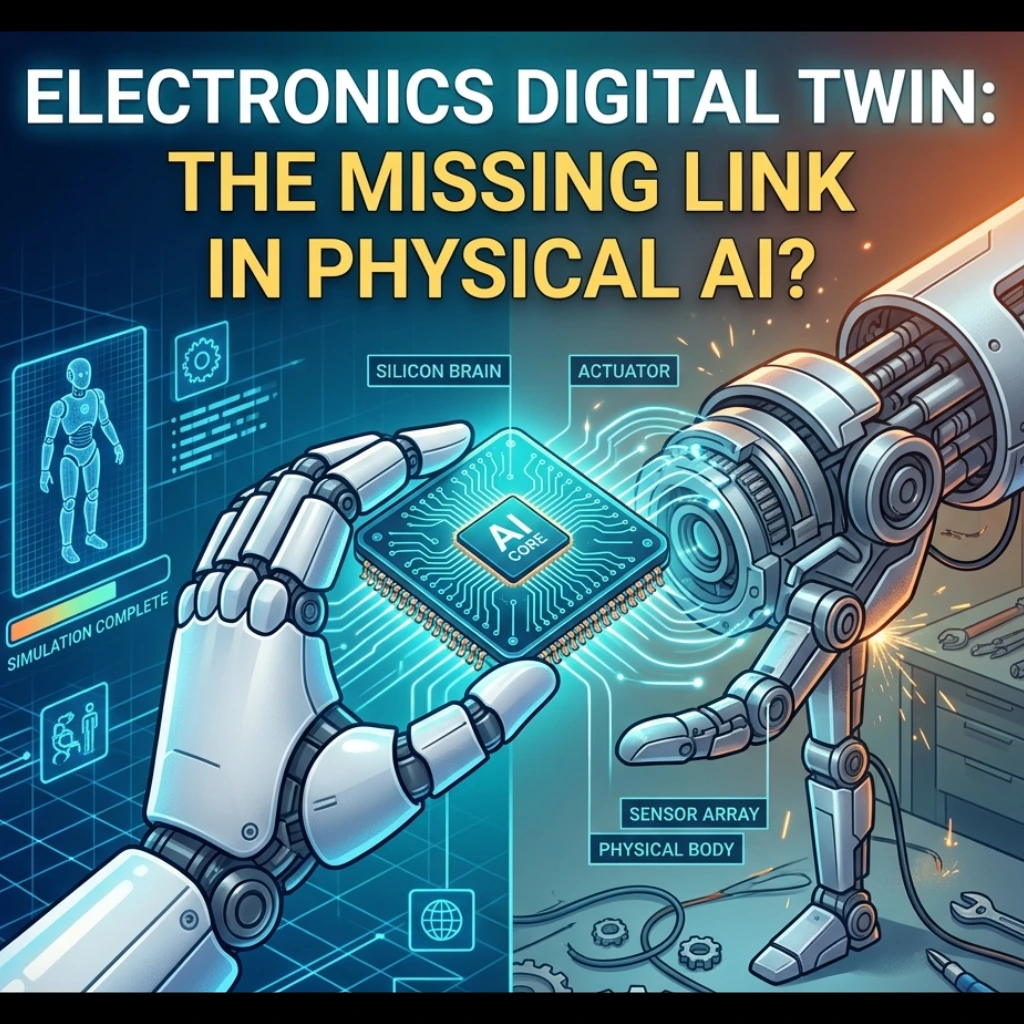
The Synopsys eDT Platform acts as a bridge. By creating a high-fidelity virtual replica of the entire electronic system, engineers can run massive-scale simulations long before physical hardware exists. We’re talking about:
- Virtual Prototyping: Testing how software interacts with complex hardware architectures.
- Power & Thermal Analysis: Predicting if your AI chip will overheat inside a sealed robotic limb.
- System-Level Validation: Ensuring that sensors, processors, and actuators play nice together.
Why “Open” Systems Change the Game
One of the most refreshing aspects of this launch is Synopsys’ commitment to an open ecosystem. Why does this matter? Because no single company builds a robot alone. A modern AI system involves components from dozens of vendors.
By keeping the platform open, Synopsys allows for seamless integration with third-party tools and standards. This interoperability is crucial for accelerating hardware development. Instead of being locked into a proprietary “walled garden,” developers can pull in models from different suppliers, creating a digital twin that actually mirrors the complexity of the real world.
Are we finally moving toward a “plug-and-play” era for industrial AI? It certainly looks like it.
The Physical AI Explosion: Why Now?
We’ve seen what AI can do on a screen (Generative AI), but the next frontier is AI with a body. Whether it’s a drone navigating a warehouse or a robotic surgeon, these systems require immense compute power packed into tiny, efficient footprints.
The Synopsys Electronics Digital Twin Platform arrives at a pivotal moment. As NVIDIA, Tesla, and Boston Dynamics push the boundaries of what robots can do, the underlying electronics are becoming insanely complex. The eDT platform addresses the “scale” problem of Physical AI by:
- Reducing Time-to-Market: Catching design flaws in the digital phase saves months of physical redesigns.
- Enhancing Safety: Rigorous testing of edge cases (like sensor failure) in a risk-free virtual environment.
- Optimizing Performance: Fine-tuning the balance between battery life and processing speed.
Final Thoughts: A New Standard for Innovation
The launch of the eDT platform marks a shift from “trial and error” to “precision engineering.” By providing a sandbox where the digital and physical worlds converge, Synopsys is giving developers the keys to a faster, safer, and more efficient future.
As we move toward a world populated by intelligent, moving machines, the question isn’t whether we need digital twins-it’s how we ever managed without them. Is your team ready to stop guessing and start simulating? The blueprint for the future of Physical AI is officially here.
FAQs
Find answers to common questions below.
What exactly makes a digital twin "electronic" compared to standard simulations?
While standard simulations might model a robot's movement, an Electronics Digital Twin models the actual "nervous system"-the PCB, power consumption, thermal heat maps, and chip-level software interactions-before the hardware is ever manufactured.
Can the Synopsys eDT platform prevent hardware recalls?
Absolutely. By stress-testing the virtual hardware in extreme "edge-case" scenarios (like a sensor failing during a heat spike), engineers can fix design flaws in the digital phase that would have caused physical failures in the field.
Is this platform only for large-scale robotics companies?
While it’s a game-changer for giants like Tesla or Boston Dynamics, the open nature of the Synopsys Electronics Digital Twin Platform makes it accessible for startups aiming to scale Physical AI hardware without the massive overhead of multiple physical prototypes.
How does "Physical AI" differ from the AI we use on our phones?
Physical AI refers to artificial intelligence that has a "body" and interacts with the physical world, such as autonomous vehicles or humanoid robots. It requires a much tighter integration between software and hardware than a chatbot or a recommendation engine.