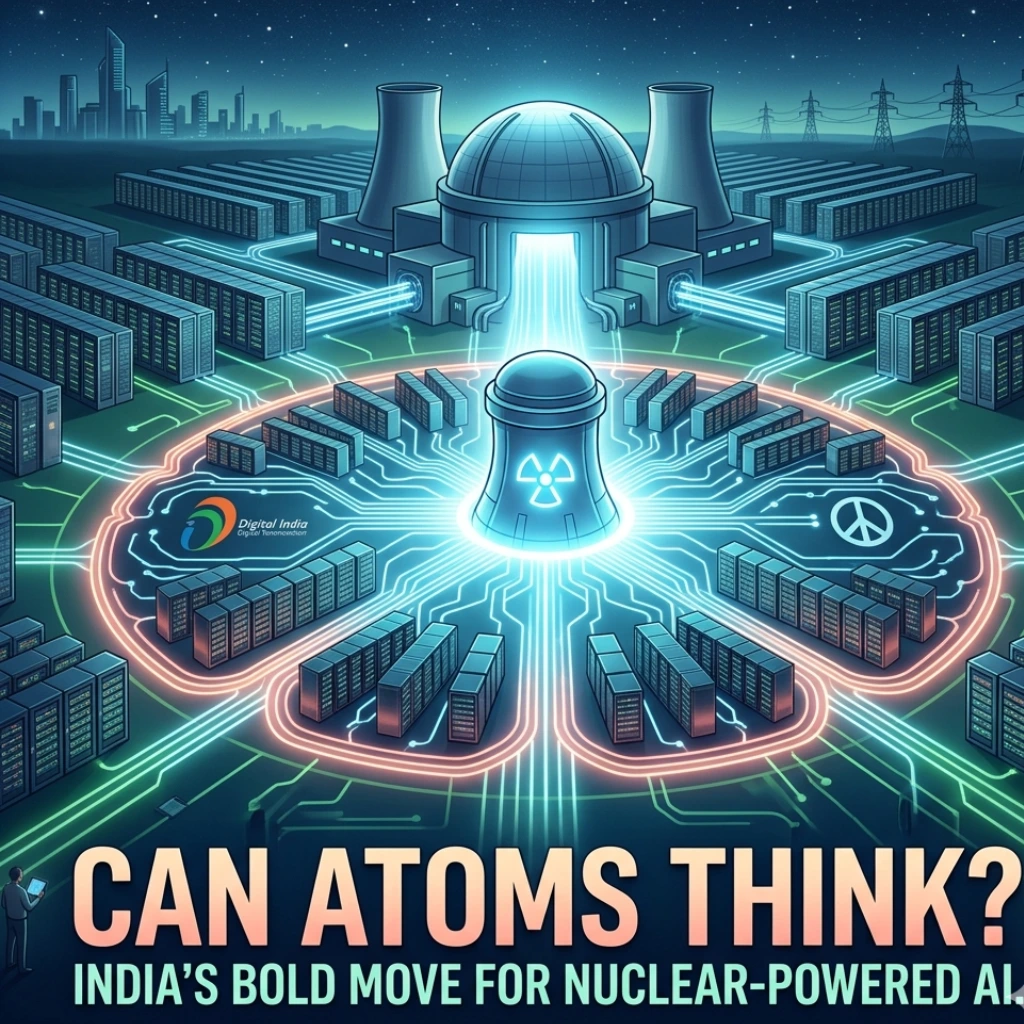
Imagine a world where the massive energy hunger of Artificial Intelligence isn’t met by coal or gas, but by the silent, immense power of the atom. It sounds like science fiction, doesn’t it? But for India, this is becoming a tangible reality. With the Prototype Fast Breeder Reactor (PFBR) at Kalpakkam recently attaining criticality, we aren’t just looking at a milestone in physics; we are looking at the birth of nuclear-powered AI infrastructure.
But why does this matter to the average person, or even the tech giant in Silicon Valley?
The Great Power Hunger: Why AI Needs Nuclear
The dirty little secret of the AI revolution is its carbon footprint. Training a single large language model consumes more electricity than a small town uses in a year. As India positions itself to become a global hub for data centers, the traditional power grid simply won’t cut it.
How do you keep thousands of high-performance GPUs running 24/7 without causing a national blackout? The answer lies in stable, baseload power. Unlike solar or wind, which are intermittent, nuclear energy provides a steady flow of electricity. By leveraging the PFBR, India is signaling a shift toward sustainable, high-density energy that can support the massive cooling and processing needs of future AI clusters.
The Kalpakkam PFBR: A Geopolitical Game Changer
The recent success at Kalpakkam is more than just a technical win; it’s a strategic moat. According to recent reports on how nuclear-powered AI infrastructure could be India’s geopolitical moat, this move allows India to offer something few other nations can: energy sovereignty for tech giants.
Here is why the PFBR is special:
- Thorium Utilization: It paves the way for using India’s vast thorium reserves, ensuring long-term energy security.
- Waste Efficiency: Breeder reactors produce more fuel than they consume, making the cycle incredibly efficient.
- Decarbonization: It offers a path to “Green AI,” helping tech companies meet their Net Zero targets.
If India can provide cheap, reliable, and carbon-free nuclear power specifically for data centers, why would a tech company go anywhere else?
From “Digital India” to “Atomic AI”
We’ve seen the rise of India’s software prowess, but the hardware and infrastructure have always faced the “energy hurdle.” By integrating nuclear power with data center policy, the government is looking to solve two problems at once.
Is it possible that the next GPT or Gemini will be trained on Indian soil, powered by Indian atoms? The infrastructure being laid down today suggests the answer is a resounding yes. This “Atomic AI” approach creates a “walled garden” of sorts-a secure, self-sustaining environment where data resides locally and is processed using domestic energy.
Final Thoughts: A New Era of Sovereignty
We are standing at a unique crossroads where 20th-century nuclear science is meeting 21st-century neural networks. The transition to nuclear-powered AI infrastructure isn’t just about keeping the lights on; it’s about who controls the “brain power” of the future.
India’s Kalpakkam breakthrough isn’t just a win for scientists-it’s a signal to the world that the future of intelligence will be green, atomic, and fiercely independent. Are we ready for the era of the Nuclear Cloud?
FAQs
Find answers to common questions below.
Why is nuclear energy better for AI than solar or wind?
AI data centers require "always-on" power (baseload). Solar and wind are dependent on weather and time of day, whereas nuclear reactors provide constant electricity 24/7.
Is nuclear-powered AI safe for the environment?
Yes, in terms of carbon emissions. Nuclear energy is one of the cleanest forms of power, helping the AI industry reduce its massive carbon footprint.
What makes the PFBR at Kalpakkam different?
It is a "Fast Breeder Reactor," meaning it can produce more fuel than it consumes, making it a sustainable choice for India’s long-term energy needs and its thorium-based nuclear program.
How does this help India's economy?
By providing reliable energy for data centers, India can attract global tech investments, create high-tech jobs, and ensure data sovereignty.