Have you ever wondered why, in an era of self-driving cars and orbital tourism, a single broken sensor can still paralyze a multi-million dollar production line for hours? We’ve had “smart” factories for a decade, yet the gap between a machine failing and a human fixing it remains frustratingly wide.
That gap might finally be closing. Today at Hannover Messe 2026, a massive shift in industrial history was signaled as Accenture and Avanade collaborate with Microsoft to develop the Agentic Factory. This isn’t just another dashboard with flashing red lights; it’s a living ecosystem where AI agents don’t just watch the work-they join the team.
From Copilots to Autonomous Teammates
For the last couple of years, we’ve lived in the “Copilot” era. AI was a helpful assistant sitting on your shoulder, waiting for you to ask a question. But the Agentic Factory flips the script. These “agents” are proactive.
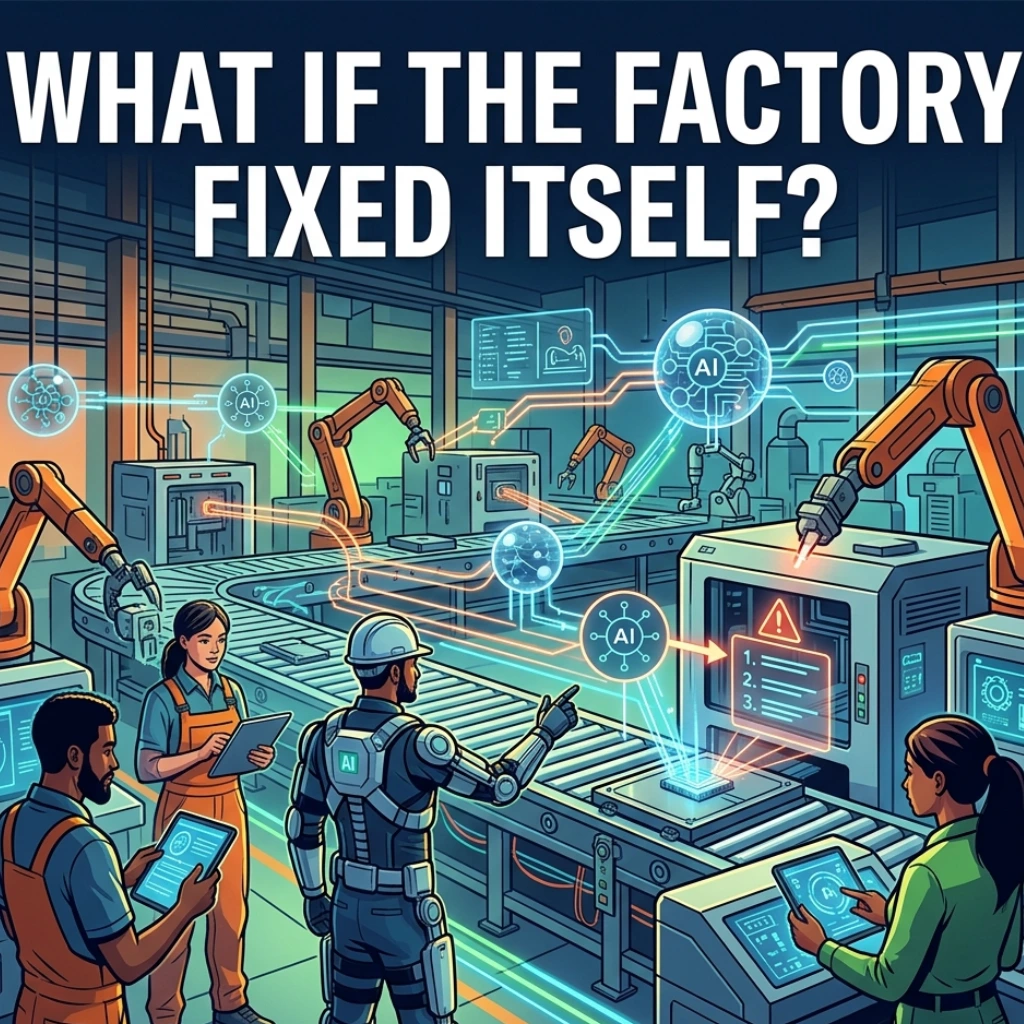
Powered by Microsoft Azure, Microsoft Fabric, and Microsoft Foundry, these AI agents act as the connective tissue of the shop floor. Instead of a technician spending two hours digging through a 400-page PDF manual to find a fault code, the agent has already:
- Analyzed the machine’s vibration telemetry.
- Cross-referenced the error with historical maintenance logs.
- Drafted a step-by-step repair plan.
- Checked the inventory for spare parts.
As Tracey Countryman from Accenture put it, it’s about moving beyond mere visibility toward systems that actually support frontline workers in those high-pressure, critical moments.
Real-World Impact: Kruger and Nissha Lead the Way
Is this just tech-giant bravado? Not quite. Manufacturing heavyweights like Kruger Inc. and Nissha Metallizing Solutions are already early adopters. They aren’t just testing “if” it works, but “how fast” it saves them money.
The goal is a staggering 10–15% reduction in mean-time-to-repair (MTTR). In the world of high-volume manufacturing, that’s not just a minor efficiency gain-it’s millions of dollars added back to the bottom line by preventing “unplanned” tea breaks for expensive machinery.
Why “Agentic” AI is Different
You might be thinking, “Isn’t this just predictive maintenance with a fancy name?” Not exactly. Traditional predictive maintenance tells you something will break. Agentic AI helps you decide what to do when it does, and in some cases, executes the boring parts of the fix itself-like raising a maintenance ticket or ordering a replacement component.
Key features of this collaboration include:
- Seamless Human-Machine Synergy: Operators remain in control, but agents handle the data-heavy “detective work.”
- Unified Data Core: It pulls from both structured data (sensors) and unstructured data (manuals and operator notes).
- Scalability: Built on the Microsoft Cloud for Manufacturing, allowing small plants to start light and scale globally.
Final Thoughts: The Human Still Holds the Keys
Despite the “Agentic” label, this isn’t about replacing the mechanic with a robot. It’s about giving that mechanic “superpowers.” By stripping away the hours of diagnostic guesswork, the Accenture and Microsoft Agentic Factory allows humans to focus on what they do best: complex problem-solving and creative engineering.
The question for manufacturers today is no longer “Should we use AI?” but rather, “Is your AI ready to go to work on the floor?”
FAQs
Find answers to common questions below.
What is an "Agentic" Factory?
It’s a manufacturing environment where AI "agents" (autonomous software entities) collaborate with humans and machines to perform tasks, diagnose issues, and optimize workflows in real-time without needing constant human prompts.
How does this reduce manufacturing downtime?
By using real-time data to identify the root cause of a failure instantly and providing guided troubleshooting, the system slashes the time spent on diagnostics and part sourcing.
Will this replace human factory workers?
No. The focus is on "human-in-the-loop" collaboration. The AI handles the data processing and logistics, while humans make the final decisions and perform physical repairs.