Have you ever stared at a shelf of skincare products, feeling more confused than inspired? We’ve all been there-buying a $60 serum because a TikTok influencer swore by it, only to have it sit gathering dust because it didn’t quite “fit” our skin.
Well, the era of trial and error is officially ending.
According to a recent AI beauty personalization market report, this sector is projected to explode to $16.4 billion by 2036. We aren’t just talking about chatbots; we’re talking about a massive shift where hyper-personalized skincare diagnostics become the gold standard.
But what does a 21.7% CAGR really mean for your bathroom cabinet? Let’s dive into how silicon chips are saving our skin barriers.
Beyond the Filter: The Science of Diagnostics
For years, “personalization” in beauty was little more than a marketing gimmick-maybe a quiz that asked if your skin was oily or dry. Today, the tech has moved from the laboratory to the smartphone.
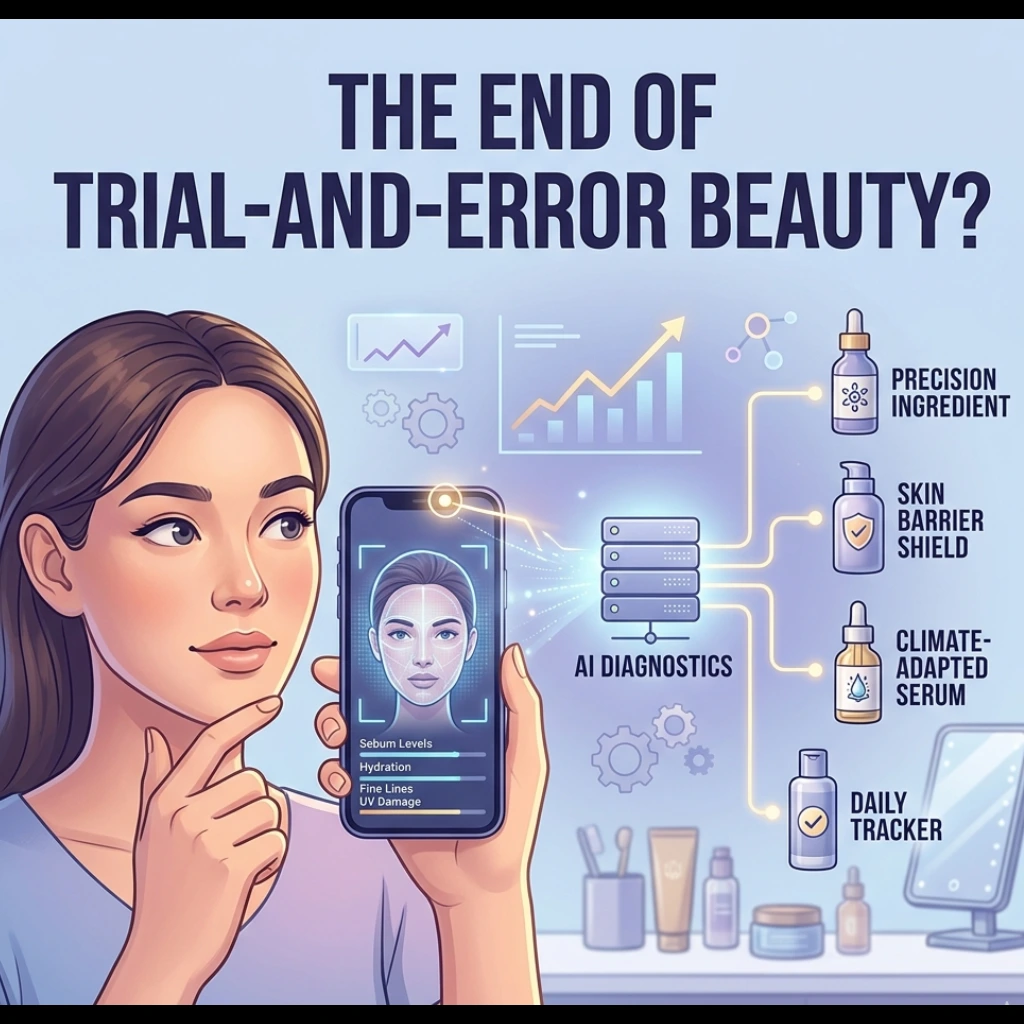
Modern AI platforms now use computer vision and deep learning algorithms to analyze high-resolution photos. They don’t just see a “breakout”; they calculate sebum levels, map out fine lines, and detect UV damage that isn’t even visible to the naked eye yet.
- Real-time Tracking: Imagine an app that adjusts your routine based on today’s local humidity and pollution levels.
- Ingredient Precision: No more guessing if you need 0.5% or 1% Retinol. The AI decides based on your skin’s tolerance.
- Virtual Try-ons: Seeing exactly how a foundation shade looks under different lighting before you hit ‘buy.’
Why the $16.4 Billion Surge?
You might wonder: is this just another tech bubble? The numbers suggest otherwise. The beauty industry is witnessing a “perfect storm” of consumer demand and technological capability
- The “Skip-care” Movement: Consumers are tired of 12-step routines. We want fewer products that work harder. AI delivers this by cutting out the fluff.
- Dermatology Access: With a global shortage of dermatologists, AI serves as a “pre-diagnostic” tool, helping users understand their skin health instantly.
- Gen Z Influence: The most tech-savvy generation is entering their peak spending years, and they demand data-backed results over celebrity endorsements.
The Big Players are Listening
It’s not just startups leading the charge. Giants like L’Oréal, Estée Lauder, and Shiseido are acquiring tech firms at a rapid pace. We are seeing a shift from beauty companies being “product houses” to becoming “tech-first ecosystems.”
Whether it’s a handheld device that 3D-prints custom foundation or a smart mirror that tracks your progress over six months, the goal is the same: Total Individualization. Is it a bit futuristic? Absolutely. But isn’t it better than spending hundreds of dollars on products that don’t work?
Final Thoughts: A Smarter Kind of Glow
We are moving away from a “one size fits all” world and into one where your skincare is as unique as your thumbprint. The $16.4 billion market forecast is a testament to a simple truth: consumers want results, not promises.
As AI continues to refine its diagnostic accuracy, the line between technology and self-care will continue to blur. The future of beauty isn’t found in a generic bottle on a shelf-it’s calculated, customized, and coded specifically for you.
FAQs
Find answers to common questions below.
Can AI really understand my skin better than a dermatologist?
While AI doesn't replace a medical diagnosis, modern algorithms can detect microscopic UV damage and hydration levels that the human eye often misses, offering a high-tech "pre-check" for your skin health.
Is hyper-personalized skincare actually more affordable?
In the long run, yes. By using AI diagnostics to identify exactly what your skin needs, you stop wasting money on "trial and error" products that don't work for your specific skin type.
How does the AI beauty personalization market affect traditional brands?
Legacy brands are pivoting from being "product sellers" to "tech providers," acquiring AI startups to offer custom-blended formulas and virtual skin tracking to stay relevant.
Is my data safe when using beauty diagnostic apps?
Most top-tier AI beauty platforms use encrypted data, but it is always wise to check the privacy policy to see how your facial mapping data is stored and used for future product recommendations.