Have you ever sat in a gridlocked intersection, watching a “smart” traffic light stay green for an empty road while your lane stretches back three blocks? It’s a frustratingly common sight in our modern cities. But what if the infrastructure wasn’t just programmed, but was actually thinking?
At Intertraffic Amsterdam 2026, the conversation shifted from simple automation to true cognitive intelligence. The star of the show? Dahua Technology and the unveiling of their Xinghan Large-Scale AI Model 2.0. This isn’t just another incremental software update; it’s a fundamental shift in how cities breathe and move.
Beyond the Lens: What is a Multimodal AI Model?
For years, traffic cameras were effectively “eyes” without a brain. they could record a crash, but they couldn’t understand the context leading up to it. Dahua is changing that narrative. By integrating vision and multimodal data, the Xinghan 2.0 model moves beyond simple video analytics.
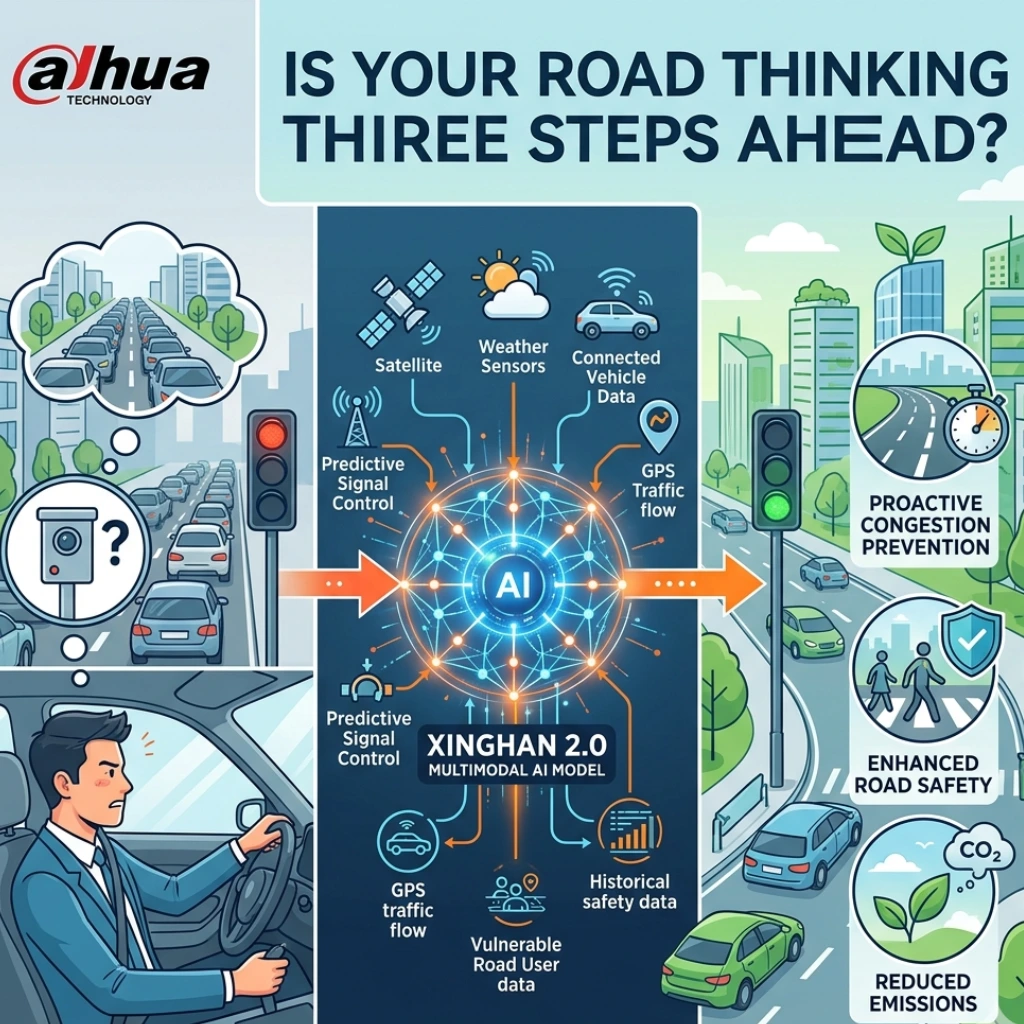
But what does “multimodal” actually mean for the average commuter? It means the system isn’t just looking at pixels; it’s processing a cocktail of data points—from weather sensors and GPS traffic flows to historical accident patterns. According to Dahua Technology’s latest highlights at Intertraffic 2026, this integration allows for a proactive urban traffic management system that anticipates problems before they manifest.
Proactive vs. Reactive: The End of the Traffic Jam?
Most current Intelligent Transport Systems (ITS) are reactive. An accident happens, a sensor detects the slowdown, and a signal is sent to emergency services. Xinghan 2.0 aims to flip the script.
How does proactive management look in the real world?
- Predictive Congestion: The AI identifies “near-miss” patterns at intersections, suggesting signal timing changes before a bottleneck forms.
- Enhanced Road Safety: By analyzing the behavior of vulnerable road users (pedestrians and cyclists), the system can trigger immediate warnings to connected vehicles.
- Environmental Impact: Smoother traffic flow means less idling, directly contributing to a reduction in urban carbon emissions.
Isn’t it time our roads became as smart as the phones in our pockets? Dahua seems to think so, positioning AI not as a “big brother” tool, but as a digital conductor for the urban orchestra.
Key Innovations Showcased at Intertraffic
The Amsterdam event served as a litmus test for the future of ITS. Dahua’s booth wasn’t just about hardware; it was a demonstration of AI-driven ecosystem synergy. The Xinghan 2.0 model stands out because of its large-scale capabilities, meaning it can manage entire city networks rather than isolated pockets of data.
Key takeaways from the showcase include:
- High-Precision Detection: Improved accuracy in identifying vehicle types, license plates, and even cargo anomalies under poor lighting.
- Real-time Decision Making: Reduced latency in data processing, ensuring that “proactive” safety measures happen in milliseconds, not minutes.
- Scalable Architecture: The ability for city planners to integrate this AI into existing infrastructure without a total “rip and replace” overhaul.
Final Thoughts: A Smarter Way Home
The technology showcased by Dahua Technology reminds us that the future of transportation isn’t just about faster cars or better asphalt. It’s about intelligence. The Xinghan Large-Scale AI Model 2.0 represents a bridge between the chaotic traffic of today and the streamlined, safe “Vision Zero” cities of tomorrow.
As we look toward the rest of 2026, the question is no longer if AI will manage our streets, but how quickly city councils can adopt these multimodal solutions. After all, wouldn’t you prefer a commute managed by a system that’s always three steps ahead?
The era of the “thinking road” has officially arrived.
FAQs
Find answers to common questions below.
Can a traffic camera actually predict an accident before it happens?
With the Xinghan AI Model 2.0, the system analyzes "near-miss" patterns and pedestrian behavior to alert drivers or adjust signals proactively, potentially stopping a crash before it occurs.
What makes "multimodal" AI different from regular smart cameras?
Regular cameras only "see" video. Multimodal AI, like Dahua's latest model, listens to weather sensors, GPS data, and historical trends simultaneously to make a more "human-like" decision.
Does this technology require cities to replace all their old cameras?
No. One of the highlights from Intertraffic Amsterdam was the model's scalable architecture, designed to integrate with existing infrastructure to upgrade city brains without a total teardown.
How does proactive traffic management help the environment?
By eliminating unnecessary idling and "stop-and-go" waves through smarter signal timing, the AI directly reduces the carbon footprint of urban commuting.