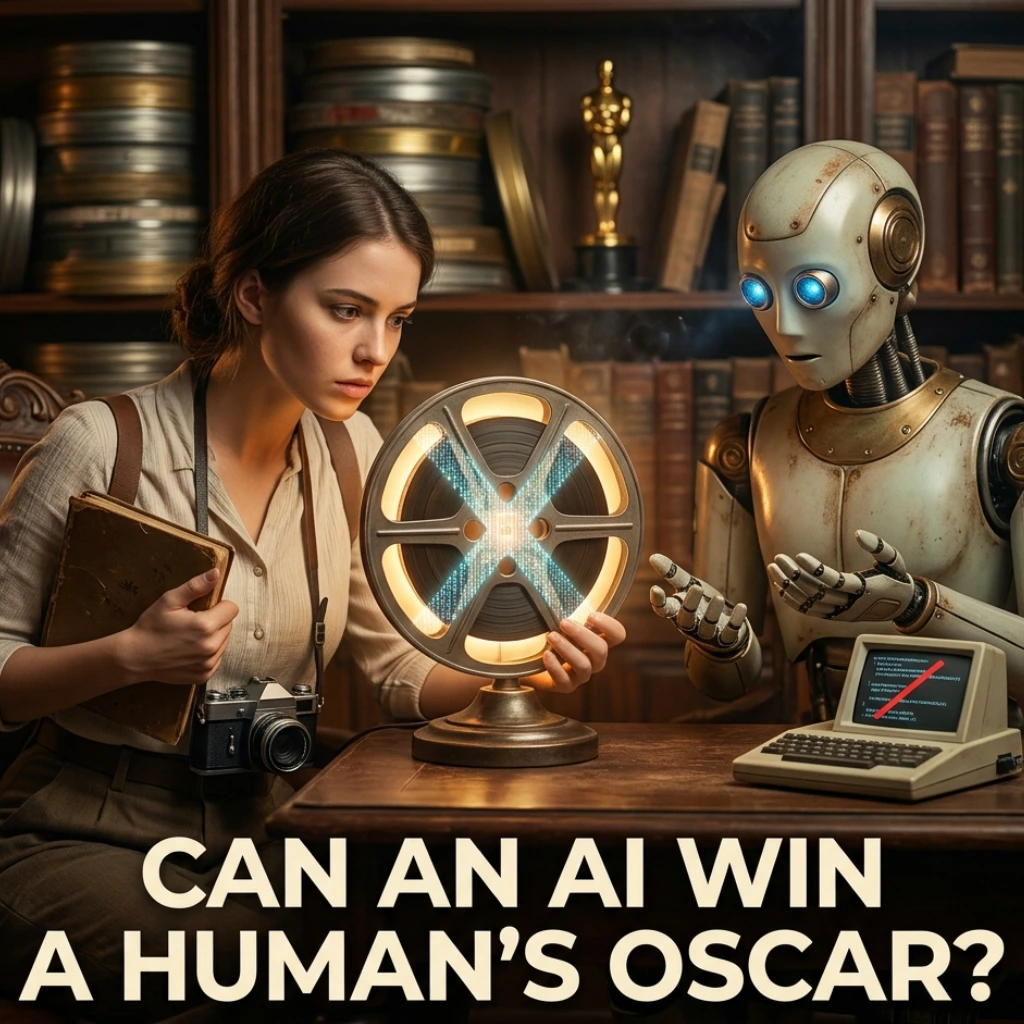
Can a machine feel heartbreak? Can an algorithm truly capture the grit of a comeback or the nuance of a grieving parent’s whisper? For decades, the Oscars have celebrated the peak of human expression. But as Generative AI begins to blur the lines between reality and pixels, the Academy of Motion Picture Arts and Sciences (AMPAS) has decided it’s time to pick a side.
For the 98th Oscars (2026) and beyond, the rules have been rewritten. While the tech world is moving at breakneck speed, Hollywood is putting on the brakes to ensure that the “soul” of cinema remains strictly human.
The Verdict: No Robots on the Podium
The latest Oscars 2027 update makes one thing very clear: AI can be a tool, but it can never be the creator. The Academy has established that while AI can assist in visual effects or post-production support, it is categorically ineligible for major awards like Best Screenplay or the acting categories.
Why the sudden hard line? It’s simple. The Academy wants to protect the craft. If a computer scans a million scripts and spits out a “perfect” screenplay, is that art, or is it just high-speed plagiarism? By mandating that scripts must be human-written, the Oscars are doubling down on the value of lived experience.
Acting Must Be Real (And Consensual)
We’ve all seen the deepfakes. We’ve seen digital resurrections of actors who passed away decades ago. It’s impressive, sure-but is it acting? The new guidelines are incredibly specific about the “human element” in performance:
- Consent is King: Digital replicas or AI-enhanced performances are only permissible with the explicit, informed consent of the actor.
- The “Real” Factor: To qualify for Best Actor or Actress, the performance must be rooted in a real human being.
- Visual Support Only: AI can help touch up a scene or de-age a star (think The Irishman or Indiana Jones), but it cannot replace the physical presence of a performer.
Can you imagine a world where a prompt engineer wins an Oscar for “Best Virtual Performance”? The Academy says: Not on our watch.
Expanding the Global Stage
Interestingly, these AI restrictions come at a time when the Academy is actually trying to be more inclusive in other areas. While they are closing the door on machines, they are opening it wider for international filmmakers. Along with the AI clarifications, the Academy is expanding global film entry rules, making it easier for diverse voices from across the globe to compete.
This creates a fascinating contrast. Hollywood is saying “no” to the limitless efficiency of AI, but “yes” to the messy, beautiful, and complex stories of humans from every corner of the earth.
What This Means for the Future of Film
Is this a case of the industry being “old school,” or is it a necessary defense of human labor? Following the massive SAG-AFTRA and WGA strikes of last year, these rules are a massive win for creatives. They ensure that humanity remains the benchmark for excellence.
However, this doesn’t mean AI is banned entirely. It will likely continue to dominate the Best Visual Effects category. The distinction is clear: AI can help build the world, but humans must tell the story and inhabit the characters.
Final Thoughts: Can We Keep the “Art” in Artificial?
At the end of the day, movies are about empathy. We go to the theater to see ourselves reflected on the big screen. Can a line of code ever truly replicate the “happy accidents” that happen on a film set? Probably not.
The Academy’s move is a bold statement in an era where “good enough” content is everywhere. By insisting on human-authored scripts and consensual performances, the 98th Oscars are reminding us that art isn’t just about the final product-it’s about the person behind it.
What do you think? Is the Academy being too restrictive, or is this the only way to save the magic of the movies? One thing is for certain: the road to the 2027 statues will be paved by people, not processors.
FAQs
Find answers to common questions below.
Can a movie using AI visual effects still win Best Picture?
Yes. The Academy allows AI for visual support and post-production. However, the core creative elements-like the screenplay and the performances-must be human-led to stay eligible for those specific major categories.
What happens if an actor's voice is recreated using AI?
Under the new guidelines, any digital replica or AI-enhanced performance requires explicit, informed consent from the actor. Furthermore, to win an acting award, the performance must be rooted in a real human portrayal.
Does this rule apply to international films as well?
Absolutely. While the Academy is expanding global film entry rules to be more inclusive of international talent, the restrictions on AI-generated content apply across the board to maintain a level playing field of human creativity.