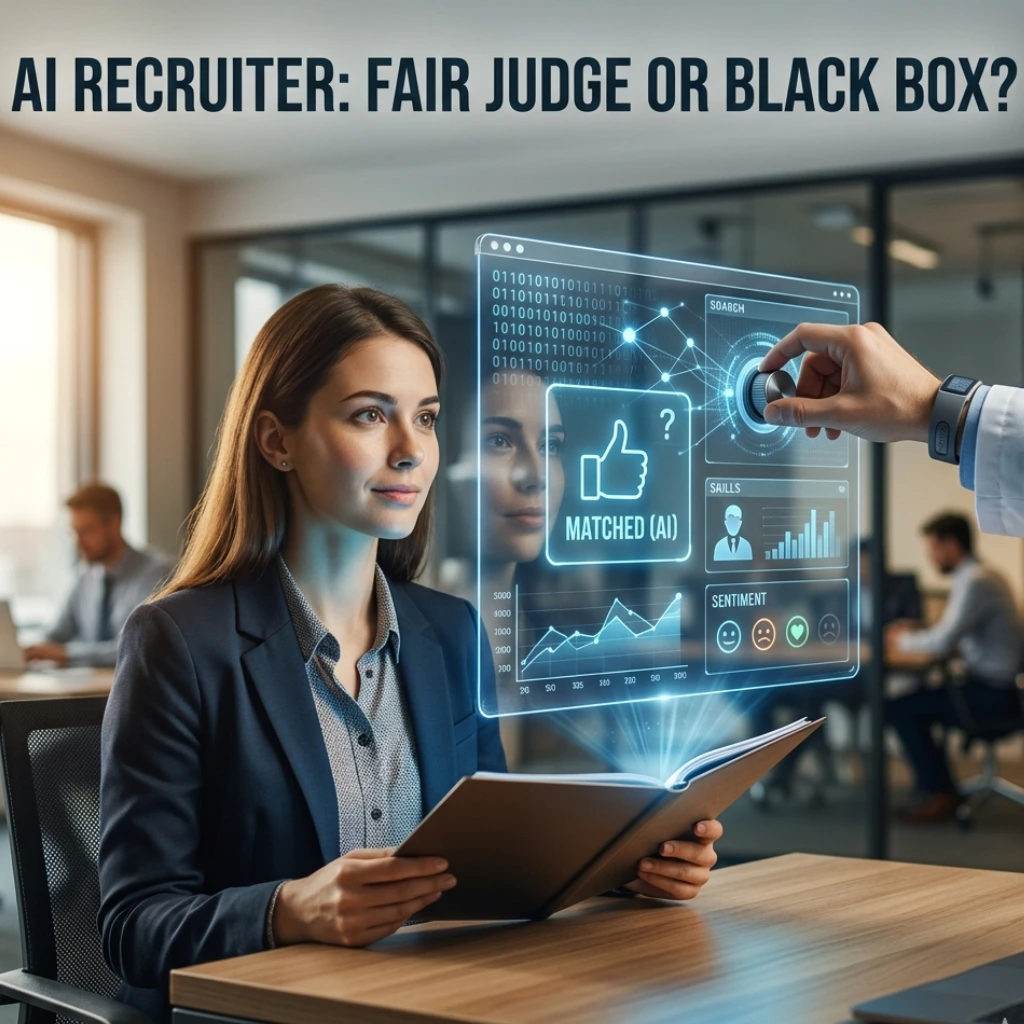
You walk into a job interview, ready to impress with your handshake and your portfolio. But what if the decision to hire you was already made before you even stepped into the room? Even more unsettling-what if that decision wasn’t made by a person at all, but by a line of code?
The reality is that the traditional “HR department” is undergoing a radical transformation. As detailed in a recent report by the Times of India on how AI is deciding who gets hired, rejected and laid off, the gatekeeper to your professional future is increasingly a sequence of algorithms.
But is this shift making the workplace fairer, or are we just replacing human bias with a “black box” we don’t fully understand?
The Silent Recruiter: How AI Screens You
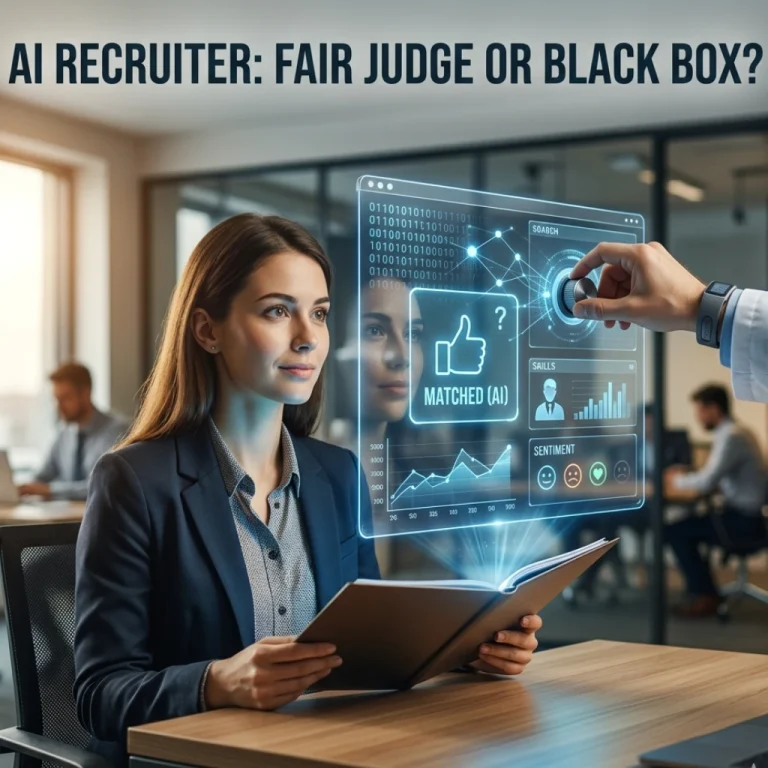
Gone are the days when a human recruiter spent 30 seconds glancing at your resume. Today, Applicant Tracking Systems (ATS) powered by AI do the heavy lifting. They don’t just look for keywords; they analyze your career trajectory, the prestige of your previous employers, and even the “sentiment” of your cover letter.
- Predictive Analysis: AI models now compare your profile against the top performers currently at a company to see if you “match” the internal DNA.
- Video Interview Scrutiny: Some platforms use facial analysis and tone-of-voice tracking to measure your confidence and emotional intelligence.
- Gamified Assessment: Forget long tests; companies are using 15-minute neuroscience-based games to map your cognitive traits.
Is it efficient? Absolutely. But does it leave room for the “wildcard” candidate-the person who might not look perfect on paper but has the grit to succeed?
The “Efficiency” Trap: Performance Monitoring and Layoffs
If getting hired by an algorithm sounds futuristic, being fired by one is where the conversation gets truly uncomfortable. Companies are now using Workforce Analytics to track everything from your keystrokes to how quickly you respond to emails.
When a recession hits or a company needs to “lean down,” these metrics become the basis for layoffs. Instead of a manager weighing your loyalty or your specific contributions to office culture, an AI might flag you for termination because your productivity score dipped for two consecutive quarters.
This leads to a chilling question: Can an algorithm understand the context of a “bad month”? Does it know you were mourning a loss or helping a teammate finish a project that didn’t have your name on it?
The Bias Problem: Can Code Be Prejudiced?
We like to think of math as objective. However, AI is only as good as the data it’s fed. If an algorithm is trained on 20 years of hiring data from a male-dominated industry, it might learn that being “male” is a prerequisite for success.
To combat this, several regions-including New York City-have begun implementing laws requiring mandatory bias audits for AI hiring tools. The goal is to ensure that “automated employment decision tools” aren’t inadvertently discriminating against age, gender, or ethnicity.
Key trends in AI Ethics for 2024 include:
- Explainable AI (XAI): Pushing for systems that can “explain” why a candidate was rejected.
- Human-in-the-loop: Ensuring a human makes the final “firing” or “hiring” call.
- Data Privacy: Stricter rules on how long companies can store your “biometric” interview data.
Final Thoughts: Navigating the Algorithmic Workplace
We aren’t heading toward an AI-run workforce; we are already in one. While AI can remove some human favoritism and speed up boring processes, it also risks turning the professional world into a cold, metrics-driven machine.
So, how do you survive? The answer lies in doubling down on your humanity. While AI can track your output, it cannot replicate your leadership, your empathy, or your ability to innovate in moments of crisis.
The next time you apply for a job, remember: you’re writing for a machine, but you’re working for people. Mastering both is the new secret to career longevity. Are you ready to impress your new digital boss?
FAQs
Find answers to common questions below.
Can an AI actually fire me without human intervention?
While AI identifies "low performers" based on data trends, most companies still require a human manager to sign off on the final decision-though the data provided by the AI is becoming the primary evidence.
How do I "beat" an AI recruiter?
Focus on standard formatting and industry-specific keywords. Since AI looks for patterns, mirroring the language used in the job description is the most effective way to get noticed.
Is AI hiring more biased than human hiring?
It's a double-edged sword. AI can eliminate "gut-feeling" prejudices, but if the historical data it learns from is biased, it may unintentionally automate discrimination.