Ever found yourself gripped by the steering wheel during a chaotic thunderstorm or a soul-crushing traffic jam, wishing the car could just… take over? We’ve been hearing whispers of the “autonomous future” for a decade, but Nissan just turned up the volume.
The Japanese automaker recently dropped a bombshell regarding its long-term vision: a plan to equip 90% of its future vehicle models with AI-based automated driving technology. This isn’t just a minor software update or a fancy new sensor; it’s a fundamental shift in how we perceive the relationship between man and machine.
But what does a world where nine out of ten Nissans are “AI-first” actually look like?
Beyond the Hype: Nissan’s High-Tech Roadmap
Nissan isn’t just throwing darts at a board. This initiative is part of a broader, aggressive strategy to lead the electrification and intelligence era. By aiming for Nissan’s 90% AI integration goal, the company is signaling that AI is no longer a luxury “add-on” reserved for high-end trims-it’s becoming the backbone of the entire brand.
The core of this movement lies in ProPILOT technology and next-generation LIDAR systems. Nissan is betting big on the idea that AI can process real-time road data faster and more accurately than a distracted human ever could.
What’s driving this massive pivot?
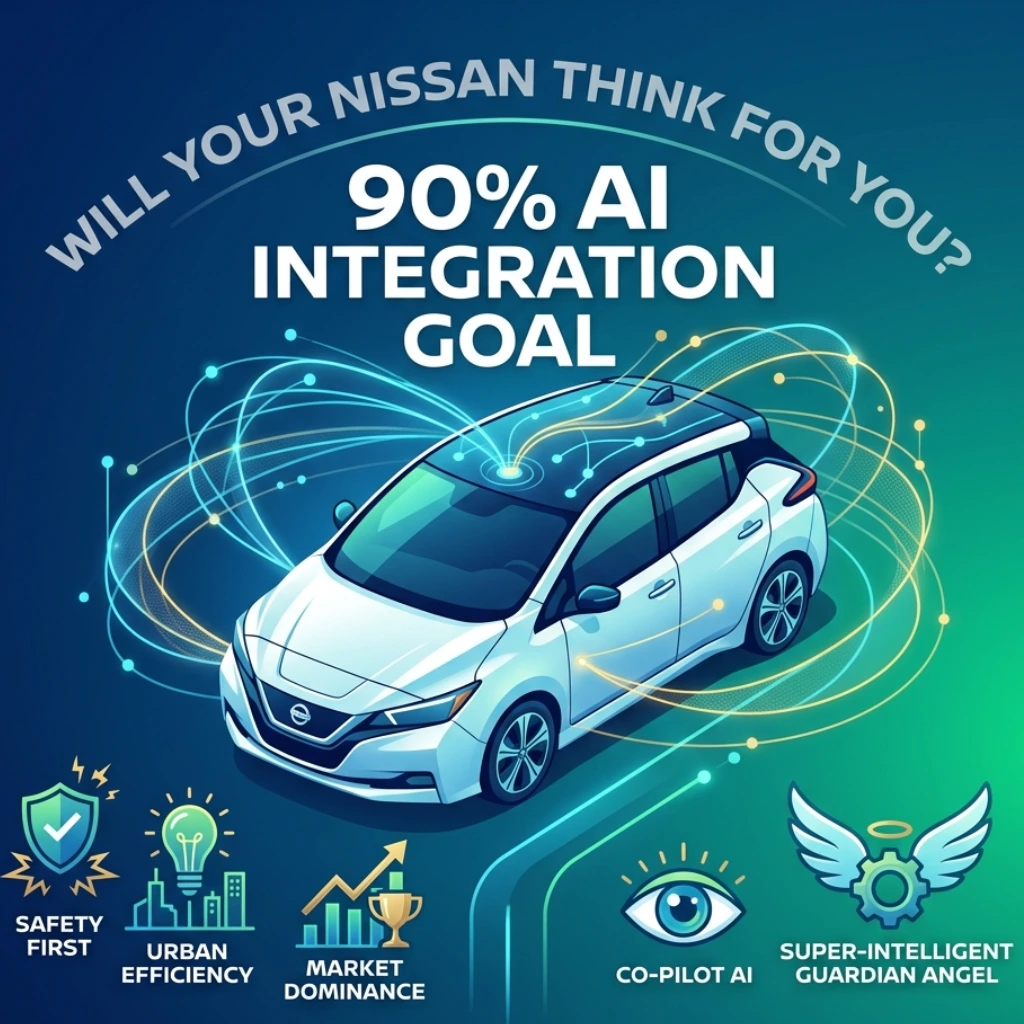
- Safety First: Reducing human error, which accounts for over 90% of road accidents.
- Urban Efficiency: AI can optimize braking and acceleration, leading to better energy consumption in EVs.
- Market Dominance: As competitors like Tesla and BYD ramp up software capabilities, Nissan is carving out its own AI-driven identity.
The “Human-Centric” AI Approach
One of the biggest hurdles for automated driving isn’t the code-it’s the “creep factor.” Do we really want to sit in a metal box controlled by an algorithm?
Nissan’s strategy focuses on “Seamless Autonomous Mobility.” Instead of replacing the driver entirely, the AI acts as a sophisticated co-pilot. It learns your habits, anticipates hazards before they enter your line of sight, and smooths out the jerky transitions often found in early cruise control systems. It’s less “robot taxi” and more “super-intelligent guardian angel.”
Can the Infrastructure Keep Up?
It’s one thing to build a smart car; it’s another to drive it on a “dumb” road. For Nissan to hit its 90% target, the technology must be robust enough to handle everything from the neon-soaked streets of Tokyo to the dusty backroads of rural America.
The integration involves massive investments in edge computing and 5G connectivity, allowing vehicles to communicate with each other (V2X). This connectivity ensures that if a car three miles ahead hits a patch of ice, your Nissan is already adjusting its torque before you even see the frost.
Final Thoughts: A New Era of Mobility
Nissan’s 90% AI integration goal is a gutsy move. It challenges the traditional “grease and gears” reputation of the automotive industry and replaces it with silicon and software. While some purists might miss the raw connection of an unassisted drive, the benefits of safety, accessibility, and reduced stress are hard to ignore.
Are we ready to let the algorithm take the wheel? Maybe not entirely-but with Nissan’s roadmap, we might not even notice when it does.
FAQs
Find answers to common questions below.
Does 90% AI integration mean the cars will be fully driverless?
Not necessarily. While the AI will handle complex driving tasks, many models will still focus on Level 2 or Level 3 autonomy, where the driver remains a supervisor rather than a passenger.
Will this AI integration make Nissans more expensive?
Initially, R&D costs are high, but Nissan aims for "democratization." By standardizing AI across 90% of the fleet, they can achieve economies of scale that eventually lower the cost per unit.
How does AI help in electric vehicles specifically?
AI is crucial for "Range Optimization." It manages battery temperature and regenerative braking more efficiently than a human, squeezing more miles out of every charge.