Have you ever scrolled through your feed and felt a genuine sense of unease at how realistic AI-generated images have become? While the world has been busy debating whether AI will take our jobs, a much more personal threat has been quietly proliferating in the shadows of the internet: the rise of non-consensual deepfake pornography.
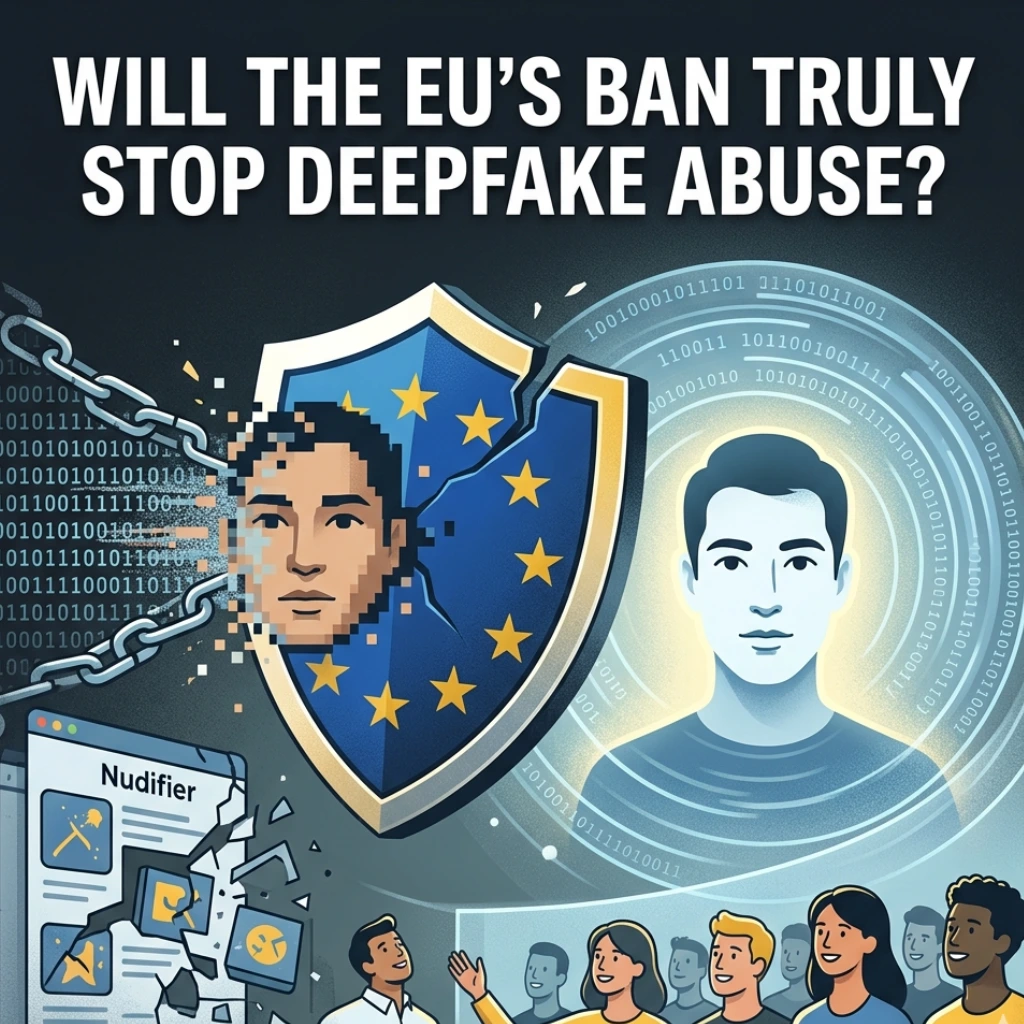
But the “Wild West” of AI-generated content might finally be meeting its match. In a decisive move, the European Union strikes deal to ban sexualised AI deepfakes, marking a massive shift in how we regulate digital dignity. This isn’t just another bureaucratic update; it’s a direct strike against the tools that turn technology into a weapon of harassment.
Why “Nudifier” Apps Are Finally in the Crosshairs
For a long time, regulators were playing a game of catch-up. For every harmful site authorities took down, three more “nudifier” apps-AI tools that digitally strip clothing from photos-popped up in their place.
What makes this new EU deal different? It moves beyond general AI ethics and targets the specific harm these tools cause. Under the updated framework of the EU AI Act:
- Explicit Prohibition: The creation and distribution of non-consensual deepfake pornography will be explicitly banned.
- Targeting the Tech: The ban isn’t just for the users; it’s designed to squeeze the developers of “nudifier” apps, making it illegal to provide the software that enables this abuse.
- Criminal Accountability: By simplifying the language in the AI Act, the EU aims to make it easier for law enforcement to prosecute those who use AI to violate privacy.
Is it possible to actually police the entire internet? Perhaps not entirely, but by cutting off the payment processors and app stores that host these tools, the EU is making it significantly harder for these developers to profit from digital violence.
Protecting Privacy in the Age of Generative AI
We often talk about “data privacy” in terms of passwords and credit card numbers. But what about the privacy of your physical likeness?
The surge in AI-generated abuse has predominantly targeted women, from high-profile celebrities to high school students. The psychological impact is devastating, yet until now, many legal systems lacked the vocabulary to handle “crimes” where no physical touch occurred.
The EU’s move acknowledges that digital harm is real harm. By classifying these AI tools as high-risk or outright prohibited, the European Union is setting a global standard. This sends a clear signal to the rest of the world: innovators can no longer use “innovation” as an excuse to produce non-consensual content on an industrial scale.
The Global Ripple Effect: Will Other Countries Follow?
When the EU passes tech legislation (like the GDPR), the rest of the world usually watches-and then copies. We are likely looking at the “Brussels Effect” in action once again.
- Platform Responsibility: Tech giants will likely have to implement stricter filters to ensure their generative models can’t be “jailbroken” to create explicit content.
- Legal Precedents: This deal provides a blueprint for US and UK lawmakers who are currently facing immense public pressure to pass similar protections.
Could this be the beginning of a safer, more ethical internet? It’s a bold step, but the success of the ban will depend on how strictly these rules are enforced across borders.
Final Thoughts: A Human Victory Over Algorithmic Abuse
Technology should empower us, not leave us looking over our shoulders. The EU’s tentative deal is a refreshing reminder that we don’t have to be passive observers of AI’s dark side. By banning deepfake porn and nudifier apps, we are choosing to prioritize human consent over code.
We’re entering an era where “I didn’t know the AI could do that” is no longer an acceptable excuse for developers. “The message is clear: if your tech relies on stripping away someone’s dignity, it doesn’t belong in our digital future.”
What do you think? Is a ban enough to stop the spread of deepfakes, or do we need even more aggressive technical safeguards? The conversation is just beginning.
FAQs
Find answers to common questions below.
Can the EU actually stop "Nudifier" apps hosted outside of Europe?
While the EU can't control every server worldwide, the ban forces app stores and payment processors to de-list and block transactions for these services, effectively cutting off their "oxygen" and making them much harder for the average person to access.
Does this ban include "parody" deepfakes of public figures?
The focus of this specific deal is on sexualized and non-consensual content. While political parodies fall under different transparency rules (like labeling requirements), anything that generates non-consensual pornography is strictly prohibited regardless of the subject's status.
What happens to people who already have these AI tools installed?
The legislation primarily targets the developers and distributors. However, by making the software illegal to provide, the EU aims to stop updates and support, eventually rendering existing local versions obsolete or legally risky to use for distribution.
Will this make AI image generators less creative?
Not necessarily. Most mainstream AI companies already have "safety guardrails" in place. This law simply mandates those ethics, ensuring that "creativity" isn't used as a mask for creating harmful, explicit imagery.