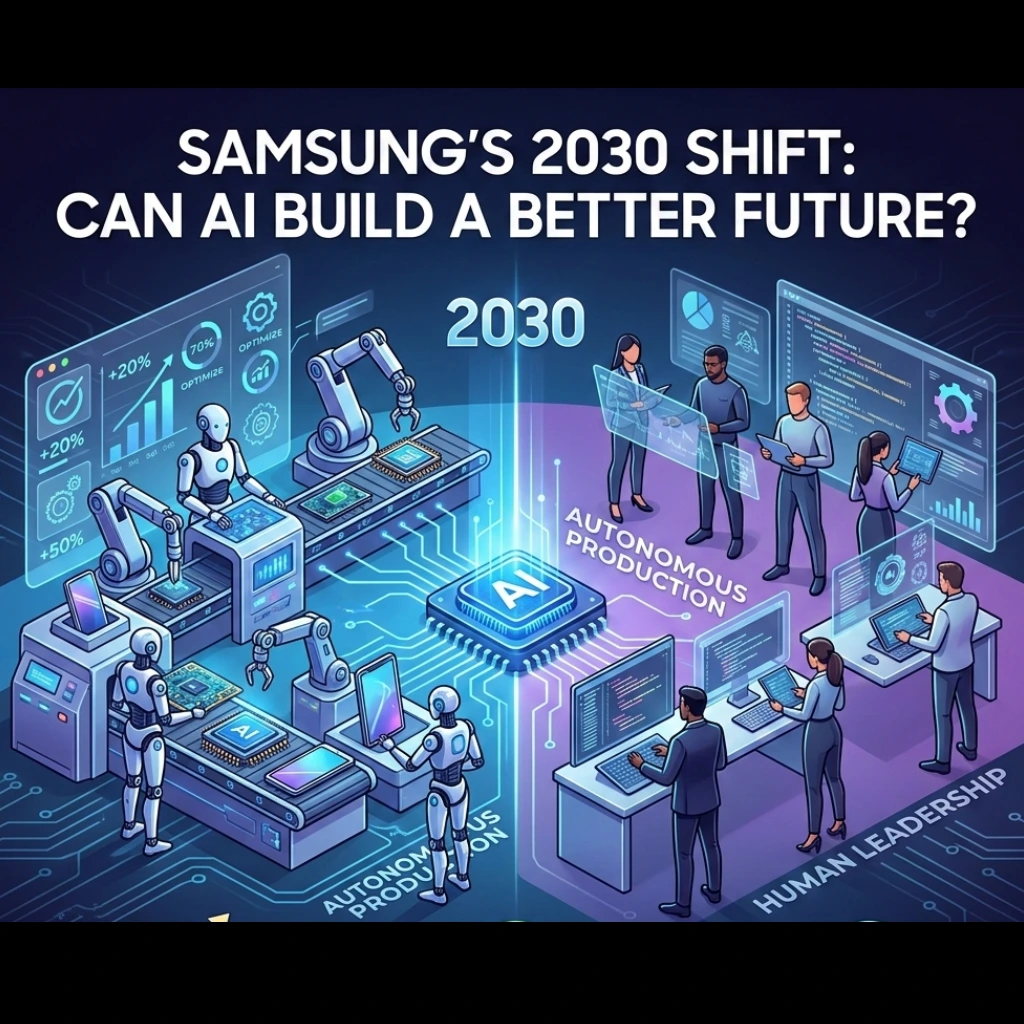
The year 2030 might sound like science fiction, but for Samsung Electronics, it is the deadline for a total industrial revolution. We aren’t just talking about a few more robots on the assembly line. Samsung has officially announced a massive strategic pivot: a transition to “Lights-Out” factories-manufacturing hubs so autonomous and AI-driven they can operate without human intervention.
But why now? And why is this move considered the absolute “core” of their competitive edge? Let’s dive into the details of this high-stakes evolution.
The Vision: From Automation to Autonomy
For decades, we’ve used the word “automation” to describe machines doing repetitive tasks. Samsung’s 2030 shift moves beyond that into the realm of autonomy. In these future factories, AI won’t just follow instructions; it will make decisions.
Imagine a production line that detects a microscopic flaw in a semiconductor wafer, recalibrates the machinery in real-time, and predicts equipment failure before it even happens. That is the level of sophistication Samsung is aiming for. By removing human error and downtime, Samsung aims to hit efficiency levels that were previously thought impossible.
Samsung’s AI Factory: The Ultimate Competitive Edge
In the hyper-competitive world of electronics, speed and precision are everything. Samsung faces fierce pressure from both high-end innovators and low-cost manufacturers. Here is why the AI shift is their secret weapon:
- Unmatched Yield Rates: Especially in chip manufacturing, a 1% difference in yield can equal billions of dollars. AI can optimize the chemical and mechanical processes at a granular level that human engineers simply cannot track.
- Labor Resilience: With aging populations in manufacturing hubs like South Korea, labor shortages are a real threat. AI-driven factories ensure production never stops, regardless of demographic shifts.
- Sustainability: AI can optimize energy consumption and reduce material waste, helping Samsung hit its ESG (Environmental, Social, and Governance) targets while cutting costs.
The “Smarter” Supply Chain
This shift isn’t happening in a vacuum. Samsung is integrating Generative AI into the very fabric of its manufacturing execution systems (MES). This means the factory can “talk” to the supply chain. If there is a shipping delay in raw materials, the AI factory automatically adjusts its production schedule to minimize idle time.
What Happens to the Workers?
A common concern with any “lights-out” factory plan is the human element. Samsung’s strategy isn’t necessarily about firing everyone; it’s about shifting the workforce. The focus will move from manual assembly to “AI Orchestration.” Employees will be retrained to manage the systems that manage the robots. It’s a shift from being the “hands” of the company to being the “brains.”
The Bottom Line
By investing heavily in AI today, they are ensuring that they won’t just participate in the future of tech-they will build the machines that create it. As we move toward 2030, the “Made by Samsung” label will increasingly mean “Perfected by AI.”
FAQs
Find answers to common questions below.
What is Samsung's AI factory plan for 2030?
Samsung aims to transition its global manufacturing into fully autonomous, AI-driven "lights-out" factories by 2030 to increase efficiency and reduce human error.
Will Samsung use robots to make all its phones by 2030?
While robots already do much of the work, the 2030 goal is for AI to manage the entire production process autonomously, from parts sourcing to final quality checks.
Why is Samsung moving to autonomous manufacturing?
To maintain a competitive edge, improve product yield (especially in semiconductors), and solve potential labor shortage issues in the future.
What are 'lights-out' factories?
These are manufacturing facilities so highly automated that they can operate in the dark, without human presence on the factory floor.