When we talk about “big” tech deals, we’re usually thinking in the hundreds of millions or maybe a couple of billion. But $32 billion? That is a number that makes even Wall Street do a double-take.
Google has officially closed its $32-billion acquisition of Wiz, the Israeli-born cloud security powerhouse. This isn’t just another line item on a balance sheet; it is the largest acquisition in Google’s history, dwarfing the $12.5 billion they paid for Motorola Mobility back in 2012.
But why now? And why Wiz? If you’ve been watching the rapid-fire expansion of AI, the answer is hiding in plain sight.
The Cloud’s New Bodyguard: What Makes Wiz Worth the Hype?
If you aren’t in the trenches of DevOps or cybersecurity, you might wonder how a company founded only four years ago-in 2020-became worth more than many legacy airlines.
Wiz solved a problem that had been giving CTOs nightmares: visibility. Most security tools are like flashlights in a dark warehouse; they only show you what’s directly in front of them. Wiz, however, acts like a floodlight. Its agentless scanning technology allows companies to see their entire cloud infrastructure-across AWS, Azure, and Google Cloud-without the friction of installing heavy software on every single server.
When Google wraps its $32B acquisition of cloud security firmWiz, they aren’t just buying a product; they are buying a standard. They are securing a future where “secure by design” isn’t a slogan, but a default setting.
Why Google Cloud is Finally Ready to Take the Gloves Off
For years, Google Cloud has played third fiddle to Amazon Web Services (AWS) and Microsoft Azure. While Google’s tech has always been top-tier, enterprise customers often leaned toward the “safer” or more established ecosystems of its rivals.
By integrating Wiz into the Google Cloud Platform (GCP), Google is sending a clear message: We are the safest place for your data. Key benefits of the merger include:
- Unified AI Security: Wiz’s ability to identify “toxic combinations” of risks (like a leaked secret paired with a vulnerable container) will now be supercharged by Google’s Gemini AI.
- Instant Credibility: Wiz already counts over 40% of the Fortune 500 as customers. Google just bought an elite Rolodex of enterprise giants.
- Market Consolidation: By pulling Wiz off the market, Google denies its competitors the chance to own the most sought-after security tech of the decade.
Can Regulators Stop the Party?
Is a deal this big ever really “simple”? Hardly. This acquisition comes at a time when the Department of Justice (DOJ) and the FTC are looking at Big Tech through a magnifying glass.
We’ve seen similar deals, like Adobe’s attempt to buy Figma, fall apart under regulatory pressure. However, the cybersecurity market is incredibly fragmented. Google will likely argue that this move is pro-competitive, providing better protection for global infrastructure against state-sponsored hackers and sophisticated cyber-attacks.
Will the “too big to fail” argument work in the world of cybersecurity? Only time-and a lot of legal fees-will tell.
Final Thoughts: A New Era of AI-Driven Protection
This $32 billion handshake represents a pivot point. We are moving away from reactive security-where you fix things after they break-to predictive security.
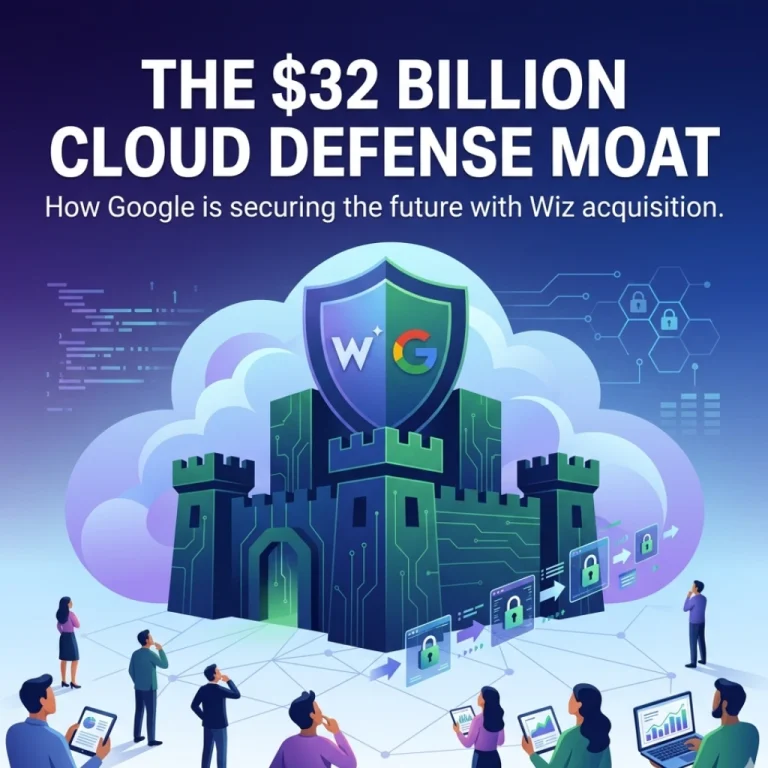
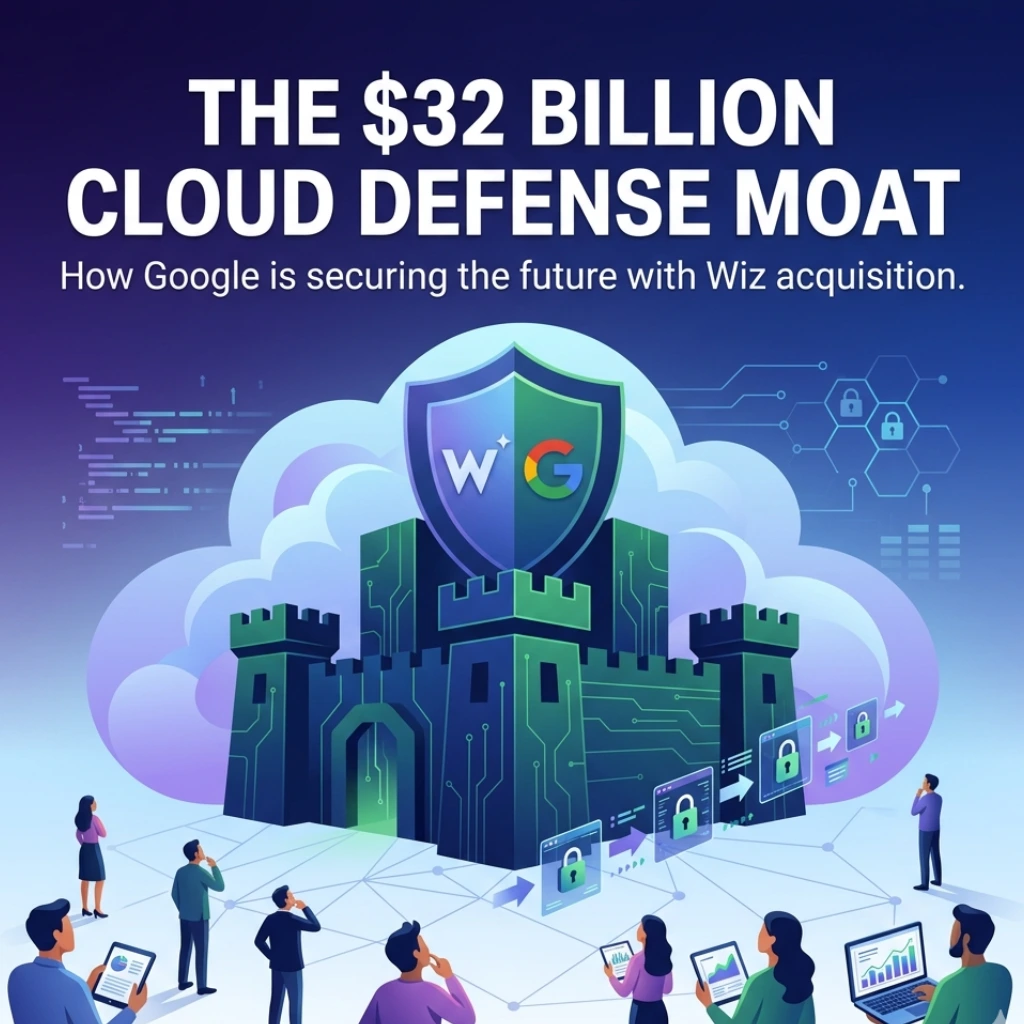
Google isn’t just buying a startup; they are building a moat. As AI makes cyber threats more frequent and automated, the only way to fight back is with an equally intelligent, deeply integrated defense system.
The big question remains: Now that Google has the best shield in the business, will the rest of the industry be able to keep up? Or are we looking at a future where Google Cloud becomes the undisputed fortress of the internet?
FAQs
Find answers to common questions below.
Why did Google pay $32 billion for a four-year-old startup?
It’s all about the "toxic combinations." Wiz's unique ability to identify complex, layered security risks across multi-cloud environments is unmatched, making it the "holy grail" for enterprise-level protection.
Will current Wiz customers be forced to switch to Google Cloud?
Not necessarily. Wiz built its reputation on being "cloud-agnostic," meaning it works across AWS and Azure. Google is likely to keep this functionality to maintain its massive Fortune 500 user base.
Does this deal make Google Cloud safer than AWS or Azure?
It certainly levels the playing field. By integrating Wiz’s agentless scanning directly into its infrastructure, Google is positioning itself as the most "security-first" cloud provider on the market.
Could regulators still block the deal?
While the deal is "wrapped," antitrust scrutiny remains a hurdle. However, because the cybersecurity market is so fragmented, Google has a strong case that this merger is a win for global digital defense.