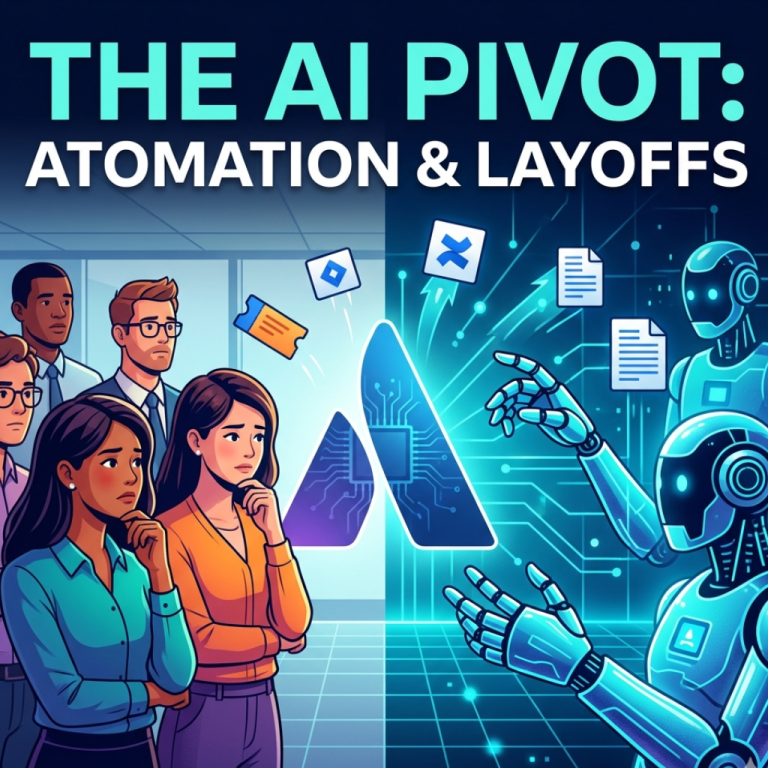
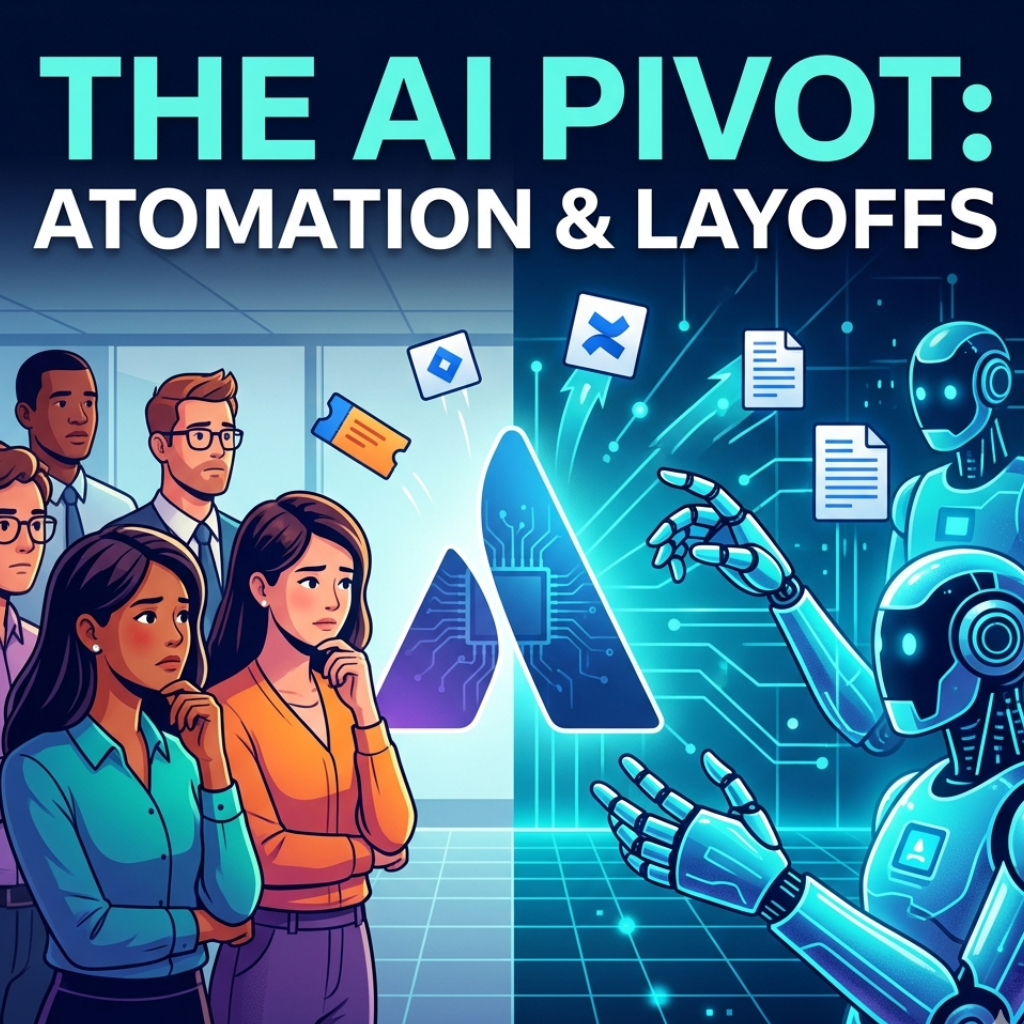
The tech industry just received another wake-up call, and this time, it’s coming from the kings of collaboration. Atlassian, the powerhouse behind Jira and Confluence, has announced a massive restructuring that involves laying off roughly 10% of its workforce-about 1,600 employees.
But if you think this is just another case of post-pandemic belt-tightening, look closer. This isn’t just about cutting costs; it’s about a fundamental pivot toward a new identity.
Is This the End of Teamwork as We Know It?
Atlassian co-founders Mike Cannon-Brookes and Scott Farquhar aren’t just trimming the edges; they are tearing up the old blueprint to build something new. The company is rebalancing its entire resource pool to focus on “the future of teamwork in the AI era.”
It begs the question: Can a company that built its empire on human collaboration successfully transition into an AI-first entity? According to the latest reports on how Atlassian restructures workforce for an AI future, the answer is a resounding “we have no choice.”
In the software world, standing still is the same as moving backward. By shifting talent away from legacy operations and toward Generative AI and R&D, Atlassian is signaling that the next decade of productivity won’t just be about “doing” work-it will be about “orchestrating” it with intelligent agents.
The Strategy Behind the Sacrifice
Layoffs are always painful, yet from a strategic standpoint, Atlassian is attempting to dodge the “innovator’s dilemma.” Instead of waiting for AI startups to eat their lunch, they are cannibalizing their own traditional structures to stay ahead.
What does this “rebalancing” actually look like?
- Doubling down on Atlassian Intelligence: Expect to see AI deeply embedded into Jira Service Management and Confluence, moving beyond simple summaries to predictive project management.
- Cloud Infrastructure Supremacy: A significant portion of the remaining workforce will likely focus on migrating the last of their on-premise customers to the cloud, where AI tools live and breathe.
- Efficiency over Headcount: The goal is a leaner, more agile organization that can ship AI features at a pace that keeps competitors like Microsoft and Notion at bay.
Why Investors are Watching Closely
Wall Street’s reaction to tech layoffs has shifted. A year ago, cuts were seen as a sign of weakness; today, they are often viewed as a sign of operational discipline. Investors are no longer rewarding “growth at all costs.” They want to see high margins and a clear roadmap for AI monetization.
The restructuring isn’t just a PR move. It’s a calculated bet that 14,000 employees focused on AI-driven workflows will be more valuable than 15,600 employees maintaining the status quo. If Atlassian can successfully integrate AI to make “the wall of Jira tickets” disappear through automation, their stock price and market relevance will likely skyrocket.
Final Thoughts: A New Era for the Digital Workspace
We are witnessing a historic shift in the Silicon Valley narrative. The conversation has moved from “how many people do you hire?” to “how much can your AI do?”
Atlassian’s decision to part ways with 1,600 talented individuals is a sobering reminder that the AI era isn’t coming-it’s already here, and it’s rewriting the rules of employment. For those remaining, the mission is clear: prove that AI doesn’t just replace workers, but actually makes the “future of teamwork” less chaotic and more creative.
The big question remains: Will this pivot be remembered as a masterstroke of foresight, or a risky gamble on an unproven frontier? Only the next few quarterly earnings calls will tell.
FAQs
Find answers to common questions below.
Why is Atlassian laying off 1,600 employees if they are profitable?
It’s a strategic "rebalancing." The company is moving away from legacy operational roles to hire and invest heavily in Generative AI and R&D.
Does this mean Jira and Confluence are being replaced by AI?
Not replaced, but overhauled. The restructuring aims to embed "Atlassian Intelligence" into every layer of their software to automate project management.
Is the Atlassian AI restructuring a sign of a tech recession?
Not necessarily. Analysts view this more as "operational discipline"-shifting from human-heavy growth to AI-driven efficiency.