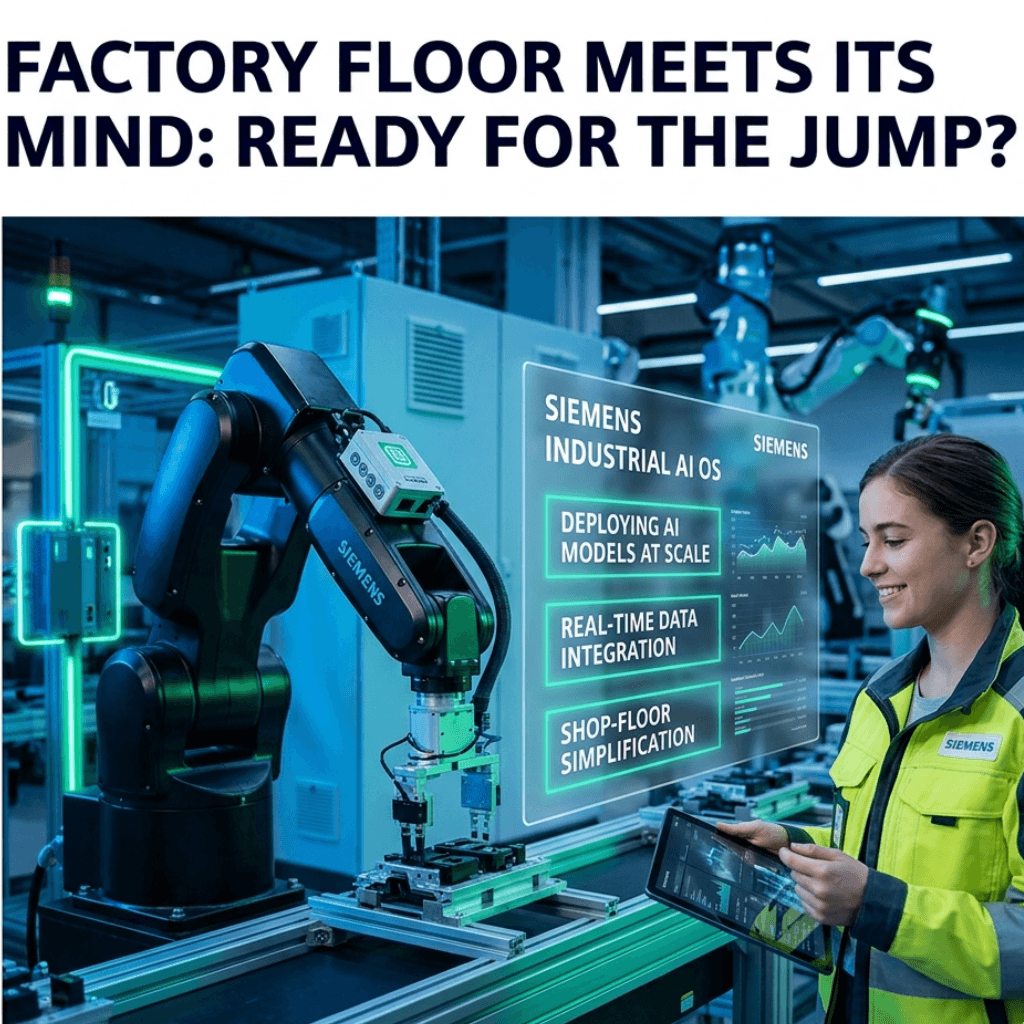
Have you ever wondered what happens when the raw power of a factory floor finally meets the “brain” of advanced artificial intelligence? For years, AI in manufacturing felt like a futuristic concept-something discussed in boardroom presentations but rarely seen on the actual assembly line.
That just changed.
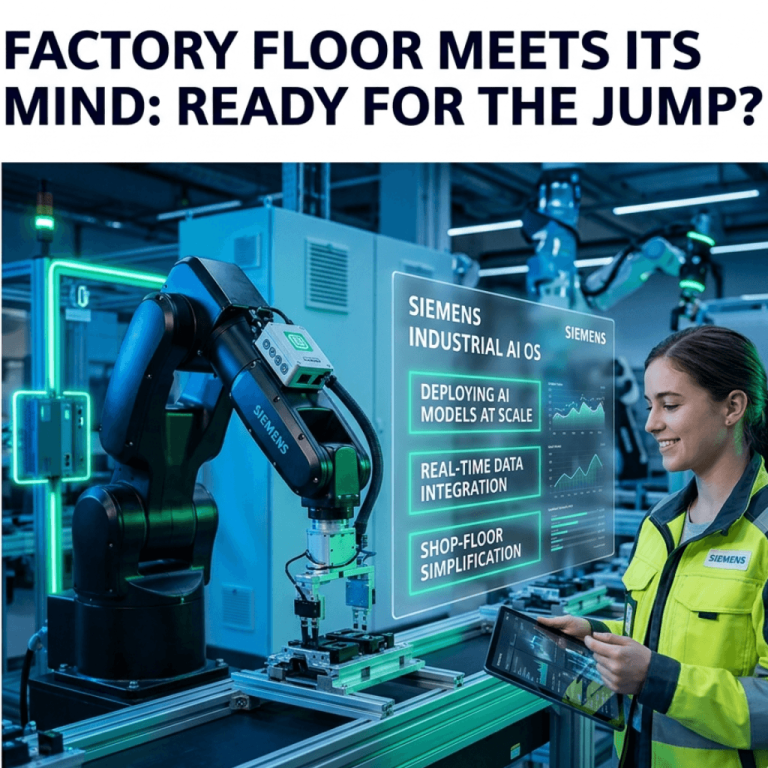
At a major launch event in Beijing, Siemens didn’t just talk about the future; they delivered it. By unveiling the Siemens Industrial AI OS, alongside 26 new edge and automation technologies, the company is effectively handing factory managers the keys to a self-optimizing ecosystem. But is the industry truly ready for AI-driven decision-making at this scale?
Why an “Operating System” for AI Matters
We use operating systems for our phones and laptops every day to make complex hardware easy to use. Siemens is applying that same logic to the industrial world. According to the official Siemens press release, this new system is designed to bridge the gap between IT (Information Technology) and OT (Operational Technology).
In the past, deploying an AI model on a factory floor required a small army of data scientists and weeks of coding. The Industrial AI OS changes the math. It allows companies to:
- Deploy AI models at scale across multiple production lines.
- Integrate real-time data from sensors directly into decision-making loops.
- Simplify the user interface, so shop-floor engineers-not just software developers-can manage the tech.
26 New Technologies: Moving Beyond the Hype
It’s easy to get lost in buzzwords, but the sheer volume of tech Siemens just dropped is staggering. The 26 new edge and automation technologies are focused on one thing: Edge Computing.
Why does the “Edge” matter? In a high-speed manufacturing environment, you can’t wait for data to travel to a cloud server in another country and back again. Decisions need to happen in milliseconds.
Some of the standout features include:
- Generative AI for Engineering: Using natural language to generate PLC (Programmable Logic Controller) code, which slashes programming time.
- Enhanced Vision Systems: AI that can spot microscopic defects in products that the human eye would miss.
- Predictive Maintenance 2.0: Systems that don’t just say “this part might break,” but actually suggest the most efficient time to fix it without stopping the entire line.
Could this be the end of “unplanned downtime” as we know it? If these technologies perform as promised, the cost savings for global manufacturing could be in the billions.
The Power of Partnerships: Siemens and the Ecosystem
No company, not even a giant like Siemens, can revolutionize an industry alone. A key takeaway from the Beijing unveiling was the emphasis on strategic partnerships. By opening up their AI OS to third-party developers and tech partners, Siemens is creating an “App Store” for industry.
This open ecosystem approach is a massive shift. It means a specialized startup in Munich or a robotics firm in Shanghai can build an AI tool that plugs directly into the Siemens framework. This accelerates innovation and ensures that the Industrial AI OS stays relevant as technology evolves.
Final Thoughts: A New Era for Production
We are moving away from the era of manual-input systems and into the age of autonomous production.” The Siemens Industrial AI OS isn’t just a software update; it’s a fundamental shift in how we think about work.
The big question remains: How fast can the workforce adapt? While the technology is ready, the human element-training workers to collaborate with AI-will be the next great challenge. One thing is certain: the factory floor is getting a lot smarter, and the race to lead the AI industrial revolution has officially entered a new, high-speed phase.
FAQs
Find answers to common questions below.
What exactly is the Siemens Industrial AI OS?
Think of it as the "Windows" or "Android" for a factory. It’s a centralized platform that allows different AI applications and hardware sensors to communicate seamlessly, making it easier to deploy smart automation without needing a PhD in data science.
Why did Siemens launch 26 new technologies at once?
To cover the entire production lifecycle. By releasing a massive suite of tools-from vision systems to generative coding-Siemens is ensuring that there are no "weak links" in an AI-driven production line.
Will the Industrial AI OS replace human factory workers?
It’s less about replacement and more about empowerment. The system handles the "data heavy lifting" and predictive alerts, allowing human engineers to focus on high-level problem solving rather than routine monitoring.
How does "Edge" technology help in industrial AI?
In manufacturing, every millisecond counts. "Edge" means the AI processes data right there on the machine (the edge of the network) rather than sending it to a distant cloud server, ensuring instant reactions and better security.