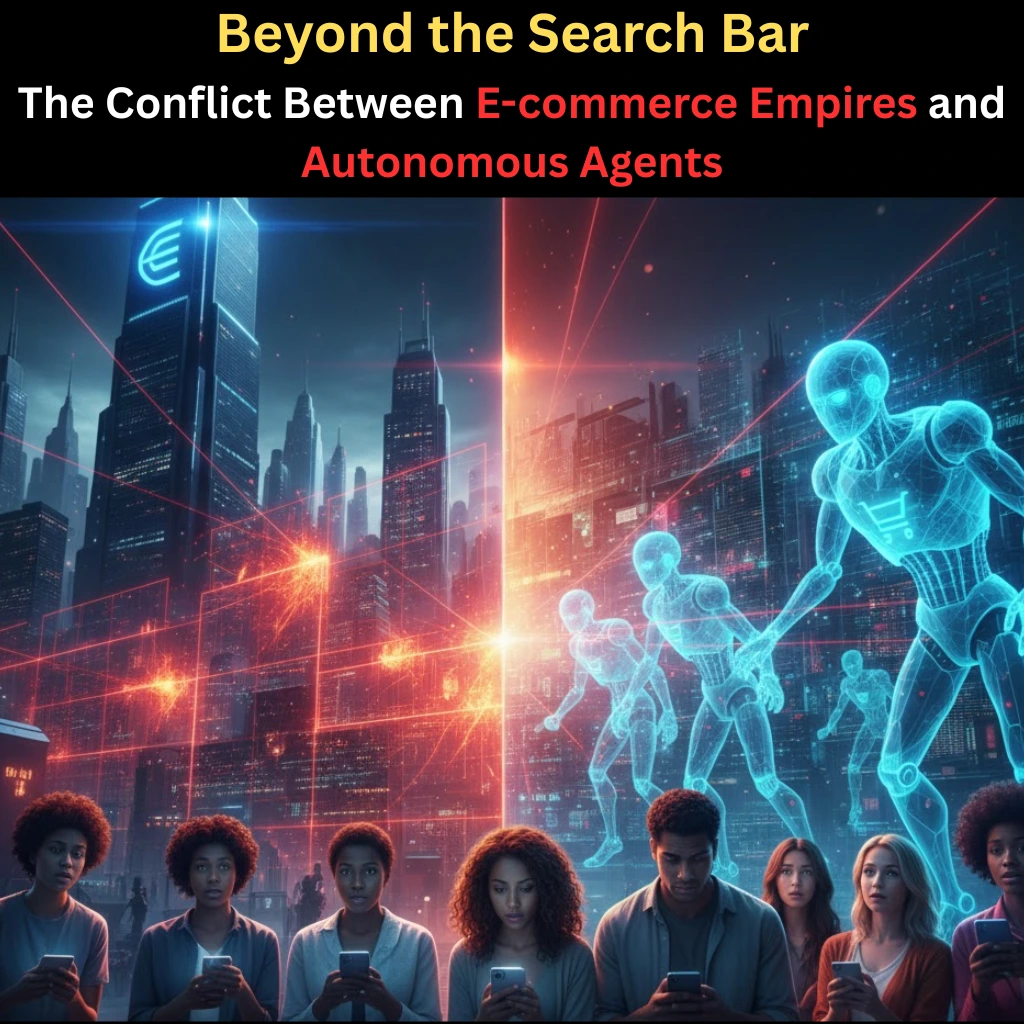
While the world is distracted by AI writing poetry and creating art, a high-stakes “Cold War” is quietly tearing apart the backend of the internet. We have officially entered a new era of digital conflict: The Great Platform War. On one side stand the trillion-dollar e-commerce empires; on the other, a new army of autonomous AI agents. The prize? Your wallet. The battlefield? That tiny “Buy Now” button. As we move deeper into 2026, this friction has reached a violent breaking point. Here’s why your shopping experience is about to become a war zone.
To understand the psychological shift behind this trend, check out our previous post on How AI Agents are Killing Traditional Shopping.
The Defensive Shield: Why Giants are Blocking Bots
For years, retail giants like Amazon, Walmart, and eBay have built “walled gardens.” They want you to stay on their apps, see their ads, and buy their sponsored products. However, new AI agents like Perplexity’s Comet and OpenAI’s Shopping GPT are breaking these walls.
It’s not just Amazon; every retail giant is picking a side. Discover the secret behind Walmart’s AI evolution and how it differs from the rest of the industry.
These bots “scrape” data, compare prices across the web in seconds, and checkout without the user ever seeing a single advertisement. In response, retail giants have started deploying advanced “Anti-Bot” firewalls. By blocking these agents, platforms are trying to force humans back into the traditional search-and-scroll loop.
The Legal Battle: Cease and Desist Orders
This isn’t just a technical fight; it’s a legal one. In late 2025 and early 2026, we’ve seen a surge in “Cease and Desist” letters being sent to AI startups. Retailers argue that these bots violate “Terms of Service” by accessing site data without permission.
The core of the argument? Data Sovereignty. Retailers believe their product listings, reviews, and pricing data belong to them, while AI companies argue that if the data is public, their agents should be able to “see” it on behalf of the user.
The Rise of “Homegrown” AI
Instead of letting third-party bots take over, retail giants are launching their own counter-attacks: Branded AI Agents. * Amazon’s Rufus and other proprietary tools are being upgraded to “Agentic” levels.
- The goal is simple: If you want to use an AI to shop, you must use their AI.
By building their own agents, retailers can ensure that the AI only recommends products that are profitable for the platform, effectively keeping the “Gatekeeper” power in their own hands.
What This Means for the Consumer
As a shopper, you are caught in the crossfire. On one hand, third-party AI bots offer unbiased price comparisons. On the other hand, retail-owned AI offers a “safer” and more integrated experience with guaranteed shipping and returns.
The winner of this war will determine the future of the internet: Will it be an Open Agentic Web where bots can shop anywhere, or a Fragmented Ecosystem where you need a different AI for every store?
FAQs
Find answers to common questions below.
Is it safe to let an AI bot shop for me?
Security is the biggest concern. While official agents from big companies are secure, third-party "scrapers" may not always handle your payment data with the same level of encryption.
Why can't I find Amazon products on some AI search engines?
This is likely due to the "Platform War." Amazon often blocks external AI bots from accessing its real-time inventory to protect its own ecosystem.
Will this war lead to higher prices?
Possibly. If retail giants successfully block price-comparison bots, it reduces transparency, which could allow platforms to keep prices higher without you noticing.
Can I still use manual search in 2026?
Yes, but it’s becoming slower and more ad-heavy. Retailers are making manual search "frustrating" to push users toward their own AI assistants.