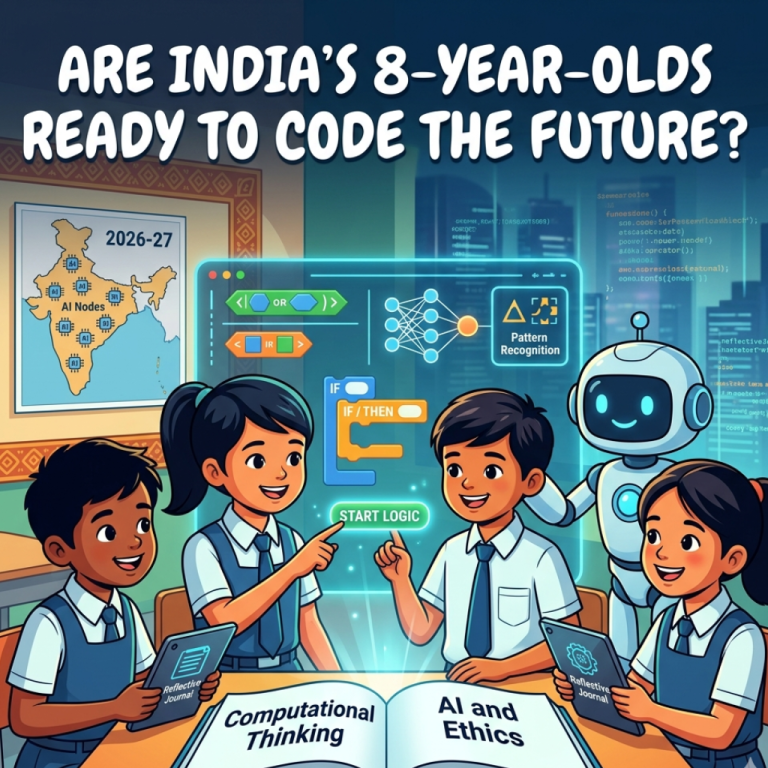
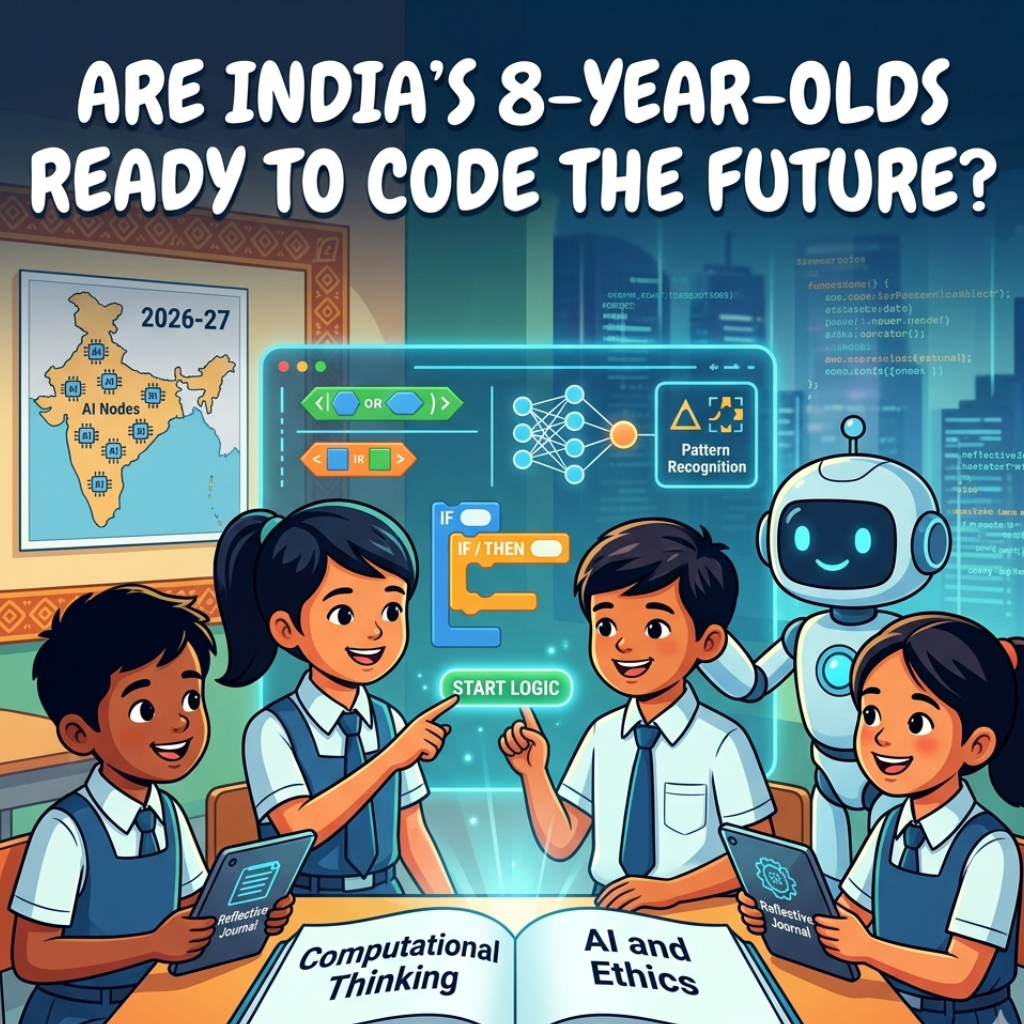
Could you imagine an eight-year-old explaining the logic behind a neural network before they’ve even mastered long division? It sounds like a scene from a sci-fi flick, but in India, this is about to become the classroom norm.
In a move that signals a massive shift in the country’s pedagogical DNA, Union Education Minister Dharmendra Pradhan has officially pulled the curtain back on a new AI and Computational Thinking curriculum. Set to roll out for Classes 3 to 8 starting from the 2026-27 session, this initiative isn’t just about adding another subject to an already heavy backpack-it’s about rewiring how the next generation thinks.
Why Now? The Push for “Future-Ready” Classrooms
We’ve moved past the era where “computer class” meant learning how to use Paint or type in Word. With the global economy pivotting toward automation and data-driven decision-making, the Ministry of Education is looking to bridge the gap between traditional schooling and industry demands.
According to the official announcement, the curriculum aims to move students from being mere consumers of technology to becoming its creators. But is the infrastructure ready? As noted in recent reports on CBSE’s future-ready AI curriculum, the success of this ambitious project hinges on more than just high-spec laptops. It requires a fundamental change in how teachers teach and how students reflect on their learning through reflective journals and assigned tasks.
Breaking Down the Syllabus: What’s Inside?
This isn’t a “one-size-fits-all” coding bootcamp. The CBSE has structured the modules to be age-appropriate, ensuring that a nine-year-old isn’t overwhelmed by complex syntax. Instead, the focus is on Computational Thinking (CT).
- Classes 3-5: Focuses on pattern recognition, sequencing, and basic problem-solving. Think of it as “logic games” that build the foundation for coding.
- Classes 6-8: Introduces data literacy, the ethics of Artificial Intelligence, and rudimentary programming.
- Project-Based Learning: Students won’t just sit for exams; they’ll build projects that solve real-world problems, making the abstract concept of “AI” tangible.
The big question remains: Are our teachers ready to pivot? Training tens of thousands of educators to move from standard textbooks to dynamic, AI-driven modules is a logistical mountain that the CBSE is currently climbing.
The Human Element: Beyond the Screen
One of the most refreshing aspects of this rollout is the emphasis on ethics and empathy. In a landscape where deepfakes and data privacy are constant concerns, the curriculum includes modules on “AI Ethics.”
Why does this matter? Because teaching a child how to build an algorithm is easy; teaching them why that algorithm shouldn’t be biased is the real challenge. By introducing these conversations early, India is betting on a future workforce that is not only tech-savvy but also socially responsible.
Final Thoughts: A Digital Renaissance or a Heavy Burden?
There’s no denying that the 2026-27 academic session will be a landmark year for Indian education. By integrating AI into the primary school level, the government is essentially saying that code is the new lingua franca.
However, the road ahead isn’t without its bumps. We have to consider the “digital divide.” Will a student in a rural government school have the same access to this “future-ready” curriculum as a student in a private metro school? For this vision to truly succeed, the hardware must reach the hands of every child, not just the privileged few.
So, are we looking at the birth of a new “Silicon Valley” generation? Only time-and the first batch of reflective journals-will tell. But one thing is certain: the Indian classroom is never going to look the same again.
FAQs
Find answers to common questions below.
Does my child need to know coding before Class 3?
Not at all. The curriculum starts with "unplugged" activities-think logic puzzles and pattern games-that build the mental muscles for coding without needing a screen right away.
Will this increase the "screen time" burden on young students?
It’s a valid worry. However, the CBSE framework emphasizes "Computational Thinking," which often involves offline problem-solving and collaborative projects rather than just staring at a monitor.
How will schools in rural areas implement this without high-speed internet?
The government plan includes "offline-first" modules and teacher training kits designed to ensure that the logic of AI can be taught even where the infrastructure is still catching up.
Is AI replacing traditional subjects like Math and Science?
Quite the opposite. Think of AI as a new "tool" in the belt. It’s designed to enhance how students approach Math and Science by helping them visualize data and automate repetitive calculations.