Artificial Intelligence is a world-class sprinter when it comes to drafting content, but it’s occasionally prone to “tripping” over the truth. We’ve all seen it: an AI confidently cites a law that doesn’t exist or attributes a famous quote to the wrong historical figure. These “hallucinations” aren’t just quirks; they are significant risks to your brand’s credibility.
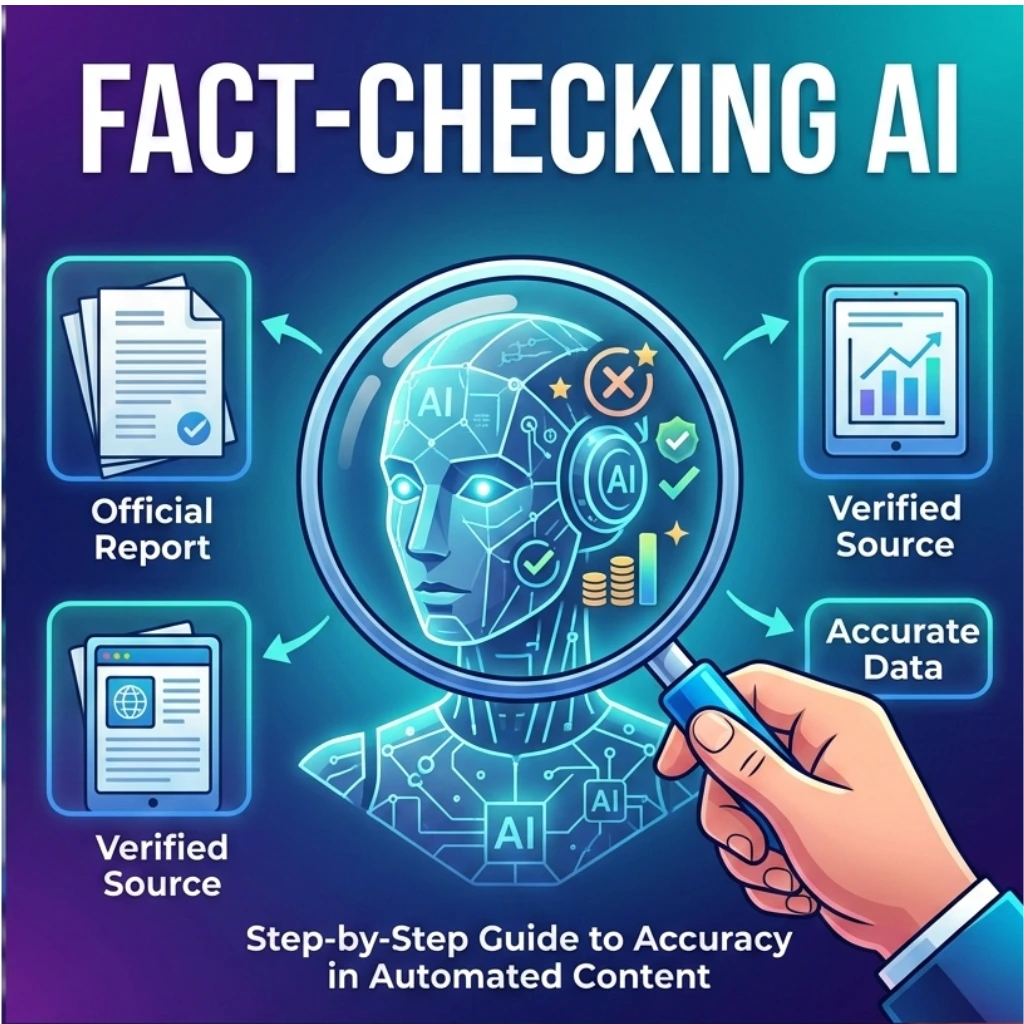
If you want to harness the speed of automation without sacrificing integrity, you need a robust framework for fact-checking AI. Here is your definitive, human-centered guide to keeping your silicon-based assistant honest.
Why Fact-Checking AI is Non-Negotiable
Large Language Models (LLMs) operate on probability, not a database of facts. They predict the next most likely word in a sentence. While they are incredibly sophisticated, they lack a “truth compass.”
- Protect Brand Authority: One viral inaccuracy can tank years of built-up trust.
- SEO Rankings: Google’s E-E-A-T (Experience, Expertise, Authoritativeness, and Trustworthiness) guidelines prioritize factual correctness.
- Legal Safety: Misleading advice, especially in medical or financial niches, carries real-world liability.
Phase 1: The Verification Workflow
1. Identify “High-Risk” Claims
Not every sentence needs a deep dive. Focus your energy on:
- Statistics and Data: Numbers are the first things AI tends to scramble.
- Proper Nouns: Names of people, companies, and specific product titles.
- Dates and Timelines: AI often blurs chronological events.
- Quotes: Models frequently “paraphrase” quotes into something the person never actually said.
2. The Rule of Three (Primary Sources)
Never let an AI verify itself. If you ask an AI, “Is this true?” it will often double down on its original mistake to remain conversational. Instead:
- Find the Source: Use a search engine to find the original study, press release, or official website.
- Triangulate: Confirm the fact across three independent, reputable outlets.
- Check the Date: Ensure the information hasn’t been superseded by more recent events (the “knowledge cutoff” issue).
3. Use Specialized Verification Tools
While manual checking is best, you can supplement your workflow with:
- Perplexity AI or Google Search: These tools cite their sources in real-time.
- Originality.ai / Winston AI: These can help flag sections that feel overly “robotic” and might require closer scrutiny.
Phase 2: Human-in-the-Loop Editing
The “Reverse Outline” Method
Read the AI output and create a bulleted list of every factual claim made. Once the “skeleton” of the facts is laid out, verify them one by one. This prevents you from getting swept up in the AI’s fluid, persuasive writing style.
Tone and Context
Check Accuracy isn’t just about dates and names; it’s about nuance. AI often misses the “gray areas” of a topic.
Pro Tip: Ask yourself, “Is this technically true but contextually misleading?” If the AI simplifies a complex legal ruling into a “yes/no” answer, you need to add the necessary “buts” and “howevers.”
Phase 3: Optimizing Prompts for Accuracy
You can reduce the need for heavy fact-checking by “priming” the AI better:
- Assign a Persona: You are a senior investigative journalist.
- Set Constraints: If you are unsure of a fact, state that you do not know.
- Request Citations: Include links to the sources used for these statistics.
Summary Checklist for Fact-Checking AI
| Step | Action | Objective | Highlight |
|---|---|---|---|
| Highlight | Mark all dates, names, and stats. | Identify targets. | Focus on key factual details. |
| Search | Use a non-AI search engine for verification. | Find primary sources. | Confirm accuracy from trusted sources. |
| Contextualize | Add nuance and expert commentary. | Humanize the content. | Provide deeper meaning and clarity. |
| Audit | Check for “hallucinated” URLs or fake citations. | Eliminate ghost sources. | Ensure credibility and reliability. |
Final Thoughts
The goal isn’t to stop using AI—it’s to become a better editor. Think of the AI as a brilliant but occasionally overconfident intern. You wouldn’t publish their first draft without a glance; the same rule applies here. By mastering fact-checking AI, you combine the efficiency of technology with the reliability of human judgment.
FAQs
Find answers to common questions below.
How do I know if an AI is lying?
AI doesn't lie; it hallucinates by predicting likely but false word patterns. Check for fake URLs, "perfect" quotes, or statistics that seem too specific without a citation.
What are AI hallucinations?
They are confident but incorrect statements made by AI. Fix them by grounding your prompts in specific source texts and manually verifying all proper nouns and data points.
Is AI content bad for SEO in 2026?
Only if it’s inaccurate. Google rewards E-E-A-T (Experience, Expertise, Authoritativeness, Trust). High-quality, fact-checked AI content ranks well; unverified "fluff" does not.
What are the best verification tools?
Use Google Search for primary documents, Perplexity AI for cited research, and Originality.ai to identify sections that require heavy human editing.
How do I fact-check ChatGPT effectively?
Use the Reverse Outline method: List every factual claim the AI made, then verify each one using a search engine. Never ask the AI to verify its own work.