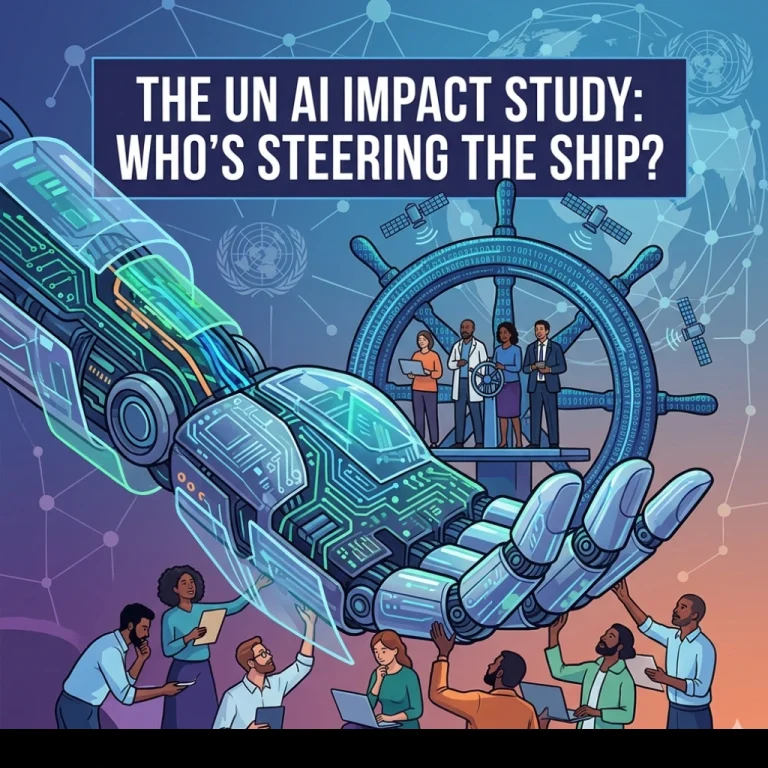
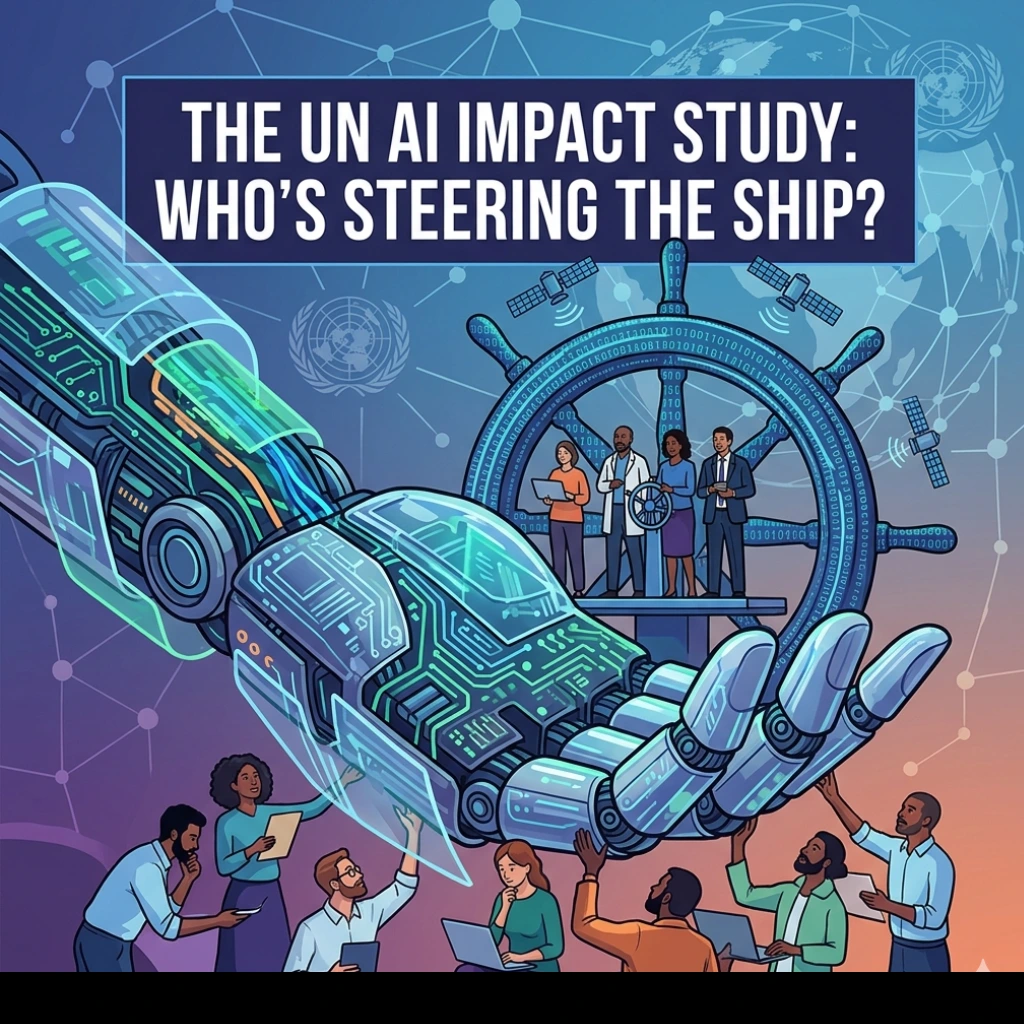
Ever wondered who’s actually steering the AI ship? It’s no longer just about chatbots writing emails. Algorithms now influence judicial rulings, healthcare, and global economies.
To address this, the United Nations has officially stepped into the arena. The UN’s Independent Scientific Panel on AI has launched its inaugural global impact study, a landmark move designed to ensure that as automation accelerates, human-centric decision-making remains the priority.
But can a global body really keep pace with the fastest-moving technology in history? Let’s dive into why this study matters and what it means for our digital future.
Beyond the Hype: Why a Global Scientific Study?
For the past few years, AI development has felt like a “move fast and break things” marathon. While private companies race for the next breakthrough, the global community has been left to grapple with the fallout-ranging from deepfakes to algorithmic bias.
The UN’s new initiative isn’t just another policy paper. It is a rigorous, evidence-based deep dive led by an independent panel of experts. As reported by Channel Africa, the focus is clear: evaluating how AI affects human rights, sustainable development, and global security.
Why is this a game-changer?
- Scientific Neutrality: Unlike corporate-led research, this study aims for an unbiased look at both the risks and the “superpowers” AI grants us.
- Global Inclusivity: It aims to bridge the gap between “AI-rich” and “AI-poor” nations, ensuring technology doesn’t widen the global inequality gap.
- Unified Standards: It seeks to create a shared “language” for AI safety that every country can adopt.
The “Human-Centric” Hurdle: Can Automation Have a Conscience?
The phrase “human-centric” gets tossed around a lot in tech circles, but what does it actually mean in practice? Essentially, it’s the idea that technology should serve people, not the other way around.
The UN panel is looking closely at human-in-the-loop systems. Think about it: if an AI decides who gets a loan or who is eligible for a visa, shouldn’t there be a human accountable for that decision? The study explores how we can maintain “meaningful human control” as systems become more autonomous.
Is it possible to enjoy the efficiency of a machine without losing the empathy and nuance of a human? This is the central question the panel is tackling. They are investigating how automation impacts labor markets, specifically focusing on “decent work” and ensuring that AI becomes a tool for empowerment rather than displacement.
Redefining Global Governance in the Age of Automation
This study is a direct response to the Global Digital Compact, a major UN initiative aimed at creating a “sustainable and inclusive” digital future. The panel’s findings will likely serve as the scientific backbone for future international treaties.
Recent trends show that governments are hungry for this data. From the EU AI Act to the White House Executive Orders, the world is moving toward regulation. However, without a unified scientific baseline, we risk a fragmented “splinternet” where AI rules vary wildly from one border to the next.
Key areas the study will investigate include:
- Data Sovereignty: Who owns the data used to train these “global” models?
- Environmental Impact: The massive energy consumption required to run large-scale AI data centers.
- Algorithmic Transparency: Breaking open the “black box” to understand how AI reaches its conclusions.
Final Thoughts: A Seat at the Table
At the end of the day, the UN’s global impact study is about more than just code and compute power-it’s about us. It’s a recognition that while technology is inevitable, its direction is not.
Will this study be the “IPCC moment” for AI? Just as the world came together to acknowledge climate science, we are now seeing a global effort to acknowledge the existential and societal shifts brought on by automation.
As we wait for the panel’s full report, one thing is certain: the era of “unchecked AI” is coming to an end. The question is no longer if we should regulate AI, but how we do it so that humanity remains in the driver’s seat.
What do you think? Are you comfortable with AI making decisions if there’s a “human-centric” framework in place, or do you think some things should always stay strictly in human hands?
FAQs
Find answers to common questions below.
What exactly is the UN Global AI Impact Study trying to solve?
It’s designed to bridge the gap between rapid tech development and human safety, ensuring that AI systems are grounded in scientific evidence, human rights, and ethical accountability.
Why does "human-centric" AI matter for the average person?
It ensures that when AI is used in critical areas-like hiring, healthcare, or law-there is still a "human in the loop" to prevent biased or cold algorithmic errors from ruining lives.
Will this study lead to new international laws?
While the UN doesn't pass local laws, this study provides the scientific "gold standard" that nations will use to build their own AI regulations and the Global Digital Compact.
How does this impact AI-poor nations?
One of the core goals is to prevent a "digital divide" where only wealthy nations benefit from AI, ensuring that the technology's impact is equitable and inclusive.