What if the next breakthrough treatment for cancer wasn’t found by a scientist staring through a microscope, but by an algorithm dreaming in 3D?
It sounds like science fiction, but for Takeda Pharmaceutical and Iambic Therapeutics, it’s a $1.7 billion reality. The two companies recently announced a massive multi-year strategic collaboration that aims to fundamentally change how we discover medicines for oncology and gastrointestinal diseases. According to recent reports, Takeda deepens its AI drug discovery push with this massive deal, signaling a major shift in how the industry approaches complex biology.
But why is a pharmaceutical giant like Takeda putting so much capital-and trust-into a startup’s AI model? Let’s break down why this deal is turning heads in both Silicon Valley and the biotech corridors of Tokyo.
Why the “Old Way” of Finding Drugs is Breaking
Before we look at the tech, we have to look at the problem. Historically, bringing a new drug to market is a gamble with terrible odds. It takes roughly 10 to 12 years and costs upwards of $2.6 billion, yet nearly 90% of drug candidates fail during clinical trials.
The bottleneck? Predicting how a tiny molecule will actually behave inside the complex machinery of a human cell.
This is where Iambic Therapeutics steps in. They aren’t just “using computers”; they are attempting to solve the geometry of biology. By leveraging their proprietary NeuralPLexer model, they want to turn the trial-and-error “wet lab” process into a precise digital simulation.
The Secret Sauce: What is NeuralPLexer?
You might be wondering: “Doesn’t every biotech claim to have a game-changing AI?” While many AI tools predict the static shape of a protein, Iambic’s NeuralPLexer does something much harder. It predicts protein-ligand structures and how they change shape when they interact.
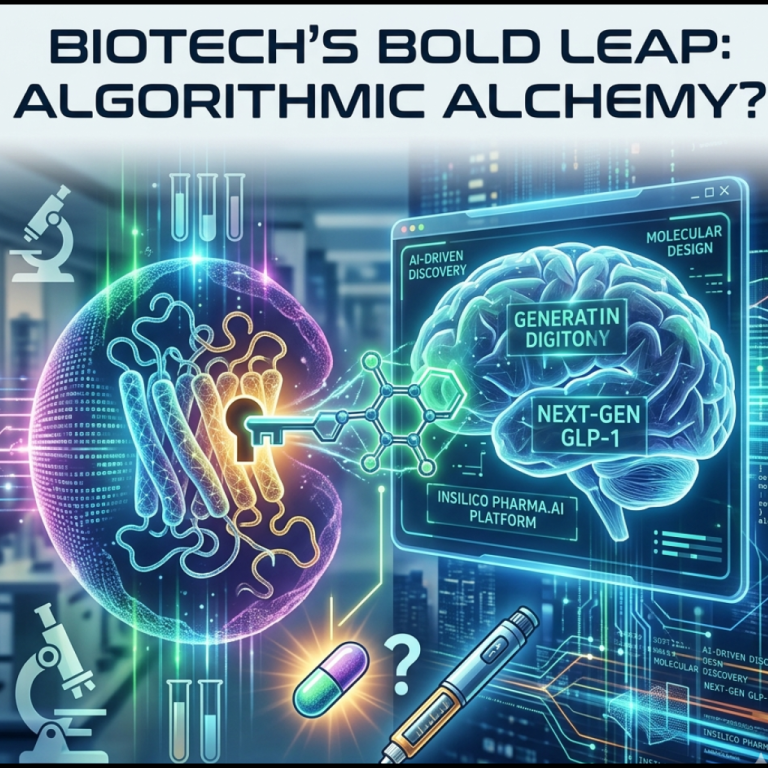
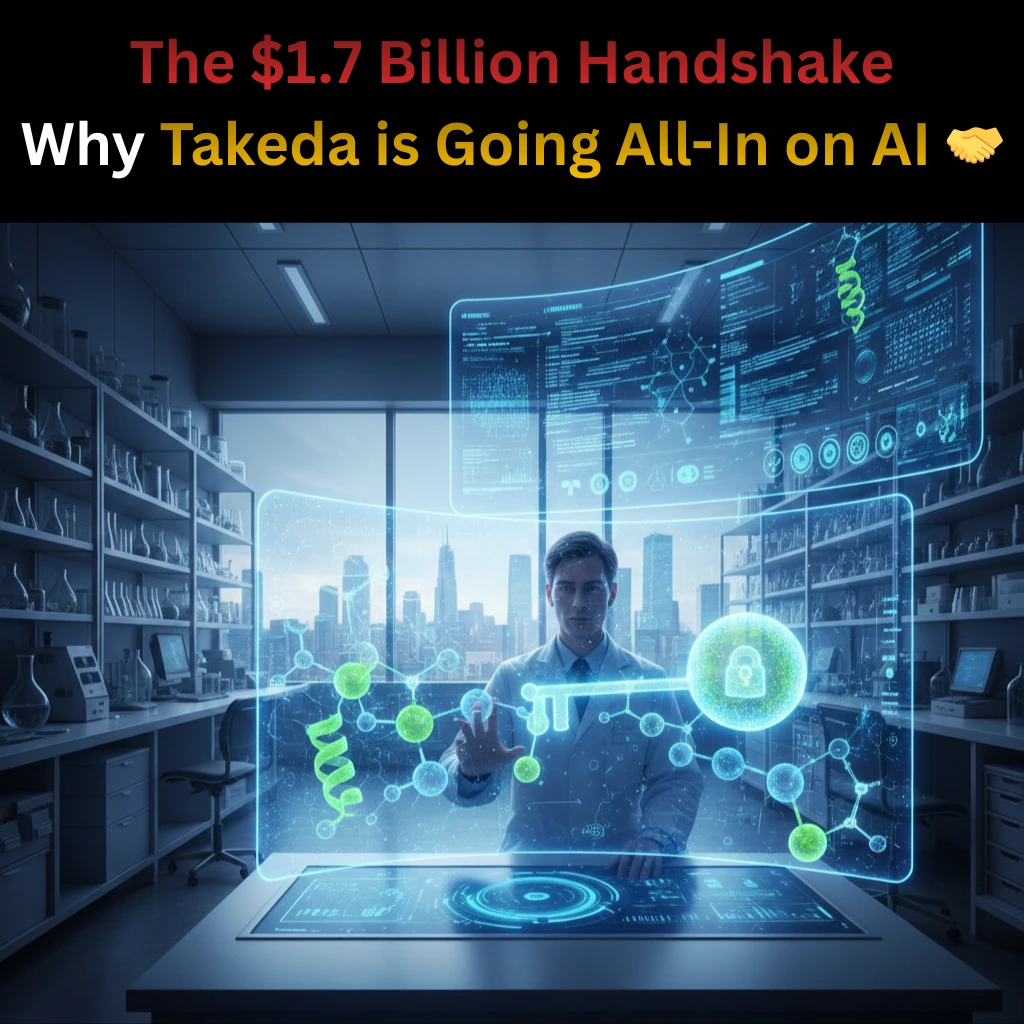
Think of it like this: most AI models take a still photo of a lock and key. NeuralPLexer provides a 3D video of the key turning the lock and the internal mechanisms moving in response.
Key highlights of the partnership:
- Massive Financial Commitment: The deal includes upfront payments and potential milestone payments exceeding $1.7 billion.
- Targeted Therapy: The focus is strictly on cancer and gastrointestinal (GI) diseases, areas where Takeda already holds a dominant market share.
- Beyond Screening: Iambic isn’t just identifying molecules; they are “generatively designing” them from scratch to fit specific biological targets that were previously considered “undruggable.”
Why Takeda is Doubling Down on AI
This isn’t Takeda’s first rodeo with artificial intelligence. The Japanese powerhouse has been aggressively “digitizing” its R&D pipeline for years. However, this partnership signals a shift from curiosity to core strategy.
By integrating Iambic’s generative AI into their ecosystem, Takeda is looking to:
- Slash Discovery Timelines: Reducing the time from “concept” to “clinical trial” by years.
- Improve Safety: Using AI to predict off-target toxicity before a single dose is ever manufactured.
- Unlock New Biology: Finding ways to attack cancer cells that traditional chemistry simply couldn’t visualize.
Is this the end of the traditional chemist? Not at all. It’s about giving those chemists a “superpower” to see through the fog of biological complexity.
Final Thoughts: A New Era of Precision
We are witnessing a “Gold Rush” in AI drug discovery. With Nvidia’s recent surges into biotech and Google’s AlphaFold 3 making waves, the race is on. But the Takeda-Iambic deal stands out because of its scale and specificity.
It’s no longer about if AI will design our medicine, but how fast it can get those medicines to the patients who are waiting. If this $1.7 billion bet pays off, the “undruggable” diseases of today might just become the preventable conditions of tomorrow.
What do you think? Is the $1.1 billion price tag a fair cost for a potential cure, or is the industry over-hyping the “AI savior” narrative? Only the clinical results will tell.
FAQs
Find answers to common questions below.
How does the NeuralPLexer model differ from traditional AI?
Unlike static models, it predicts the dynamic movement of proteins and ligands, essentially creating a "3D movie" of molecular interactions.
Why is Takeda focusing specifically on oncology and GI diseases?
These are complex areas with "undruggable" targets where traditional chemistry often fails, making them perfect for AI-driven precision.
Can AI actually reduce the cost of prescription medicine?
By slashing the 90% failure rate in clinical trials, AI drug discovery could significantly lower the multi-billion dollar R&D overhead for new treatments.