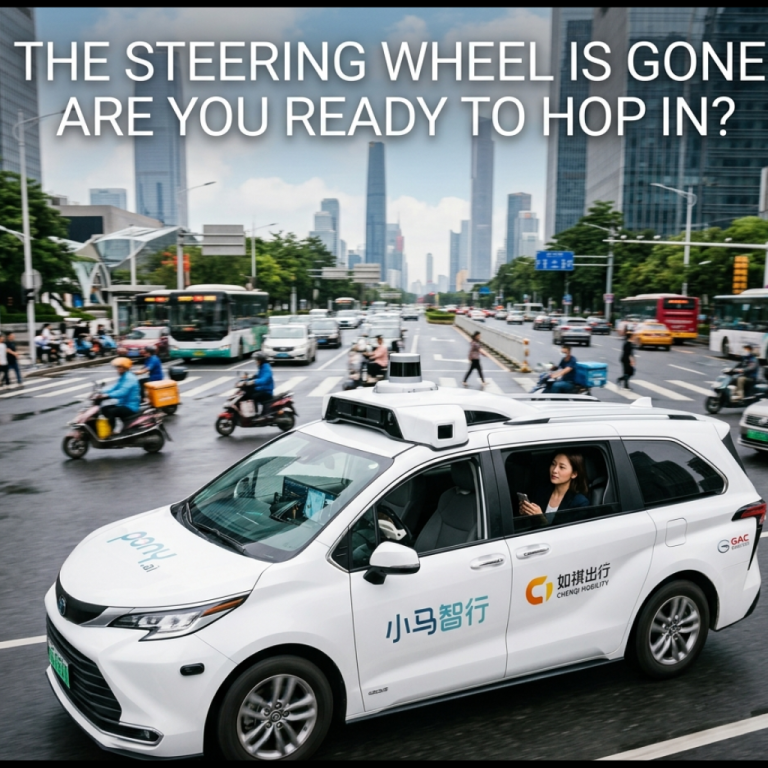
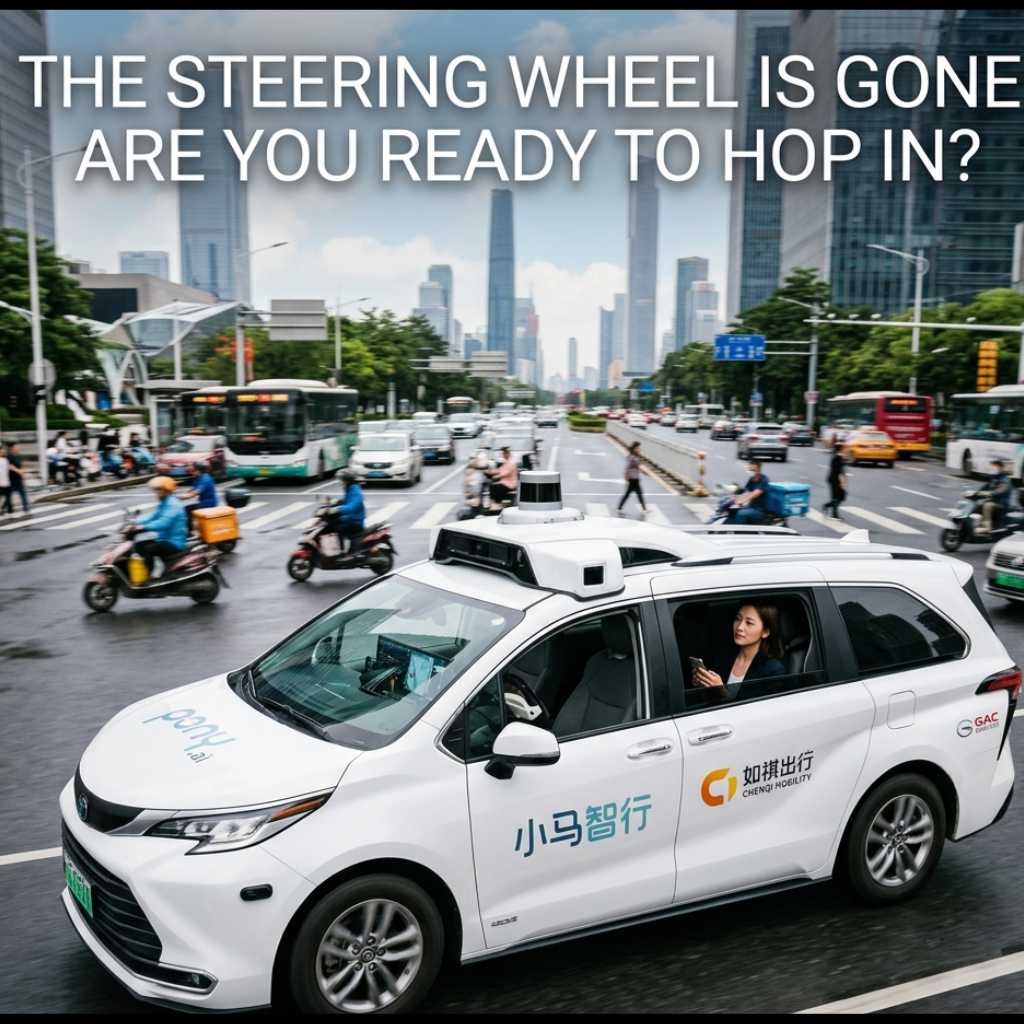
Have you ever looked at a passing car and realized there was no one behind the steering wheel? In Guangzhou, that sight isn’t just a sci-fi trope anymore-it’s becoming the new standard for morning commutes.
The landscape of urban transport just shifted gears. Pony.ai, a titan in the autonomous driving sector, has officially delivered its first batch of over 100 seventh-generation (Gen-7) Robotaxis to Guangzhou Chenqi Mobility. This isn’t just a pilot program or a small-scale test; it’s a full-throttle leap into the commercialization of driverless technology.
But what makes the Gen-7 different from the cars we’ve seen before? And more importantly, are we finally ready to trust the machine?
A Fleet Built for the Real World
When we talk about “Generation 7,” we aren’t just talking about a software update. These vehicles represent the culmination of millions of miles of real-world data. Unlike earlier prototypes that often looked like science experiments with spinning LIDARs glued to the roof, the Gen-7 fleet is sleek, integrated, and-dare we say-consumer-ready.
According to the official announcement from Pony.ai and Chenqi Mobility, these vehicles are designed to handle the “chaos” of urban Chinese traffic. Think about it: navigating through swarms of electric delivery scooters, unpredictable pedestrians, and heavy rain.
Key features of the Gen-7 rollout include:
- Redundant Safety Systems: Multiple backups for braking, steering, and power to ensure the car never loses control.
- Multi-Sensor Fusion: A sophisticated blend of solid-state LIDAR, cameras, and millimeter-wave radar for 360-degree perception.
- Deep Platform Integration: The vehicles are synced directly with Chenqi Mobility’s dispatching system, making the user experience as seamless as calling a standard Didi or Uber.
Why Guangzhou is the Global Testing Ground
You might wonder, why Guangzhou? Why not Silicon Valley or Phoenix? While the US has companies like Waymo, China has turned the Greater Bay Area into a massive “living lab” for AI.
The partnership between Pony.ai and Chenqi Mobility (a platform backed by automotive giant GAC Group) is a strategic masterstroke. It combines Pony.ai’s “driver” (the AI software) with Chenqi’s massive user base. This collaboration solves the biggest hurdle in autonomous driving: Scale. By putting 100 vehicles on the road at once, they are gathering more data in a week than most startups gather in a year. They are essentially teaching the AI how to “think” like a local driver in one of the world’s most complex driving environments.
Beyond the Hype: The Business of Moving People
Is this just a tech flex, or is there a real business model here? For years, the knock on Robotaxis was the cost. Earlier generations cost hundreds of thousands of dollars per unit. However, the Gen-7 is built with mass production in mind.
By reducing the cost of the sensor suite and utilizing GAC’s automotive manufacturing prowess, Pony.ai is moving toward a world where a Robotaxi ride might actually be cheaper than owning a car.
What does this mean for the average commuter?
- Lower Costs: No driver salary means lower fare prices in the long run.
- Safety: AI doesn’t get tired, distracted, or angry (no road rage here!).
- Efficiency: Better routing and smoother acceleration can significantly reduce urban congestion.
Final Thoughts: Are You Ready to Hop In?
The delivery of over 100 Gen-7 vehicles marks the end of the “experimental” era. We are entering the “operational” era. As these cars blend into the traffic of Guangzhou, the question is no longer if autonomous driving will happen, but how quickly it will expand to the rest of the world.
Would you feel comfortable catching up on emails or taking a nap while your car navigates a five-lane intersection? It might feel a bit eerie at first, but if the Gen-7 performs as promised, the steering wheel might soon become a relic of the past.
The future isn’t just coming; it’s already been dispatched to your location.
FAQs
Find answers to common questions below.
Will the Gen-7 Robotaxi be safer than a human driver?
With a redundant "Level 4" safety architecture and a multi-sensor fusion suite, the Gen-7 is designed to eliminate human errors like distraction and fatigue, even in dense urban traffic.
How does the Pony.ai and Chenqi Mobility partnership work?
It’s a "software meets scale" strategy. Pony.ai provides the autonomous "AI Driver," while Chenqi Mobility handles the massive ride-hailing network and fleet operations.
When can I ride in a Gen-7 Robotaxi?
The first batch of 100+ vehicles is currently active in Guangzhou, China. As the fleet scales, the goal is to expand these commercial driverless services to other major Tier-1 cities.
What makes the 7th-generation different from previous models?
The Gen-7 is the first fleet built for high-volume production, featuring integrated automotive-grade hardware and lower manufacturing costs to make robotaxis commercially viable.