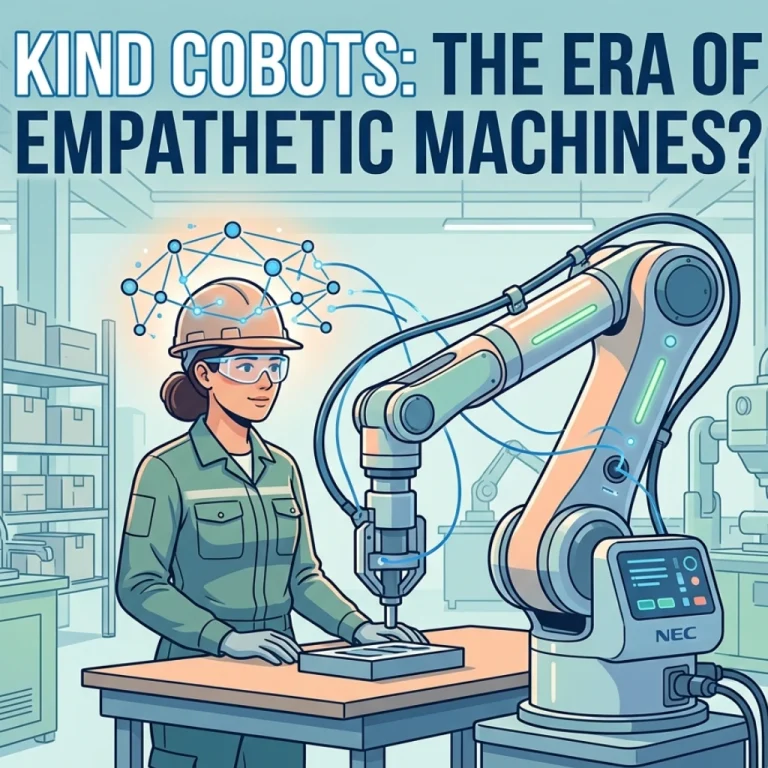
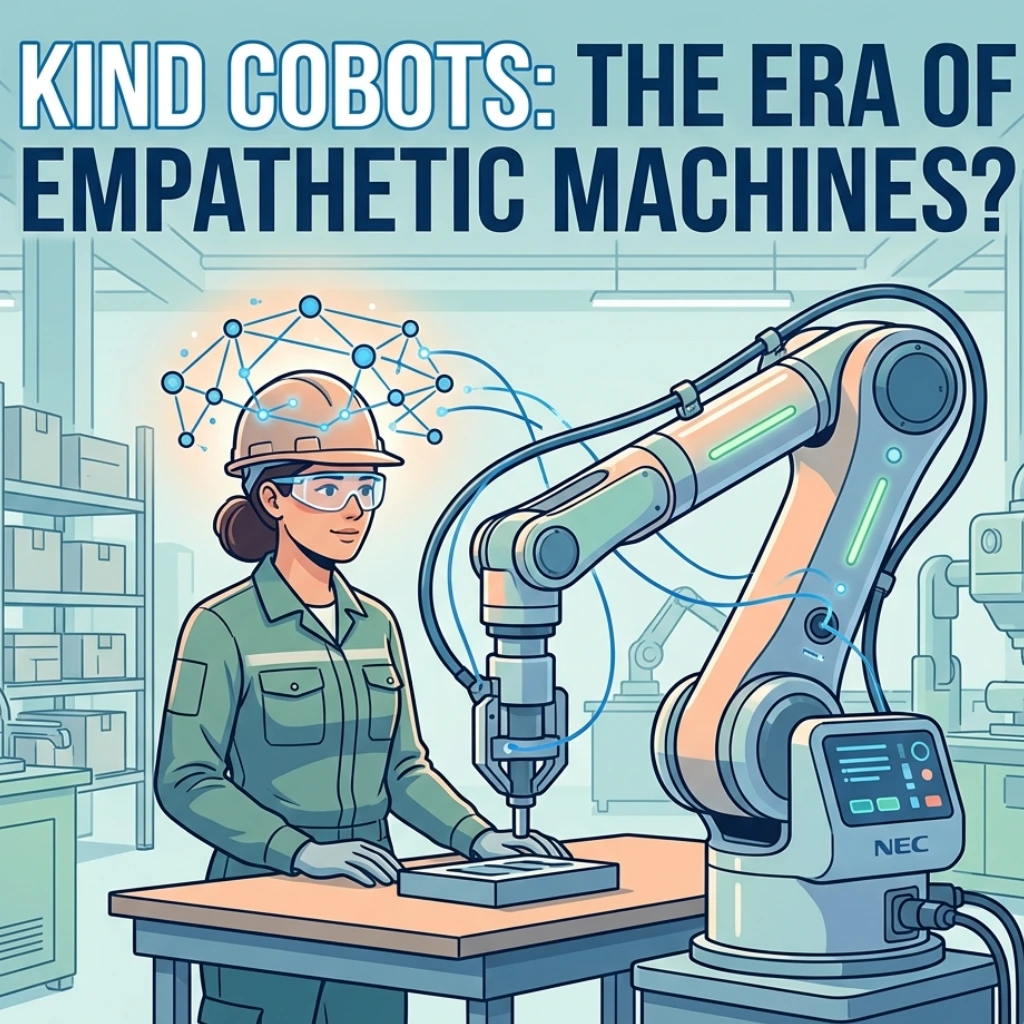
Have you ever felt that slight pang of anxiety when a heavy industrial robot swings just a bit too close to you at work? Or perhaps you’ve experienced the frustration of a machine moving at a pace that simply doesn’t match your own?
For decades, the “Physical AI” in our factories and warehouses has been efficient, but incredibly blunt. It followed a script. It saw obstacles, but it didn’t see people. That is, until now.
NEC Corporation has officially pulled back the curtain on a first-of-its-kind “Stress-Aware” Physical AI. This isn’t just another software update; it’s a fundamental shift in how machines perceive the humans they work alongside.
Why Does Your Robot Need to Know You’re Stressed?
In a typical collaborative workspace, safety is measured by distance. If a human gets too close, the robot stops. Simple, right? But NEC realized that safety isn’t just about physical contact; it’s about psychological comfort.
According to the official announcement, that predicts human movement and psychological states.
Think about it: if a robot moves abruptly, your heart rate might spike, or you might hesitate in your next task. This “micro-stress” builds up, leading to fatigue and burnout. NEC’s new system uses advanced sensors and proprietary algorithms to:
- Monitor non-verbal cues: Predicting where a human will move before they actually step there.
- Gauge psychological tension: Adjusting its speed and trajectory based on the estimated stress level of the worker. B
Ridging the Gap Between Logic and Emotion
How does a machine actually “feel” a human’s vibe? The technology utilizes multimodal sensing. It combines visual data (computer vision) with movement patterns to create a real-time “stress map” of the environment.
If the AI detects that a worker is rushing or showing signs of nervousness, the robot might widen its path or slow its movements to provide more “breathing room.” Conversely, if the worker is confident and moving efficiently, the robot maintains its peak performance.
This creates a symbiotic flow. Instead of the human adapting to the machine, the machine finally learns to adapt to the human. Isn’t that what true collaboration should look like?
Beyond the Factory Floor: Where Else Could This Go?
While the initial rollout targets logistics and manufacturing, the implications for Stress-Aware Physical AI are massive. We are looking at a future where this tech could be integrated into:
- Healthcare: Robots assist the elderly by sensing agitation and moving with increased gentleness to avoid startling them.
- Public Spaces: Security or service robots in crowded airports could navigate around anxious travelers without adding to the chaos.
- Retail: Delivery bots could recognize a frustrated customer and change their interaction style.
NEC is positioning this as a cornerstone of their “Human-Centric AI” philosophy. By making robots more empathetic-or at least better at simulating empathy-we remove the “uncanny valley” of mechanical interaction.
Final Thoughts: A New Era of Co-existence
We’ve spent years worrying about robots taking our jobs. Perhaps it’s time to start talking about how they can make those jobs less taxing. NEC’s breakthrough suggests that the next generation of AI won’t just be smarter or faster; it will be kinder.
By prioritizing the mental well-being of the worker, NEC is setting a new industry standard. After all, a workplace where humans and machines work in harmony isn’t just more productive-it’s more human.
What do you think? Would you feel more comfortable working next to a robot that “knows” when you’re having a bad day? The era of emotional machines has officially arrived.
FAQs
Find answers to common questions below.
Can a robot actually read my emotions?
While it doesn't "feel" like a human, NEC’s Stress-Aware Physical AI uses multimodal sensors to analyze your movements and non-verbal cues to estimate your psychological tension in real-time.
Will this make collaborative robots slower?
Actually, it’s designed for efficiency. By predicting human movement, the AI allows robots to maintain a smooth flow, slowing down only when it detects high stress or unpredictable movement to ensure a safer, more natural workflow.
Is my personal data safe with a "stress-reading" robot?
The system focuses on physical kinetics and environmental interaction rather than personal identification, prioritizing workplace safety and ergonomics over individual data tracking.
What happens if I’m just having a bad day?
The AI adapts! If your movements are hesitant or erratic due to fatigue, the Physical AI compensates by providing more clearance and adjusting its speed to prevent further cognitive load or accidents.