The race for Artificial General Intelligence (AGI) just took a sharp, high-speed turn. While most of the industry was busy debating the incremental updates of existing LLMs, Meta decided to move the goalposts entirely.
Mark Zuckerberg’s empire officially pulled back the curtain on Muse Spark, the debut model emerging from its secretive and highly ambitious Superintelligence Lab. This isn’t just another chatbot or a slightly faster image generator. It represents a fundamental shift in how Meta views the future of silicon-based thought.
But what makes Muse Spark different from the Llama models we’ve grown to love? According to Fortune’s latest coverage of the unveiling, this is the first step in a “full-throttle” push toward systems that don’t just predict the next word, but actually reason through complex human dilemmas.
The Birth of the Superintelligence Lab
For months, rumors swirled about a “Manhattan Project style” division within Meta. We now know it as the Superintelligence Lab. While Meta’s FAIR (Fundamental AI Research) team continues to focus on open-source excellence, the Superintelligence Lab has a singular, more aggressive mission: autonomous reasoning.
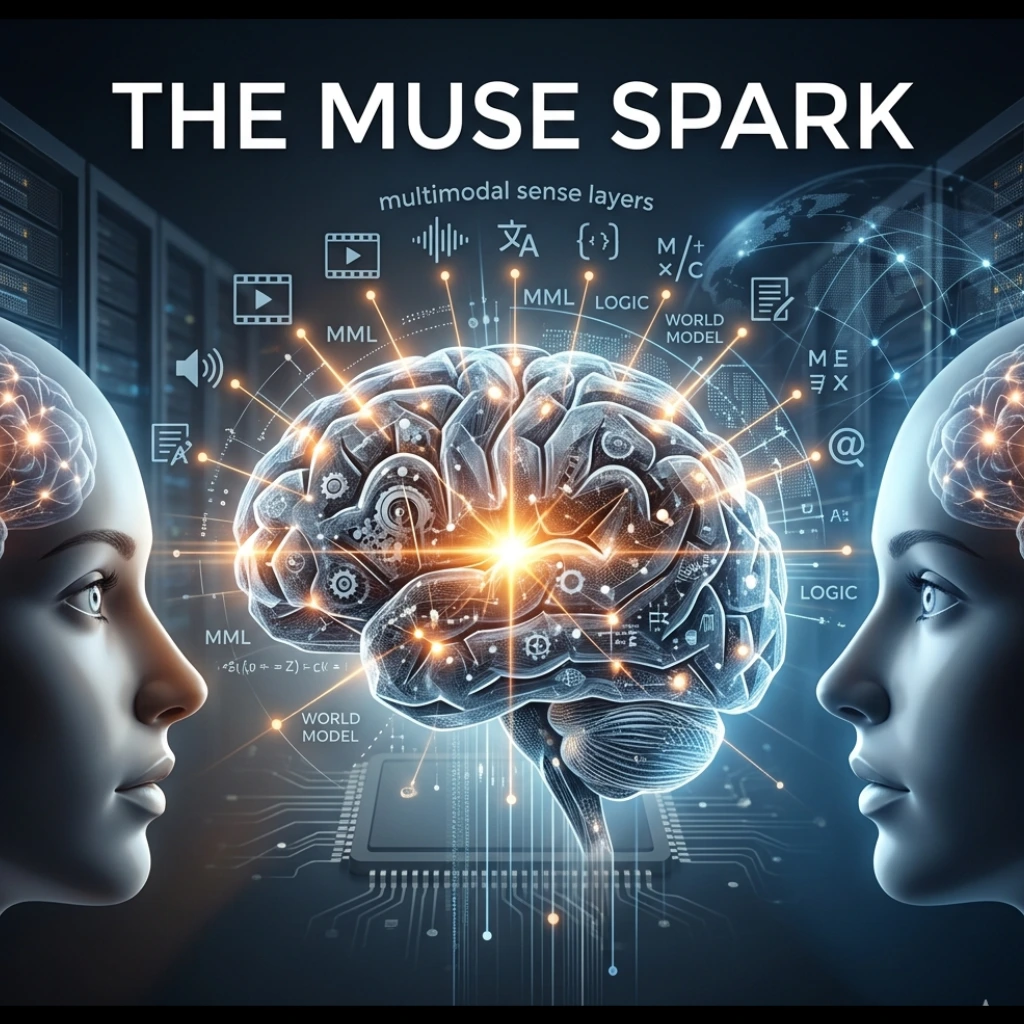
Muse Spark is the “spark” that starts this fire. It is designed with a new architecture that departs from standard transformer models. Instead of simply processing data, it utilizes a “world-model” approach, allowing the AI to simulate outcomes before it speaks.
Have you ever wondered why AI often hallucinates? It’s because it doesn’t “understand” gravity, time, or social consequences. Muse Spark aims to fix that. It marks Meta’s transition from building “stochastic parrots” to building cognitive partners.
Key Features: What’s Under the Hood?
Meta isn’t just releasing a model; they are releasing a statement. Muse Spark introduces several “industry firsts” that have competitors at OpenAI and Google taking notes:
- Multimodal Logic (MML): Unlike models that “bolt on” vision and audio, Muse Spark was trained natively across all senses simultaneously. It understands a video not just as a sequence of frames, but as a causal event.
- Deep Reasoning Layers: The model uses a “Think-Before-You-Speak” protocol, drastically reducing errors in coding and mathematical proofs.
- Real-time Adaptive Memory: It doesn’t just forget the conversation after the session ends. It builds a persistent, secure context of a user’s preferences (with heavy emphasis on privacy, of course).
- The “Spark” Efficiency: Despite its power, the model is remarkably lean, designed to eventually run on next-gen Meta glasses and mobile hardware.
Is This the End of “Old School” AI?
We’ve spent the last few years getting used to AI that helps us write emails or summarize PDFs. But is that really all we want?
Muse Spark suggests that the “Assistant Era” is ending and the “Agent Era” is beginning. We are moving toward a world where your AI doesn’t just draft a meeting invite; it understands the nuance of why the meeting is happening and can proactively suggest solutions to the roadblocks mentioned in your previous files.
The strategic pivot by Mark Zuckerberg highlights a massive investment in H100 and B200 GPUs, signals that Meta is no longer playing catch-up. They are playing for the win. By integrating Muse Spark across the Meta ecosystem-WhatsApp, Instagram, and the Metaverse-they are putting superintelligence into the pockets of billions.
Final Thoughts: A New Chapter or Just More Hype?
The announcement of Muse Spark feels different. It feels like the moment the industry stopped trying to mimic humans and started trying to solve the problems humans can’t.
Can an AI truly possess “spark”? Can it innovate rather than just imitate? While the “Superintelligence” label is bold-perhaps even provocative-Meta is betting billions that Muse Spark will prove the skeptics wrong.
As we watch the rollout over the coming weeks, one question remains: Are we ready for an AI that thinks faster than we do? One thing is for sure: the quiet days of simple chatbots are officially over. Welcome to the era of the Spark.
FAQs
Find answers to common questions below.
Is Muse Spark just an upgrade to Llama?
No. While Llama is an excellent open-source LLM, Muse Spark is built on a new "world-model" architecture designed for native reasoning rather than just text prediction.
What does "Superintelligence Lab" actually mean?
It is Meta's dedicated division focused specifically on achieving Artificial General Intelligence (AGI) by creating models that can simulate real-world physics and logic.
Can Muse Spark run on my phone?
Meta has designed the "Spark" architecture to be highly efficient, with the goal of powering future smart glasses and mobile devices with local, high-level reasoning.
How does Muse Spark handle user privacy?
The model introduces "Real-time Adaptive Memory," which is built to create a personalized experience while utilizing Meta's latest encrypted data-handling protocols.