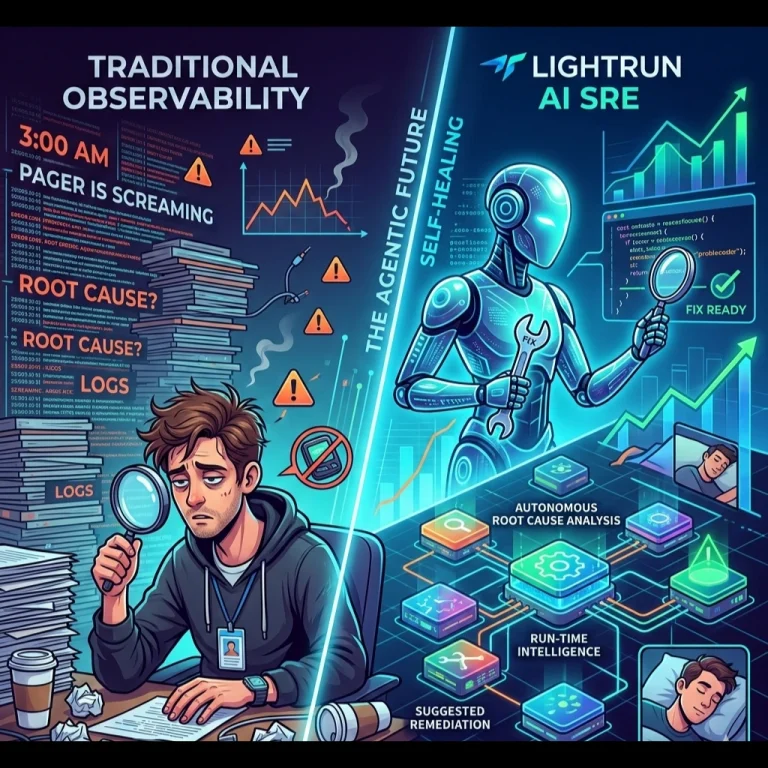
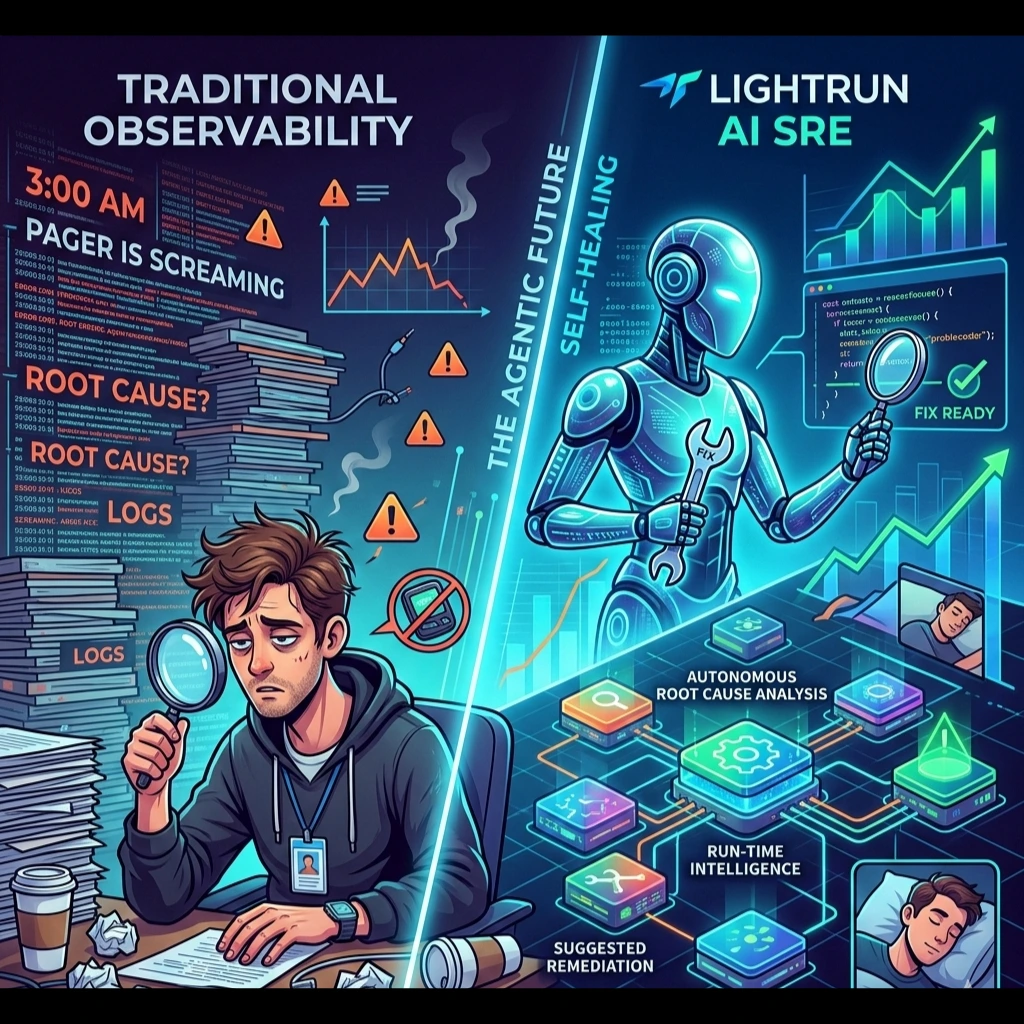
We’ve all been there. It’s 3:00 AM, the pager is screaming, and somewhere in a complex web of microservices, a production error is wreaking havoc. You’re digging through mountain-high stacks of logs, praying for a breakthrough. But what if the system could diagnose itself, find the root cause, and suggest a fix before you even rub the sleep out of your eyes?
On February 25, Lightrun stepped into the spotlight to turn that “what if” into a reality. With the launch of Lightrun AI SRE, the company is moving beyond simple observability and pushing into the era of autonomous remediation.
Why Traditional Observability is Failing Modern Devs
Let’s be honest: our current debugging toolkit is getting a bit dusty. We’ve spent years relying on “static” snapshots of data. When an error occurs, we look at logs that happened in the past or traces that don’t always give the full picture.
Why are we still guessing what happened in production? The gap between identifying a problem and actually understanding the live runtime context is where most of our engineering hours (and sanity) disappear. Lightrun’s new tool aims to bridge this gap by acting as an autonomous agent that doesn’t just watch the smoke-it finds the fire and hands you the extinguisher.
How Lightrun AI SRE Changes the Game
According to a recent report by InfoWorld on Lightrun’s AI SRE unveiling, this isn’t just another dashboard. It is a specialized AI agent designed to live within the Software Development Life Cycle (SDLC).
Here is how it actually works under the hood:
- Runtime Intelligence: Unlike standard AI bots that just read your source code, this tool analyzes live application state. It sees the variables, the memory, and the actual execution flow as the error happens.
- Autonomous Root Cause Analysis (RCA): Instead of a human spending four hours correlating logs, the AI identifies the specific line of code causing the bottleneck or crash in seconds.
- Suggested Remediation: It doesn’t just say “it’s broken.” It provides a validated fix based on the real-time data it gathered, significantly reducing the Mean Time to Repair (MTTR).
Is This the “Agentic” Future of Software Engineering?
We are currently seeing a massive shift from “Copilots” (which help you write code) to “Agents” (which perform tasks for you). Lightrun is positioning itself at the forefront of this Agentic Workflow.
But does this mean SREs are going out of style? Not exactly. Think of it more like an upgrade. By handling the “grunt work” of production debugging, human engineers can focus on architecture, security, and scaling-the things that actually require human intuition and creativity.
Can you imagine a world where “debugging in production” is no longer a phrase that strikes fear into the hearts of junior devs? With AI-powered SRE tools, we are moving toward self-healing infrastructure that learns from every crash.
Final Thoughts: A New Standard for Reliability
The release of Lightrun AI SRE marks a pivot point for the industry. We are moving away from reactive monitoring and toward proactive, autonomous engineering.
As systems become too complex for any one human to fully grasp, having an AI that understands the live runtime context isn’t just a luxury-it’s becoming a necessity. Whether you’re a startup founder or a lead architect at a Fortune 500, the goal remains the same: spend less time fixing the past and more time building the future.
Are you ready to hand over the pager to an AI? It might be the best night’s sleep you’ve had in years.
FAQs
Find answers to common questions below.
Does Lightrun AI SRE actually write code fixes?
Yes. By analyzing the live runtime state-not just static logs-it identifies the exact root cause and suggests a validated remediation that matches the current application context.
How is an "AI SRE" different from a standard LLM?
While a standard LLM guesses based on patterns, an AI SRE agent has "eyes" on your production environment. It uses real-time execution data to ensure its suggestions are grounded in reality, not hallucinations.
Can this tool replace a human SRE team?
Think of it as an "Exoskeleton" rather than a replacement. It handles the repetitive, data-heavy forensic work of debugging, allowing human engineers to focus on high-level architecture and security.
Is it safe to let an AI fix production errors?
The tool works within a governed Agentic SDLC. While it finds and suggests fixes autonomously, teams can set guardrails to ensure every change is reviewed before it hits the live environment.