
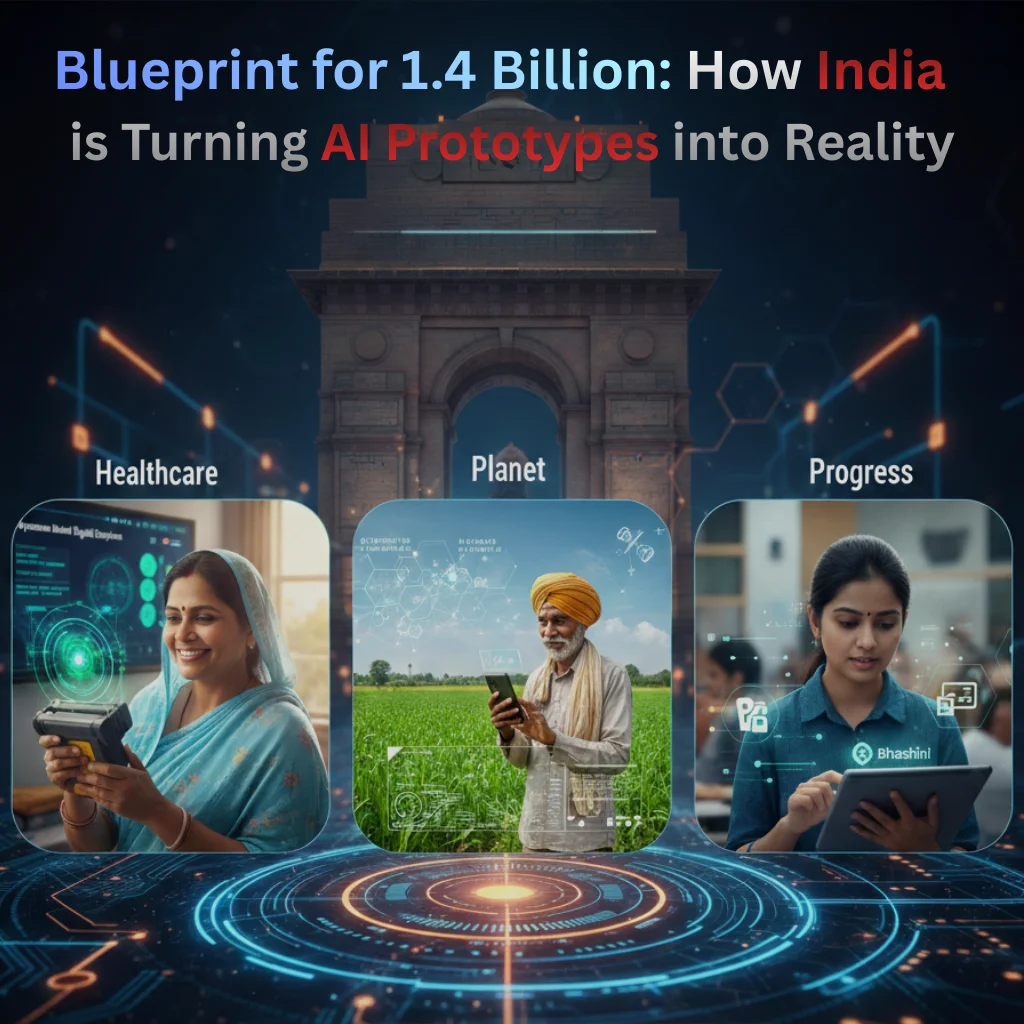
The buzz in India’s tech corridors is no longer just about “what AI can do.” We’ve seen the demos, we’ve played with the chatbots, and we’ve marveled at the potential. The real question now is: How do we make it work for 1.4 billion people?
From February 16–20, 2026, New Delhi will become the epicenter of this conversation as it hosts the India AI Impact Summit. This isn’t just another tech conference with flashy lights and buzzwords. It is a strategic gathering curated around three foundational pillars: People, Planet, and Progress. But what does “scaling AI” actually look like in a country as diverse as India?
Breaking the Prototype Barrier in Healthcare
For years, we’ve seen brilliant AI prototypes capable of detecting early-stage tuberculosis or scanning retinas for diabetic retinopathy. The problem? Most of these tools stay trapped in high-end labs or urban pilot programs.
The 2026 Summit will bridge the “pilot-to-pavement” gap. The focus is on integrating AI into the Ayushman Bharat digital ecosystem, ensuring that a diagnostic tool developed in Bengaluru can function seamlessly in a rural clinic in Bihar.
- Scalable Diagnostics: Moving AI tools into handheld devices for frontline ASHAs (Accredited Social Health Activists).
- Predictive Analytics: Using data to stay ahead of seasonal disease outbreaks before they become crises.
Is it possible to provide world-class healthcare to the last mile without a thousand new hospitals? The Summit’s healthcare track suggests that with AI, the answer is a resounding yes.
Agriculture: Can AI Secure India’s Food Future?
India’s farmers are currently battling unpredictable climate patterns and depleting groundwater. At the Summit, the “Planet” pillar takes center stage, focusing on AI-driven precision agriculture.
The goal is to move beyond generic weather reports. Imagine a small-scale farmer receiving a WhatsApp notification powered by satellite data and AI telling them the exact hour to sow seeds or the precise amount of fertilizer needed for their specific plot of land.
By targeting small and micro-enterprises (SMEs) within the agri-tech space, the government aims to democratize access to high-tech tools. This isn’t just about big tractors; it’s about smart data for small hands.
Governance and the ‘People’ Pillar
Perhaps the most ambitious part of the 2026 agenda is the focus on AI in Governance. We are talking about making the state more “intelligent” and less bureaucratic.
How many hours do citizens lose navigating government portals? The Summit will showcase AI interfaces that allow users to access services via voice commands in their local dialects. Whether it’s applying for a ration card or checking land records, the barrier of digital literacy is being dismantled by conversational AI.
Key areas of focus include:
- Bhashini Integration: Real-time translation to ensure language is no longer a barrier to digital India.
- Automated Grievance Redressal: AI systems that categorize and escalate citizen complaints without human bias or delay.
Why 2026 is the “Make or Break” Year
The timing of this summit is critical. As India positions itself as a global leader in the Global Partnership on Artificial Intelligence (GPAI), the world is watching to see if a developing nation can lead the “AI for All” movement.
The event will also address the elephant in the room: Ethical AI and Data Privacy. You can’t scale AI in governance without ironclad trust. The summit is expected to release updated frameworks for responsible AI usage, ensuring that progress doesn’t come at the cost of personal liberty.
Final Thoughts: A Blueprint for the Global South
The India AI Impact Summit 2026 isn’t just about India. It’s about creating a blueprint for the Global South. If India can successfully scale AI in the chaos and complexity of its own backyard, these solutions can be exported to Africa, Southeast Asia, and beyond.
We are moving away from the era of “AI experimentation” and entering the era of AI implementation. As we look toward February, one thing is clear: the future of India won’t just be built with bricks and mortar, but with code, data, and a commitment to human-centric progress.
FAQs
Find answers to common questions below.
Is the India AI Impact Summit 2026 open to the public?
While the summit is a high-level strategic event for policymakers and tech leaders, many sessions focusing on SME empowerment and agri-tech innovations will be live-streamed to encourage grassroots participation.
How does this summit differ from previous AI events in India?
Unlike previous years that focused on "potential," 2026 is about execution. The summit specifically targets the "pilot-to-pavement" gap, ensuring AI tools work in rural settings, not just urban labs.
Will there be a focus on job displacement?
Actually, a core part of the "People" pillar focuses on AI augmentation. The goal is to see how AI can help frontline workers, like ASHA workers and farmers, do their jobs more efficiently rather than replacing them.
Actually, a core part of the "People" pillar focuses on AI augmentation. The goal is to see how AI can help frontline workers, like ASHA workers and farmers, do their jobs more efficiently rather than replacing them.
Yes! A major segment of the event is dedicated to scaling micro-enterprises, providing a platform for startups to integrate their solutions into the national digital ecosystem.