Think about the last time you walked into a bank or logged into your mobile app. Did it feel like you were interacting with a powerhouse of Silicon Valley-level tech, or just a digital ledger? For HSBC, the answer is shifting rapidly toward the former.
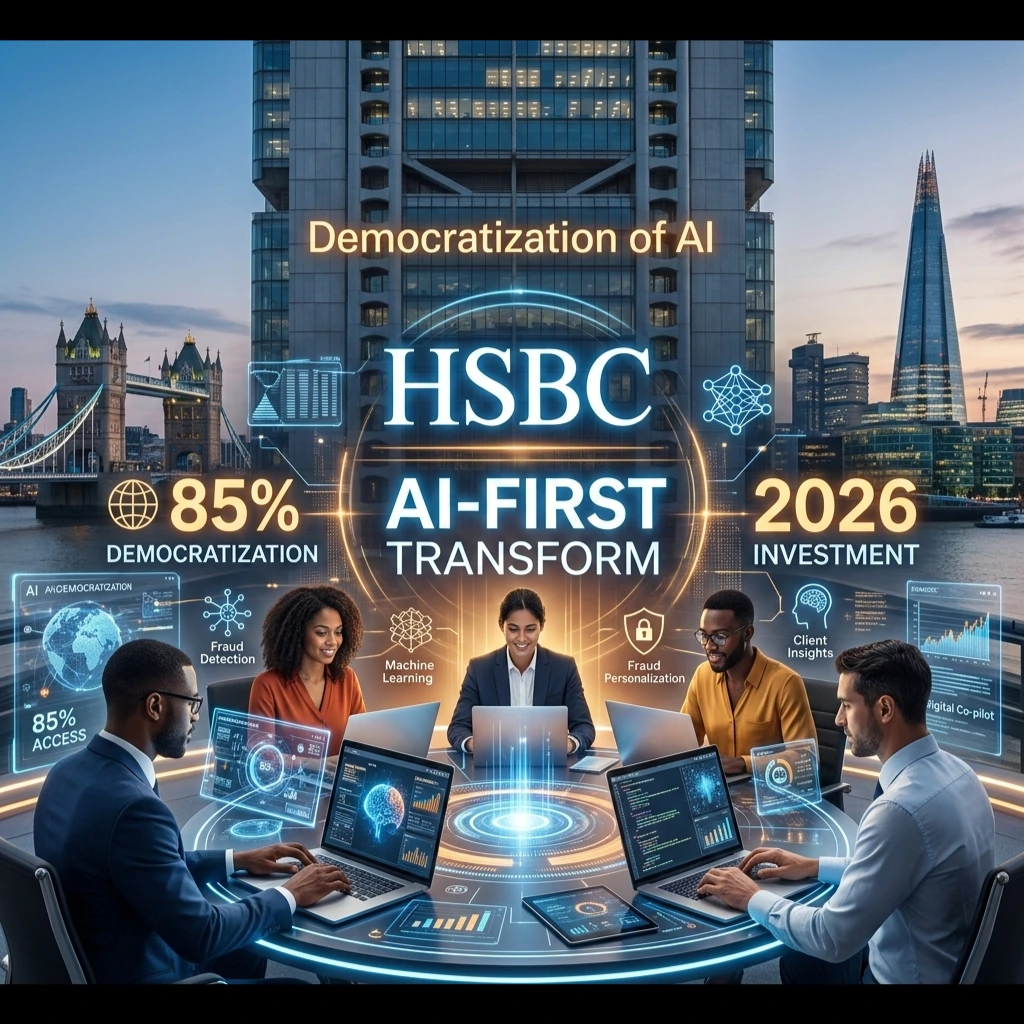
While many financial institutions are still dipping their toes into the “experimental” waters of artificial intelligence, HSBC has decided to dive into the deep end. The bank recently made waves by announcing that 85% of its workforce now has access to generative AI tools. But this isn’t just a minor software update; it’s a fundamental pivot.
How does a century-old institution transform its entire DNA to become “AI-first”? And more importantly, why is it making this its single largest technology investment for 2026?
The Great Democratization: AI for the Many, Not the Few
Most companies keep their high-end AI tools locked away in the “Innovation Lab,” reserved for data scientists and senior devs. HSBC is breaking that mold. By rolling out access to 85% of its global team, they are betting on the democratization of intelligence.
This move suggests that the bank isn’t just looking for one “killer app.” Instead, they want thousands of micro-efficiencies. Imagine a relationship manager using GenAI to summarize complex market shifts in seconds, or a compliance officer using LLMs to scan thousands of pages of new regulations.
According to a recent report by CIO Dive, this massive rollout is part of a broader strategy to make the bank “AI-ready” at every level. It’s a bold statement: AI is no longer a “nice-to-have” tool; it’s the new baseline for professional competency in finance.
Why 2026 is the Year of the “AI Pivot”
Why is HSBC earmarking 2026 as the year of its largest tech spend? The timing isn’t accidental. The financial sector is currently facing a “perfect storm” of rising data complexity and customer expectations for instant, personalized service.
By prioritizing GenAI in their 2026 budget, HSBC is focusing on:
- Hyper-Personalization: Moving beyond generic banking to offer advice tailored to individual spending patterns.
- Operational Resilience: Using AI to detect fraud and manage risk faster than any human team ever could.
- Code Acceleration: Empowering their internal developers to ship products faster by using AI-augmented coding environments.
Is it a risky move? Perhaps. But in a landscape where fintechs are nipping at the heels of traditional banks, the risk of standing still is much higher.
Can a “Humanized” Bank Exist in an AI World?
There’s a common fear that more AI means less “human” connection. However, HSBC’s CEO Georges Elhedery seems to view it differently. The goal is to strip away the “robotic” administrative tasks that eat up a banker’s day, leaving more room for actual strategy and client relationships.
The “Human” benefits of this AI surge include:
- Reduced Burnout: Automating repetitive data entry and document filing.
- Faster Answers: Customers get technical queries resolved in seconds via AI-assisted support.
- Better Decisions: Managers can use AI to simulate “what-if” scenarios for global market shifts.
By putting these tools in the hands of the majority, HSBC is essentially giving its staff a “digital co-pilot.” It’s not about replacing the pilot; it’s about making sure the pilot doesn’t get overwhelmed by the controls.
Final Thoughts: A Blueprint for the Future of Finance?
HSBC’s aggressive roadmap sets a high bar for the rest of the banking world. By making Generative AI its leading investment for 2026, the bank is signaling that the era of “testing” is over. We are now in the era of execution.
Will this massive investment pay off in the form of higher margins and happier customers? Or will the complexities of regulating AI in a highly scrutinized industry slow them down? Only time will tell, but one thing is certain: the “traditional” bank is dead. Long live the AI-augmented bank.
What do you think? Would you feel more secure knowing your bank is powered by the latest AI, or do you still prefer the old-school human touch? The line between the two is getting thinner every day.
FAQs
Find answers to common questions below.
Why is HSBC giving 85% of its staff access to GenAI?
It’s about "democratizing intelligence." Rather than keeping AI in a lab, HSBC wants every department-from compliance to customer service-to find micro-efficiencies that aggregate into massive institutional gains.
Is the HSBC Generative AI investment 2026 replacing human bankers?
Quite the opposite. The strategy aims to automate the "robotic" administrative tasks, allowing human employees to focus on high-level strategy, empathy-driven customer service, and complex problem-solving.
What makes HSBC’s AI strategy different from other banks?
While many banks are cautious and siloed, HSBC has made GenAI its single largest technology investment for 2026, signaling a shift from "experimental" use to "foundational" integration.
How does this impact the average banking customer?
Expect faster response times, hyper-personalized financial advice based on your specific spending patterns, and enhanced security through AI-driven fraud detection.