Have you ever noticed that even the most advanced AI can sometimes act like a toddler when looking at a picture? Sure, it can identify a “cat” or a “chair,” but ask it to understand how a complex architectural blueprint translates to a physical 3D space, or how a robot should navigate a cluttered, changing construction site, and things get messy.
While the world has been obsessed with LLMs that talk our ears off, a new heavyweight has quietly entered the ring to solve the “vision problem.” Ex-Google DeepMind researchers’ startup Elorian raises $55M in a fresh funding round, and they aren’t here to build another chatbot. Led by industry veteran Andrew Dai, Elorian is on a mission to give machines something they’ve desperately lacked: “adult-level” visual reasoning.
The $55 Million Bet on ‘Physical AI’
The funding-bringing the company to a $300 million valuation-comes from tech royalty, including Nvidia, Altimeter Capital, and even Google’s own Jeff Dean. But why is there so much hype around a company that hasn’t even released a public product yet?
The answer lies in the shift toward Physical AI. In 2026, we’ve reached a point where text generation is largely a solved problem. The real frontier is now the physical world. Elorian is focusing on the “intelligence layer” for robotics and architecture, aiming to create models that understand spatial relationships and physical constraints natively.
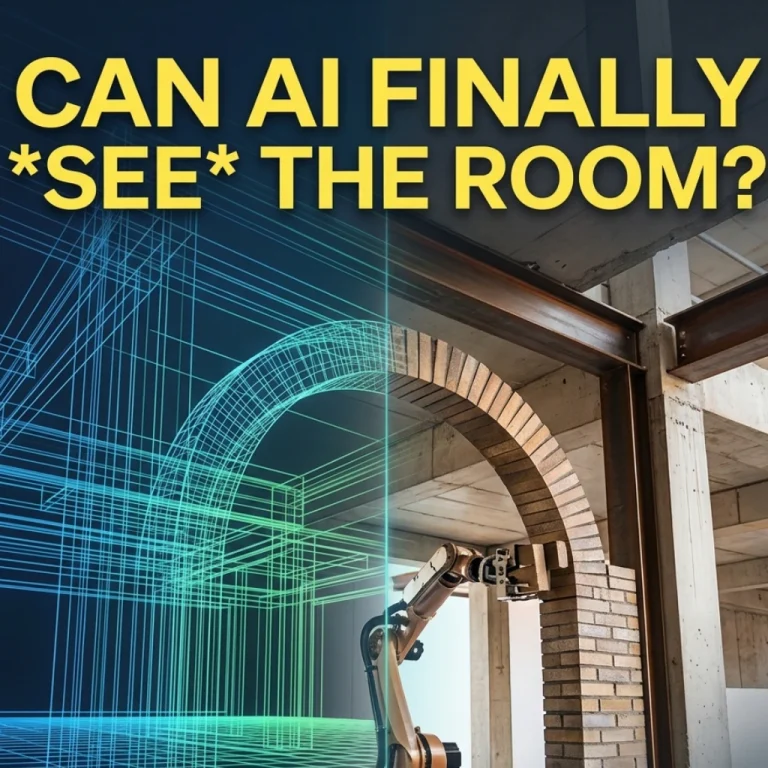
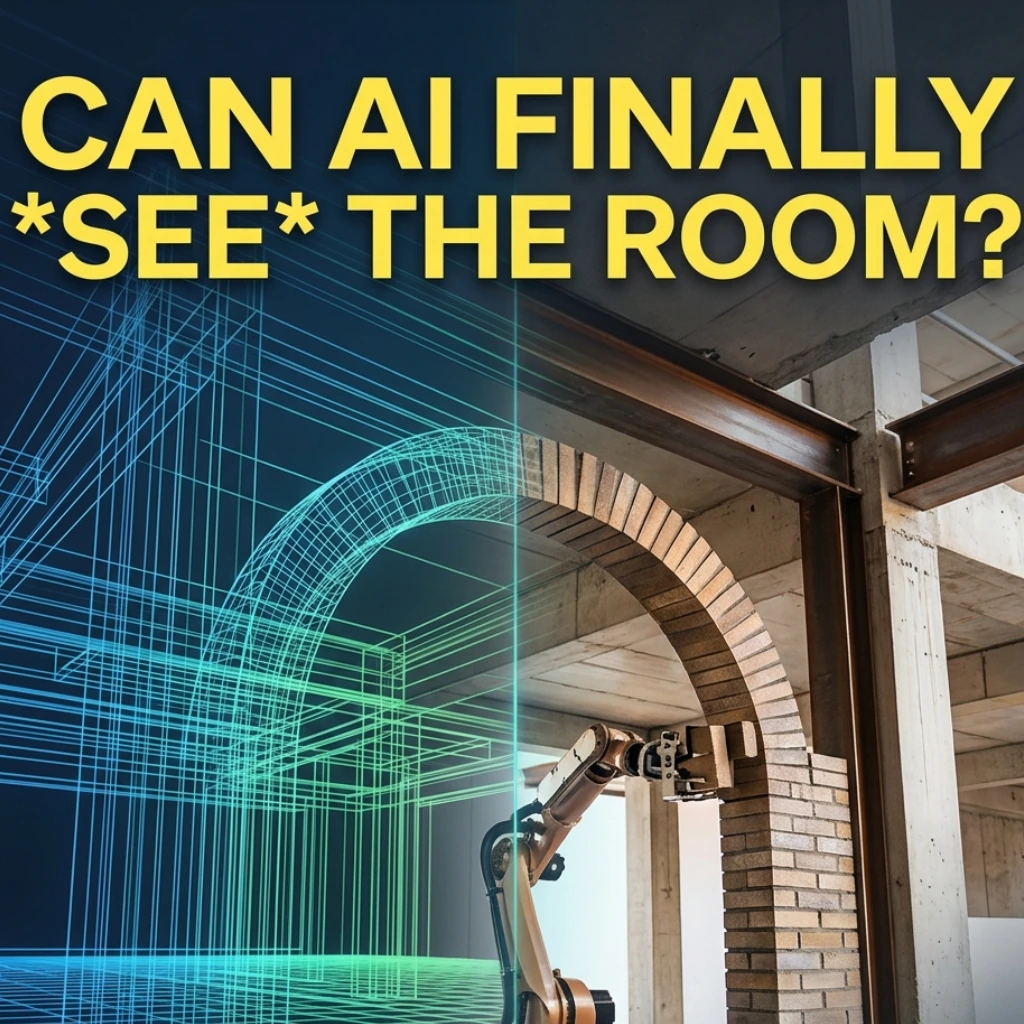
Instead of just “seeing” pixels, Elorian’s models are being trained to “reason” about them. It’s the difference between seeing a pile of bricks and knowing how to build a sound arch. One identifies objects; the other understands structure.
Why ‘Visual Reasoning’ is the Missing Link
Current AI models are often “stitched together”-they use a language brain and attach a vision “patch” to it. Andrew Dai, who spent 14 years at DeepMind and co-led data pre-training for Gemini, believes this approach is reaching its limits.
Elorian is taking a different path:
- Native Multimodality: Their models are built from the ground up to process text, images, and video simultaneously.
- Beyond the 3-Year-Old Level: Dai famously noted that most current models have the visual intelligence of a preschooler. Elorian wants to provide the “adult” perspective required for high-stakes industries.
- Architectural Precision: In the world of architecture and robotics, a mistake of a few centimeters isn’t just a typo-it’s a structural failure. Elorian’s focus on visual logic aims to eliminate these hallucinations in the physical world.
Can Small Teams Outpace the Giants?
It’s a classic Silicon Valley David vs. Goliath story. How does a team of roughly a dozen people compete with the billions being poured into OpenAI or Google?
The “Elorian Playbook” relies on specialization. By ignoring the race to build a “General Everything” AI, Dai and his co-founders-including former Apple researcher Yinfai Yang and Harvard professor Seth Neel-can focus entirely on the logic of the physical environment. As the industry moves toward Agentic AI in 2026, the demand for AI that can “look” at a spreadsheet or a blueprint and make real-time, autonomous decisions is skyrocketing.
Final Thoughts: The Year of the Machine Eye
We’ve spent the last few years teaching AI to speak our language. Now, we’re finally teaching it to see our world. With its $55M war chest and a roster of DeepMind alumni, Elorian positions itself as the “soul” of the next generation of robots.
If they succeed, the robots of 2027 won’t just be following code; they’ll be understanding the room. In a world needing AI for city building and logistics, “adult-level” reasoning is the breakthrough we’ve waited for.
Are we ready for machines that can finally see the world as clearly as we do?
FAQs
Find answers to common questions below.
What exactly is "adult-level" visual reasoning?
Unlike standard AI that simply labels objects (e.g., "this is a hammer"), adult-level reasoning understands the function and physics of the object (e.g., "I can use this tool to apply force to this specific nail without damaging the surface").
Why did Nvidia and Jeff Dean invest in Elorian?
The investment signals a shift from "Generative AI" to "Physical AI." Industry leaders believe Elorian’s focus on spatial logic is the missing piece for truly autonomous robotics and smart architecture.
How does Elorian differ from Gemini or GPT-4o?
While those are general-purpose models, Elorian is built from the ground up for native multimodality, prioritizing spatial accuracy and physical constraints over conversational fluff.