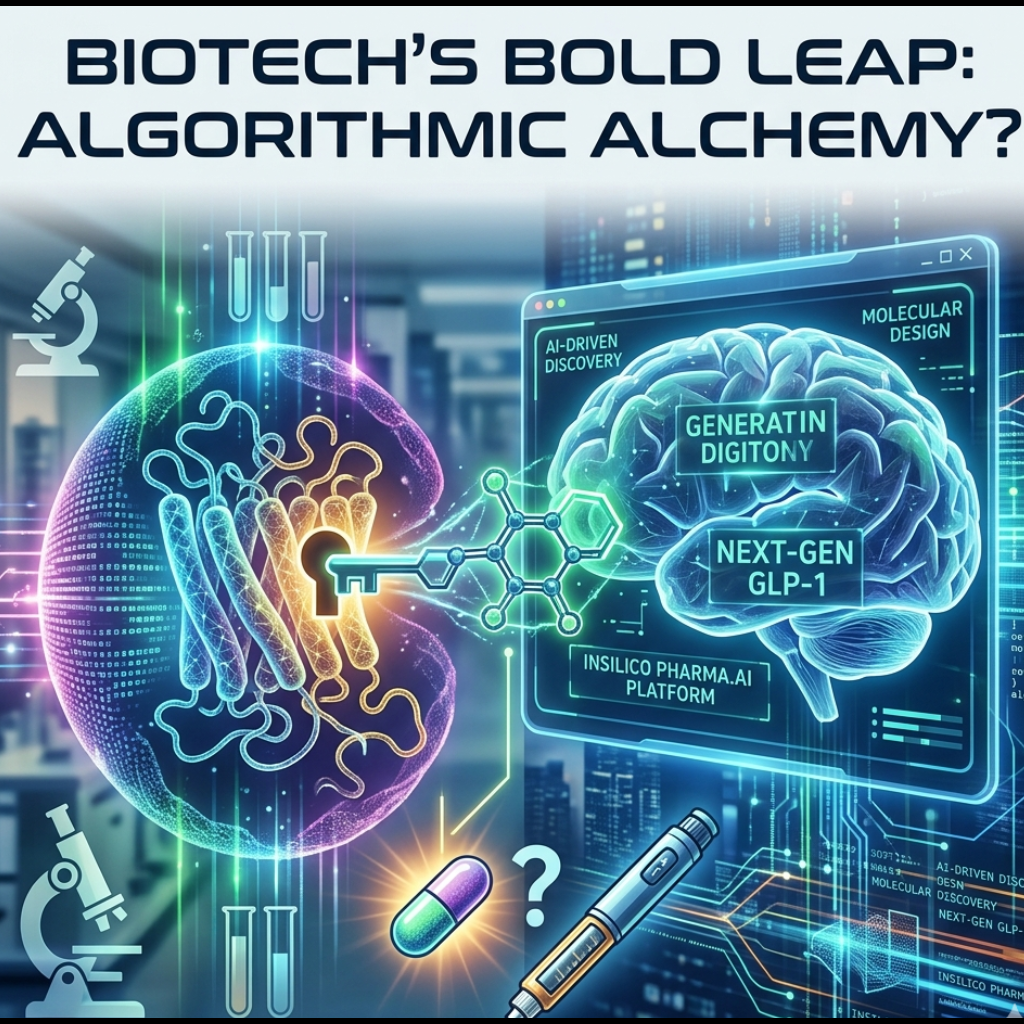
The pharmaceutical world just witnessed a seismic shift, and it didn’t happen in a traditional lab. It happened in the cloud.
In a move that has sent ripples through both Wall Street and the healthcare sector, Eli Lilly has reportedly inked a staggering $2 billion deal with Hong Kong-based Insilico Medicine. The goal? To leverage generative AI to discover the next frontier of GLP-1 diabetes and weight loss drugs.
But why is a company that already dominates the market with Mounjaro and Zepbound spending billions on an AI partnership? Is this a defensive play, or are we looking at the birth of a more efficient, “smarter” pill?
The Quest for the “Perfect” GLP-1
We’ve all seen the headlines. GLP-1 receptor agonists have revolutionized how we treat obesity and Type 2 diabetes. However, as successful as current drugs are, they aren’t perfect. Most require weekly injections, and many patients struggle with gastrointestinal side effects.
This is where the Eli Lilly $2 billion deal with Insilico Medicine comes into play. According to sources familiar with the matter, Lilly will acquire exclusive rights to sell and develop specific drug candidates discovered by Insilico’s AI platforms.
Why does this matter?
- Speed to Market: Traditional drug discovery takes 10+ years. AI can slash the early-stage “hit-to-lead” time from years to months.
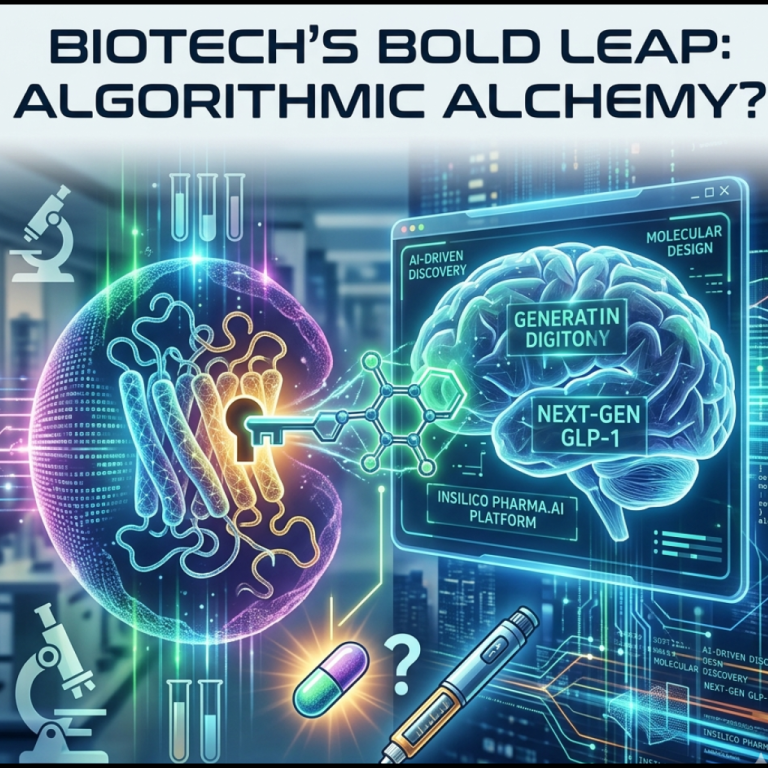
- Precision Engineering: Insilico’s platform, Pharma.AI, uses deep learning to design molecules that fit into biological receptors like a key in a lock, potentially reducing side effects.
- Oral Alternatives: The “holy grail” is a highly effective, small-molecule weight loss pill that works as well as an injection. AI is the fastest way to find that molecule.
Why Insilico Medicine?
You might wonder: What makes a Hong Kong-based startup worth a $2 billion commitment? Insilico Medicine isn’t exactly a newcomer. They were one of the first companies to bring an AI-discovered drug (for idiopathic pulmonary fibrosis) into Phase II clinical trials. Their proprietary “Biology42” and “Chemistry42” systems don’t just search through existing databases; they generate brand-new molecular structures that have never existed in nature.
By partnering with Insilico, Eli Lilly isn’t just buying a drug; they are buying a head start. In a market where competitors like Novo Nordisk and Pfizer are racing to release their own next-gen pills, being “first and best” is the only way to maintain a trillion-dollar valuation.
The Geopolitical and Economic Ripple Effect
This partnership is particularly fascinating given the current climate. Despite tightening regulations on cross-border tech transfers, Lilly’s move signals that innovation has no borders.
For the biotech industry, this deal sets a new benchmark for valuation. We are moving away from a world where AI is a “cool experiment” to a world where it is the backbone of R&D. If AI can successfully identify a GLP-1 candidate that requires a lower dose or offers better tolerability, the ROI on this $2 billion investment could be tenfold.
Final Thoughts: A New Era of Medicine?
Are we ready for a world where our most life-changing medicines are designed by algorithms?
The Eli Lilly and Insilico Medicine partnership suggests the answer is a resounding “yes.” This isn’t just about weight loss; it’s a proof of concept for the future of human health. We are moving toward bespoke medicine, where the distance between a biological problem and a chemical solution is bridged by high-speed processing.
As these AI-generated candidates move into clinical trials, one thing is certain: the “Big Pharma” of tomorrow will look more like a tech giant than a laboratory. And for patients waiting for the next breakthrough, that speed might be the most important innovation of all.
FAQs
Find answers to common questions below.
Why is Eli Lilly spending $2 billion on an AI startup?
While Lilly is a market leader, the race for an "oral GLP-1" (a weight-loss pill) is heating up. This deal allows them to use Insilico’s generative AI to find molecular structures that are safer, more potent, and easier to manufacture than current injections.
What makes Insilico Medicine different from other biotech firms?
Unlike traditional firms that "screen" existing chemicals, Insilico’s Pharma.AI platform actually invents new molecules from scratch. They were the first to move an entirely AI-designed drug into human clinical trials.
Will this deal make weight loss drugs cheaper?
In the long run, yes. AI significantly reduces "R&D waste"-the billions spent on failed drug candidates. By streamlining the discovery process, pharmaceutical giants can potentially lower the overhead costs of bringing a drug to market.
Does this mean AI is now "writing" our prescriptions?
Not quite. AI identifies the "recipe" for the drug, but it still has to pass rigorous human clinical trials and FDA scrutiny to prove it is safe for the public.