
Have you ever noticed how the most difficult conversations often happen in the quietest rooms? For millions of people dealing with mentahttps://aivapour.com/news/ai/crink-ai-driven-…platform-funding/l health hurdles, the loudest barrier isn’t the cost or the distance-it’s the hesitation to take that first step. What if technology didn’t just track your steps or your sleep, but actually understood the weight of your thoughts?
This is the challenge Crink, a mental wellbeing startup, is tackling head-on. By blending the precision of artificial intelligence with the irreplaceable nuance of human empathy, the platform is aiming to bridge the gap in a sector that has long been underserved. And the market is taking notice.
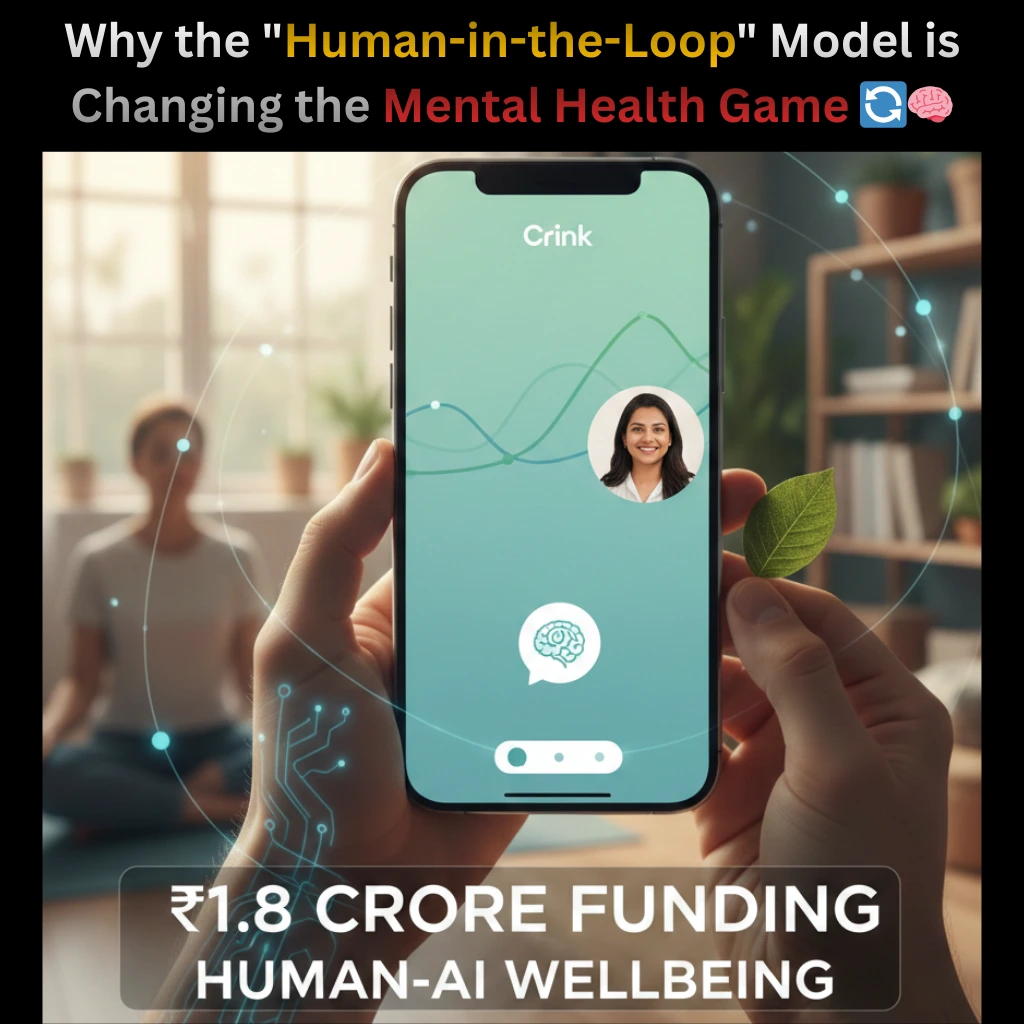
Recently, Crink secured ₹1.8 crore in pre-seed funding to scale its AI-driven human wellbeing platform, signaling a shift in how we perceive digital therapy.
Why the “Human-in-the-Loop” Model is Winning
In a world saturated with chatbots that offer scripted, “cookie-cutter” advice, why does Crink stand out? The secret lies in their hybrid approach. While AI is excellent at pattern recognition and 24/7 availability, it lacks the lived experience of a licensed professional.
Crink’s platform doesn’t try to replace therapists; it empowers them. By using AI to handle initial screenings, mood tracking, and data-driven insights, the startup ensures that when a user finally connects with a human expert, the conversation is already miles ahead.
Key features of this tech-human synergy include:
- Predictive Analytics: Identifying potential mental health dips before they become crises.
- Personalized Care Paths: Moving away from “one-size-fits-all” wellness to tailored psychological support.
- Instant Accessibility: Breaking the “waiting room” culture that plagues traditional clinical therapy.
The ₹1.8 Crore Milestone: What’s Next for the Startup?
Securing pre-seed funding in the current “funding winter” is no small feat. It suggests that investors are looking past generic SaaS products and toward impact-driven HealthTech. So, where will this capital go?
The startup plans to utilize the ₹1.8 crore infusion to refine its proprietary AI algorithms and expand its network of licensed human therapists. Scaling a platform like this requires more than just code; it requires building a community of trust. With the mental health market projected to grow exponentially, Crink is positioning itself as a leader in accessible, stigma-free intervention.
Could this be the turning point for corporate wellness too? As companies struggle with “quiet quitting” and employee burnout, integrated platforms like Crink offer a scalable solution for HR departments looking to provide genuine support rather than just “pizza Friday” perks.
Bridging the Gap in a High-Stress Era
Let’s be honest: the pace of modern life isn’t slowing down. From the pressures of the gig economy to the social isolation often fueled by our screens, the demand for mental health support has never been higher. Yet, a massive percentage of the population remains untreated due to high costs or the fear of judgment.
Crink’s AI-driven approach lowers the barrier to entry. It allows a user to engage with a platform in total privacy, getting the “first-aid” they need immediately, while seamlessly transitioning to high-level professional care when necessary.
Why this matters right now:
- Destigmatization: Digital-first platforms make seeking help feel like a proactive lifestyle choice rather than a medical emergency.
- Affordability: Tech-driven efficiencies often lead to lower costs for the end-user.
- Data-Backed Progress: Users can actually see their growth over time through visual dashboards and AI insights.
Final Thoughts: A Smarter Way to Heal
Is AI the ultimate “cure” for mental health? Probably not. But is it the most powerful tool we’ve ever had to facilitate healing? Absolutely.
By securing this ₹1.8 crore funding, Crink isn’t just building an app; they are validating a new philosophy of care-one where technology listens and humans heal. As they scale their platform, the focus remains clear: making sure that no one has to navigate their darkest moments without a roadmap.
What do you think? Are you ready to trust an AI-driven platform with your mental wellbeing, or does the human touch remain non-negotiable for you? Perhaps, as Crink suggests, the answer is a bit of both.
FAQs
Find answers to common questions below.
Can an AI-driven mental wellbeing platform actually understand human emotions?
While AI doesn't "feel," it is incredibly good at recognizing patterns in language and behavior that humans might miss. It acts as a 24/7 bridge, providing immediate support until a human therapist can step in.
Will Crink replace human therapists with robots?
Not at all. The goal is "human-in-the-loop" care. The AI handles the data and initial outreach so that human therapists can focus entirely on deep, empathetic healing without the administrative burnout.
How does the ₹1.8 crore funding help the average user?
This investment is earmarked for making the platform smarter and the network of licensed therapists larger. For you, this means shorter wait times, more personalized care paths, and a more intuitive app experience