The film industry has always been a high-stakes gamble, where “time is money” isn’t just a cliché-it’s a terrifying reality. But what if the most grueling parts of filmmaking, from color grading to visual effects, could be handled with the click of a button?
Amazon MGM Studios is looking to answer that question. In a move that’s sending ripples through Hollywood, the tech giant is rolling out a suite of proprietary AI tools designed to overhaul how movies and TV shows are made. With a closed beta set for March 2026, the studio isn’t just looking to join the AI race; it’s looking to lead it.
Cutting the Fat: Why Amazon is Automating the Set
Let’s be honest: production cycles have become bloated. Between massive VFX requirements and complex post-production schedules, fans often wait years between seasons of their favorite shows. Amazon’s new AI initiative aims to trim this timeline significantly.
By integrating AI into the “boring” but essential parts of the workflow, the studio hopes to slash overhead costs. We aren’t just talking about robots writing scripts-this is about technical efficiency. Imagine AI-driven tools that can:
- Automate repetitive editing tasks.
- Enhance background environments in real-time.
- Streamline the labor-intensive process of localization and dubbing.
But does faster always mean better? That’s the multi-million dollar question keeping producers awake at night.
The March 2026 Beta: A Testing Ground for Innovation
The industry is keeping a close eye on the upcoming closed beta. Unlike general-purpose AI tools like ChatGPT or Midjourney, Amazon MGM Studios turns to AI to cut costs and speed up film and TV production using a highly specialized framework tailored specifically for cinematic standards.
This isn’t a public “free-for-all.” It is a calculated, professional-grade rollout. By limiting the beta to a specific group of creators, Amazon can fine-tune the tech to ensure it meets the high-fidelity requirements of a Prime Video original. The goal is clear: create a “smart studio” environment where creators spend less time on logistics and more time on storytelling.
Navigating the Human Element: Collaboration or Replacement?
Whenever “AI” and “Hollywood” appear in the same sentence, anxiety follows. We saw this during the recent SAG-AFTRA and WGA strikes-the fear that algorithms will replace human intuition. However, Amazon seems to be positioning these tools as creative assistants rather than replacements.
Think of it as the evolution of the CGI era. When digital effects first arrived, people feared the death of practical filmmaking. Instead, it became a tool that expanded the “possible.” Amazon’s AI Studio aims to do the same for the technical side of the lens. If an AI can handle the 40 hours of color matching a human used to do, doesn’t that free the human to focus on the artistic vision?
The Bigger Picture: A New Era for Streaming Giants
Amazon isn’t acting in a vacuum. Netflix and Disney are also pouring billions into R&D. But Amazon has a unique advantage: AWS (Amazon Web Services). By leveraging their own massive cloud infrastructure, they can process AI-heavy tasks more cheaply and quickly than almost any other studio on the planet.
Key highlights of the new AI Studio strategy:
- Cost Reduction: Minimizing the “burn rate” during long post-production phases.
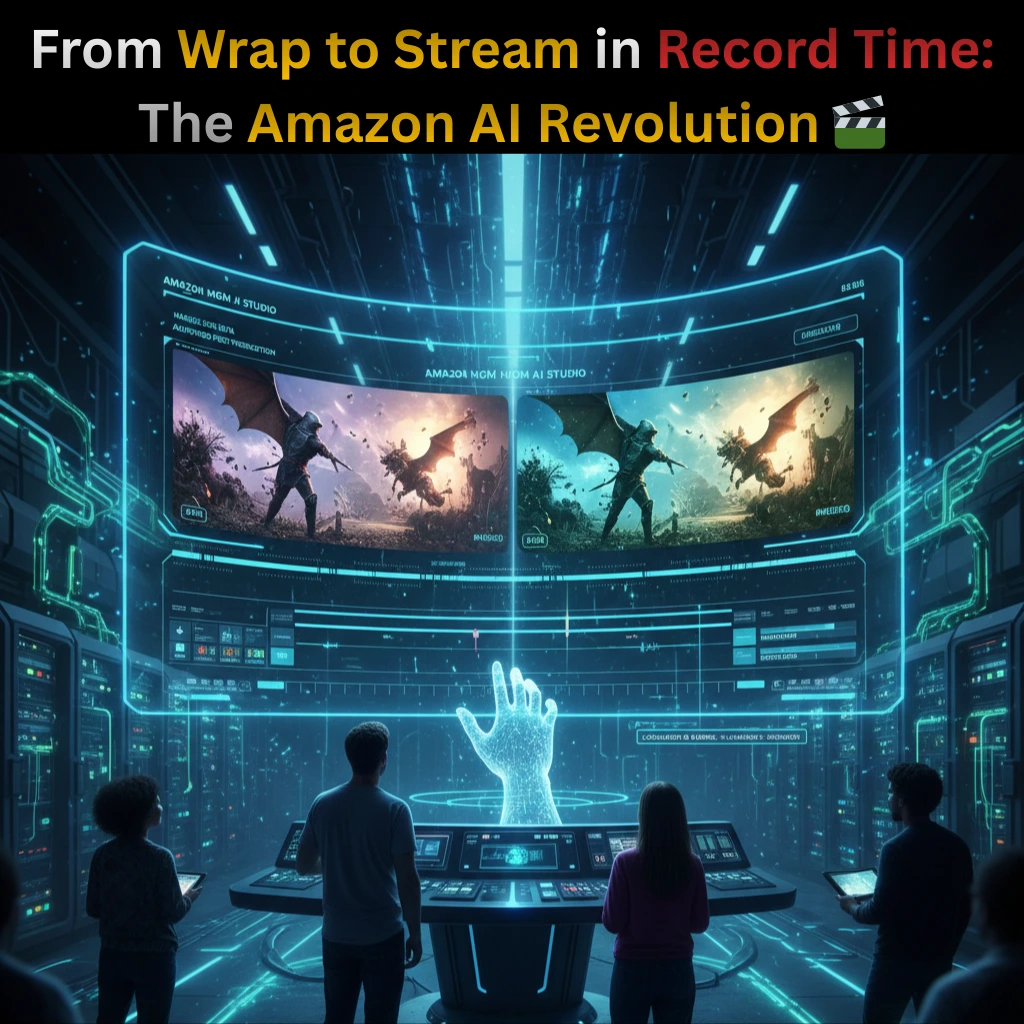
- Workflow Acceleration: Getting content from “wrap” to “streaming” in record time.
- Creative Freedom: Providing tools that allow indie-style creators within the MGM ecosystem to execute big-budget ideas.
Final Thoughts: The Future is (Almost) Here
Is the “Amazon MGM AI Studio” the magic wand the industry needs? It’s too early to tell, but the intent is bold. By focusing on the practical applications of AI-rather than just the hype/ Amazon is setting a roadmap for the future of entertainment.
As we approach the March 2026 beta, the industry will be watching to see if these tools truly empower creators or if they simply turn art into a high-speed assembly line. One thing is certain: the way we watch and make movies is about to change forever. Are you ready for the AI-powered premiere?
FAQs
Find answers to common questions below.
Will the Amazon MGM AI Studio replace human directors?
Not exactly. The studio is positioning these tools as "creative assistants." Think of it as upgrading from a typewriter to a word processor; the AI handles the repetitive, technical heavy lifting (like color matching or rotoscoping) so directors can focus on the actual storytelling.
Why is the March 2026 beta "closed"?
Professional filmmaking requires extreme precision. By keeping the beta closed, Amazon can ensure the AI meets "theatrical quality" standards before a wider release, avoiding the uncanny valley or technical glitches that often plague early-stage AI.
How does this impact the cost of my Prime Video subscription?
While not directly linked to subscription prices, lowering production costs allows Amazon to take more creative risks on "big budget" shows without the massive financial overhead, potentially leading to more frequent content releases.
Can indie filmmakers use these tools?
Currently, the tools are tailored for the Amazon MGM ecosystem. However, given Amazon’s history with AWS, it’s highly likely they will eventually offer these AI production services to external creators as a cloud-based subscription.